Chapter 10 of 10
Forty Years Later, a Camera in Orbit Found My Shadow
Lunar Reconnaissance Orbiter (LRO) photographs Eagle's Descent Stage from 24 km above
Told in Eagle’s imagined voice · the events are real · source
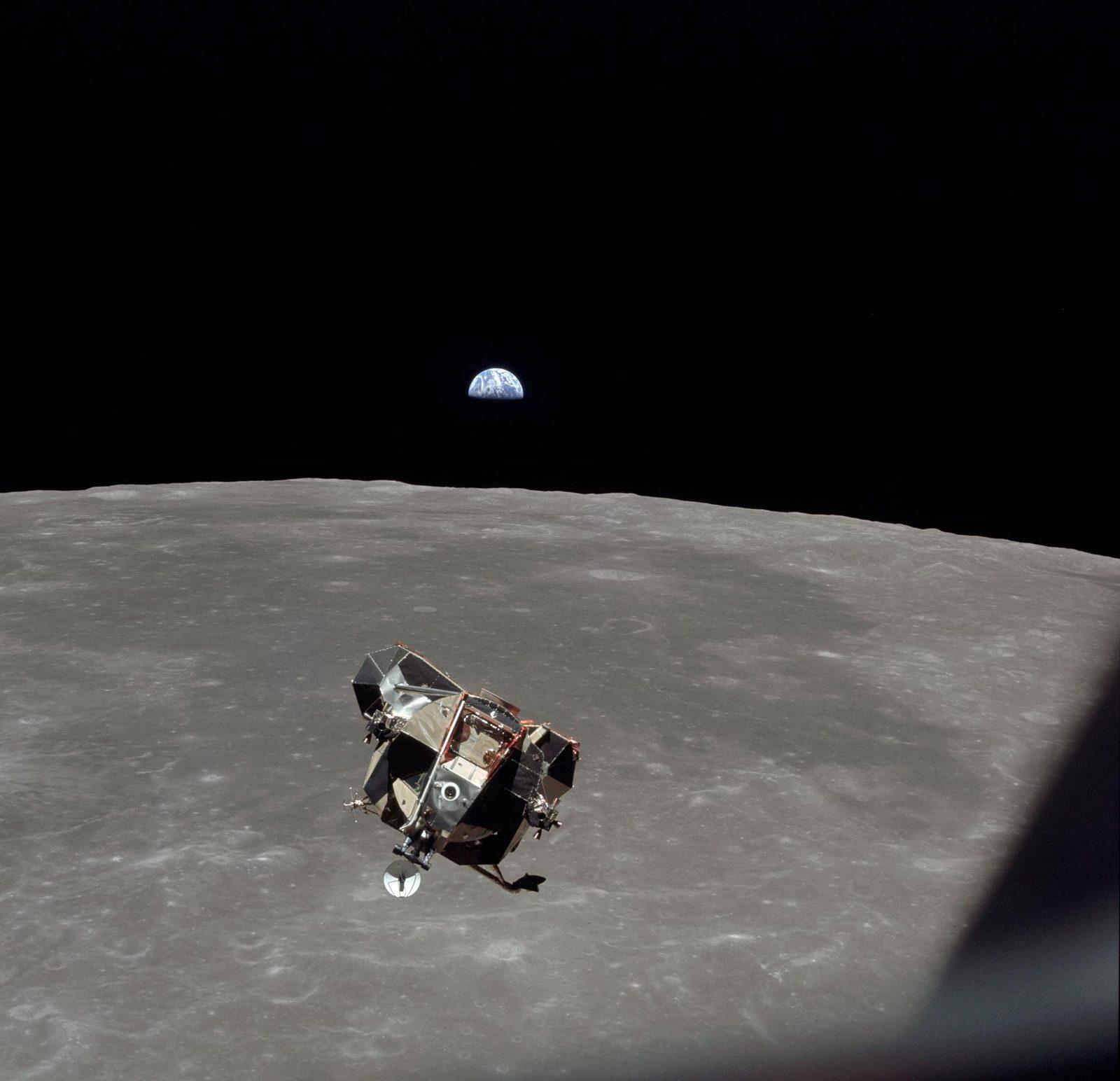
EagleFor more than forty years, I stood completely alone in the freezing two-week nights and boiling two-week days of the Sea of Tranquility.
Then, just fifteen miles overhead, a new robot explorer named the Lunar Reconnaissance Orbiter swept across my sky with a telescopic camera.
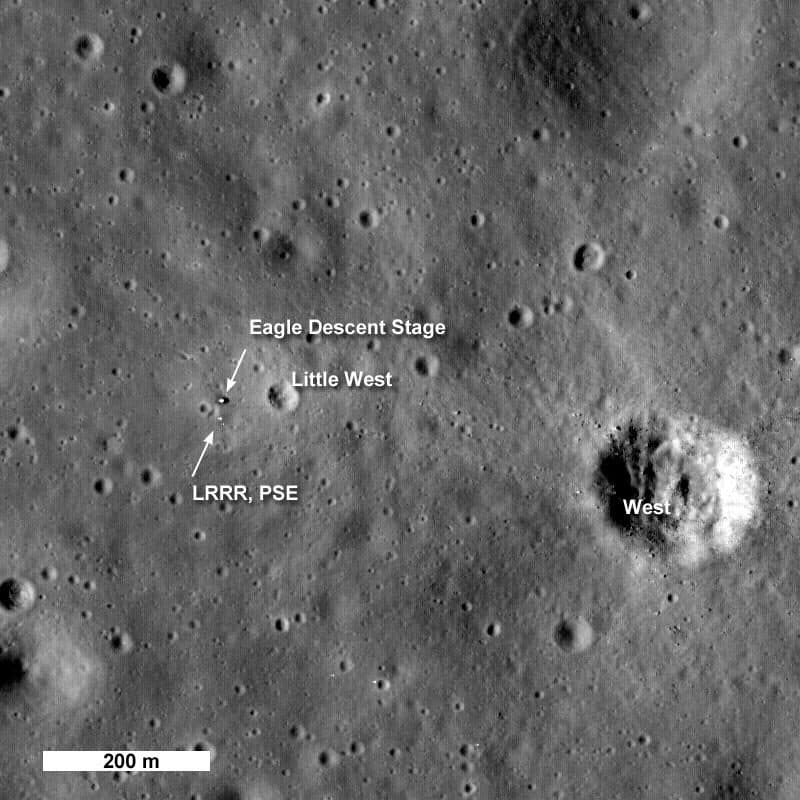
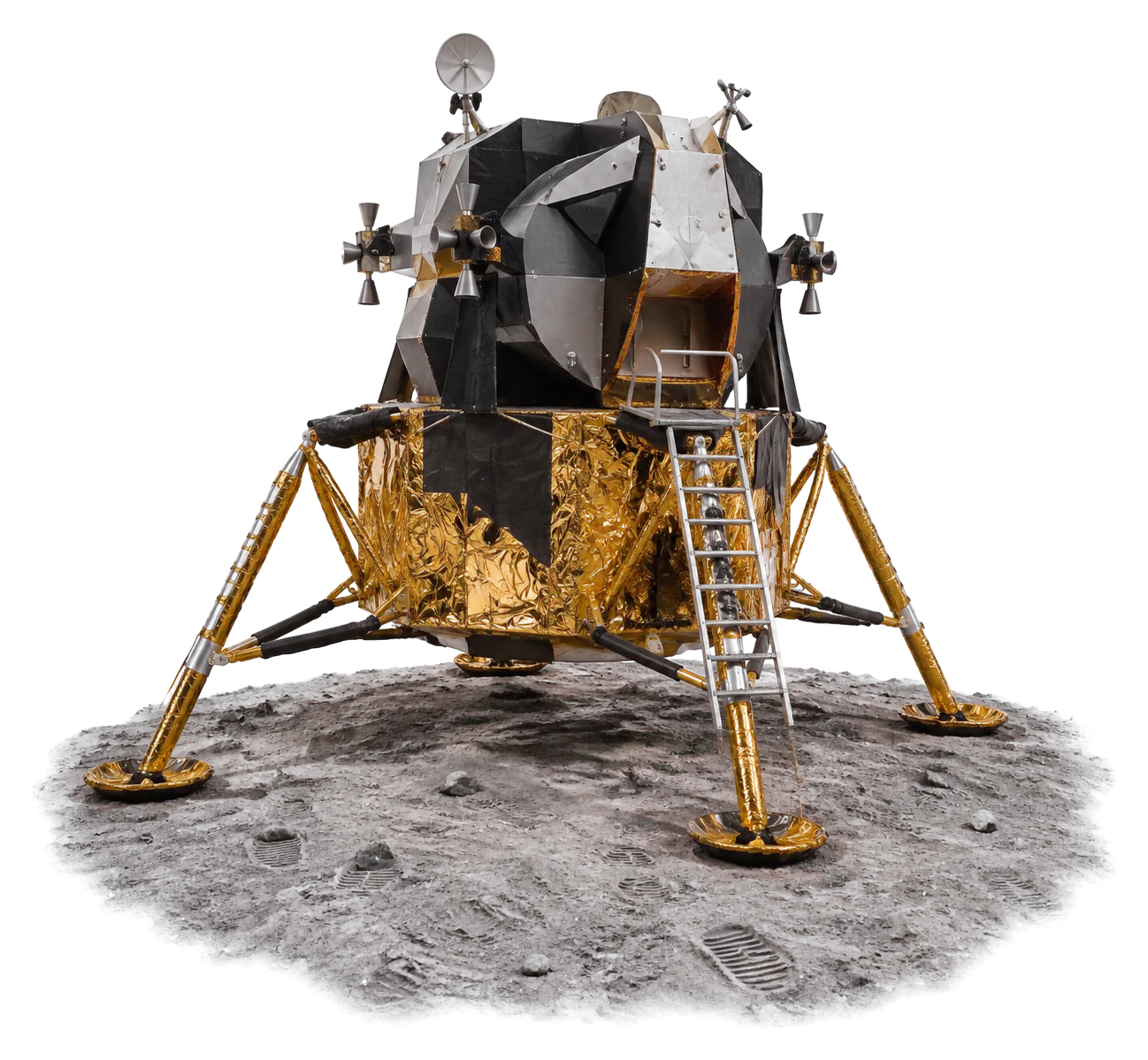
EagleThere I was in the photograph: a bright four-legged octagon casting a long, crisp black shadow across the gray dust.
I don't have a working radio anymore, yet I am still telling our story to everyone who looks up at the Moon.
The big idea
Later observations can add evidence to a mission whose original hardware has gone quiet.
Think about it
What can an orbital photograph show that an astronaut's close-up cannot?
In this chapter: Eagle's octagonal Descent Stage and the LROC Narrow Angle Camera
Sources: Main record
Machine illustration: AI-made. Photos: NASA Image and Video Library, credited on each picture.