Chapter 1 of 8

A car in a cupboard

Designing and stowing a folding lunar vehicle before Apollo 15

Told in Apollo 15 Rover’s imagined voice · the events are real · source
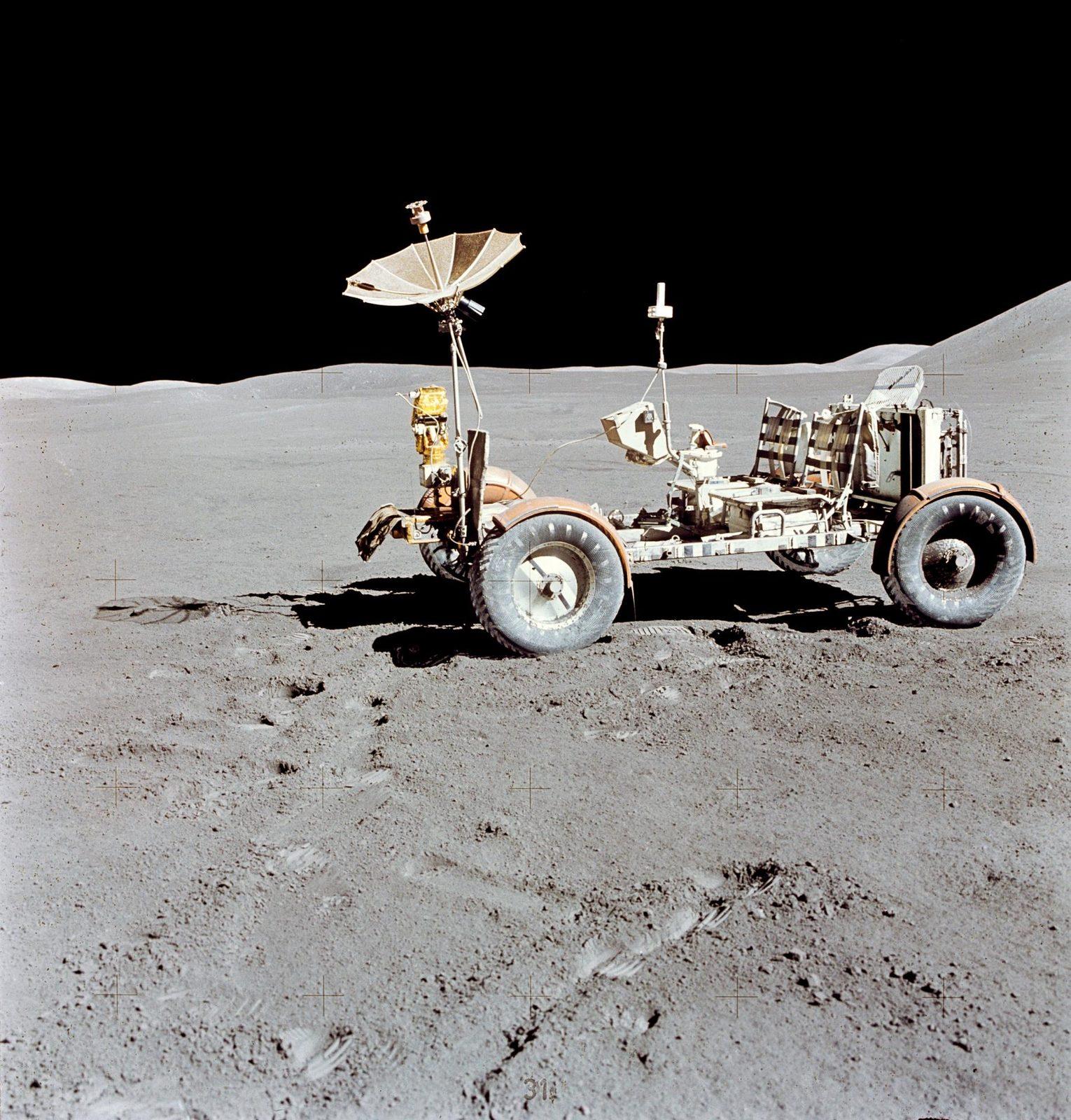
AS15-88-11901 (31 July-2 Aug.
Apollo 15 RoverBefore I could explore the Moon, I had to fit beside a lander.
NASA/JSC
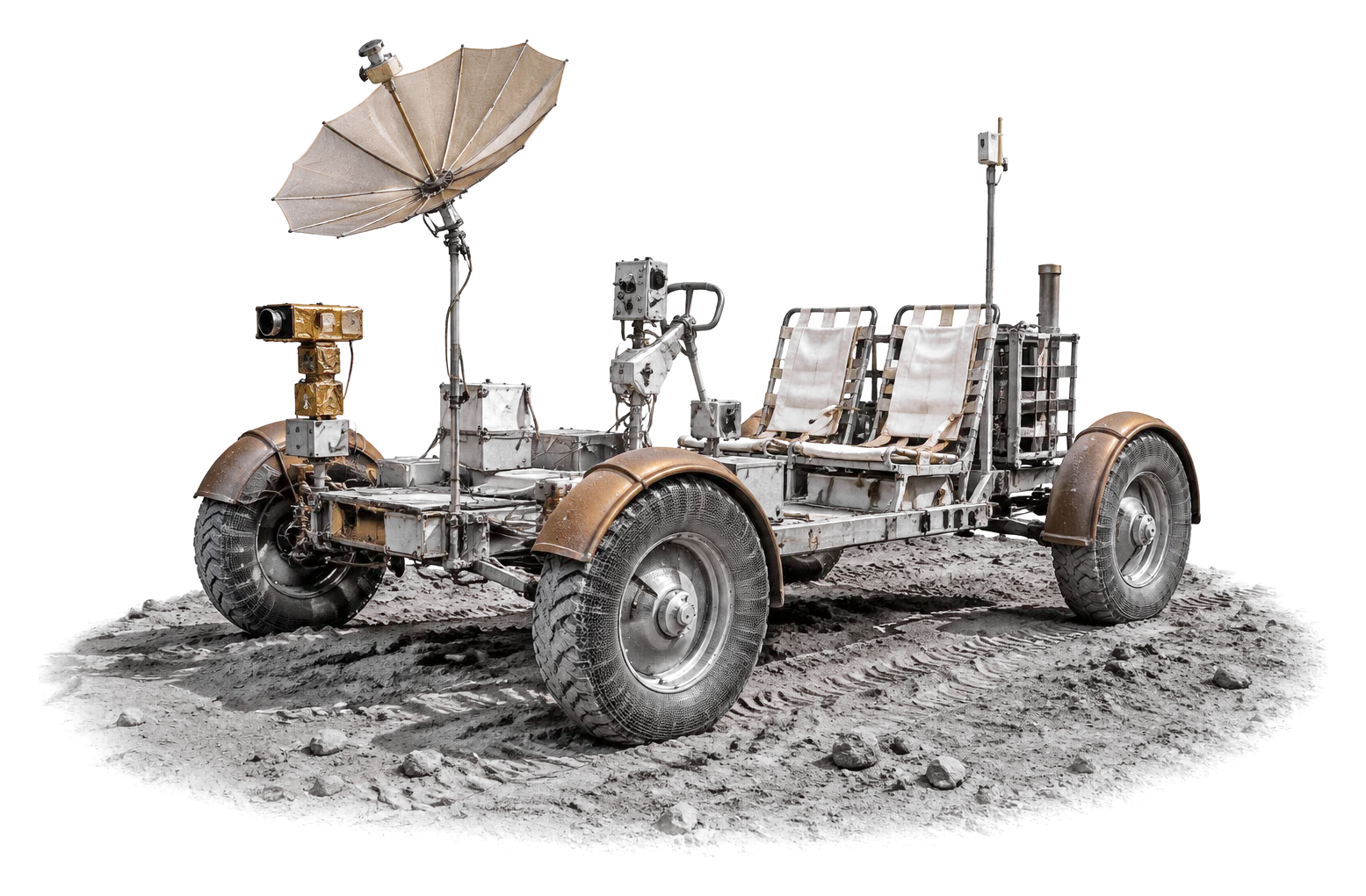
01I am Apollo 15's Lunar Roving Vehicle. Boeing developed the rover with Delco as a major subcontractor. My three-part aluminum chassis could fold into the descent stage's Quad 1 equipment bay. A larger exploration range began with a smaller package.
My wheels were not filled with air. They were woven from metal.
02Steel-strand mesh formed the tyres, with titanium chevrons supplying traction. Each wheel had its own electric drive motor. This was hardware designed for the Moon's low-gravity vacuum, not an ordinary road car carried into space.
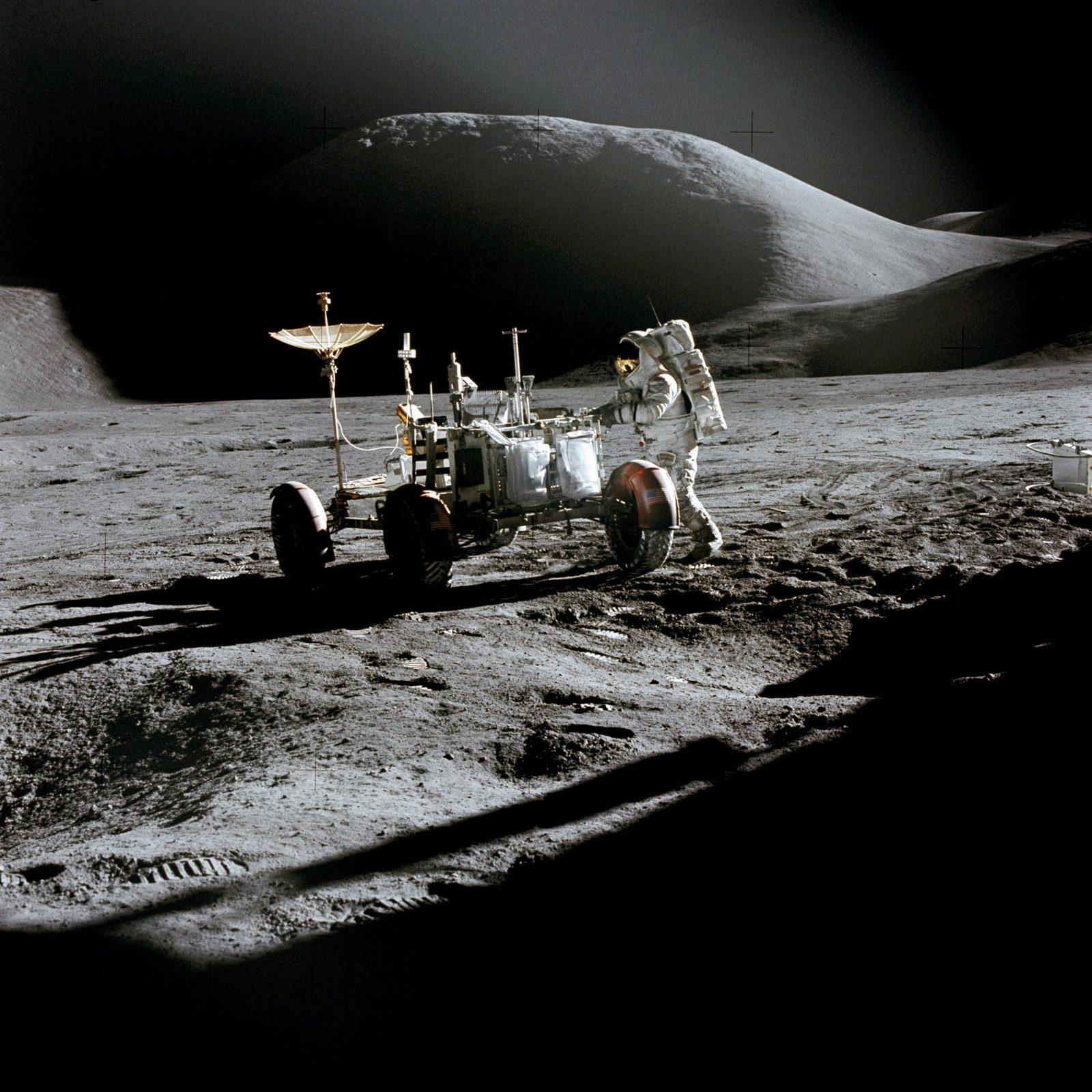
AS15-86-11603 (31 July 1971) --- Astronaut James B.
Apollo 15 RoverTwo batteries had to travel with us. Recharging was not the plan.
NASA/JSC
03Two non-rechargeable 36-volt silver-zinc batteries powered the drive and steering systems. Passive thermal control helped manage battery temperatures. Energy and heat mattered together; the rover did not carry a solar charging array.
I was built to carry explorers—and bring their samples back to the lander.
04Seats, life-support equipment, cameras, tools and sample storage were part of the vehicle's job. The crew would do the geology. I would extend their reach. First, the folded machine needed a ride all the way to the Moon.

The big idea

A spacecraft's packing, power and mobility are linked engineering choices. A folding chassis made a larger surface exploration tool possible.

Think about it

Why does a lunar car need to be designed around its journey before anyone drives it?

Fact file

Development
17 months
NSSDCA's reported development duration; not an exact assembly birthday.
Source ↗

In this chapter: Hinged chassis, mesh wheels, individual drive motors and two silver-zinc batteries

Sources: Main record · Apollo by the Numbers · Apollo 15 summary · NASA SP-4029

Machine illustration: AI-made. Photos: NASA Image and Video Library, credited on each picture.

Chapter 1 of 8

Next