Chapter 2 of 5

The missing picture

A navigation-timing anomaly during Flight 6

Told in Ingenuity’s imagined voice · the events are real · source
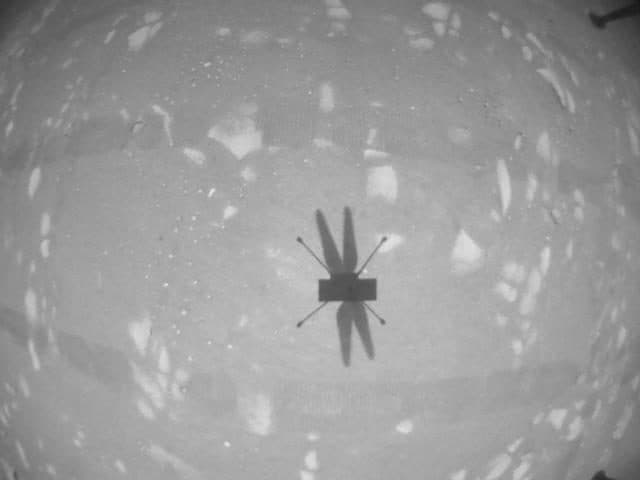
The downward-looking navigation camera aboard NASA's Ingenuity Mars Helicopter took this image of the rotorcraft's shadow on the surface of Jezero Crater during helicopter's second experimental test flight on April 22, 2
IngenuityMy downward eye helped me work out how I was moving.
NASA/JPL-Caltech
01The camera tracked features on the ground while my inertial measurement unit measured acceleration and rotation. The navigation system combined the information to estimate my motion.
On my sixth flight, the pictures lost their timing.
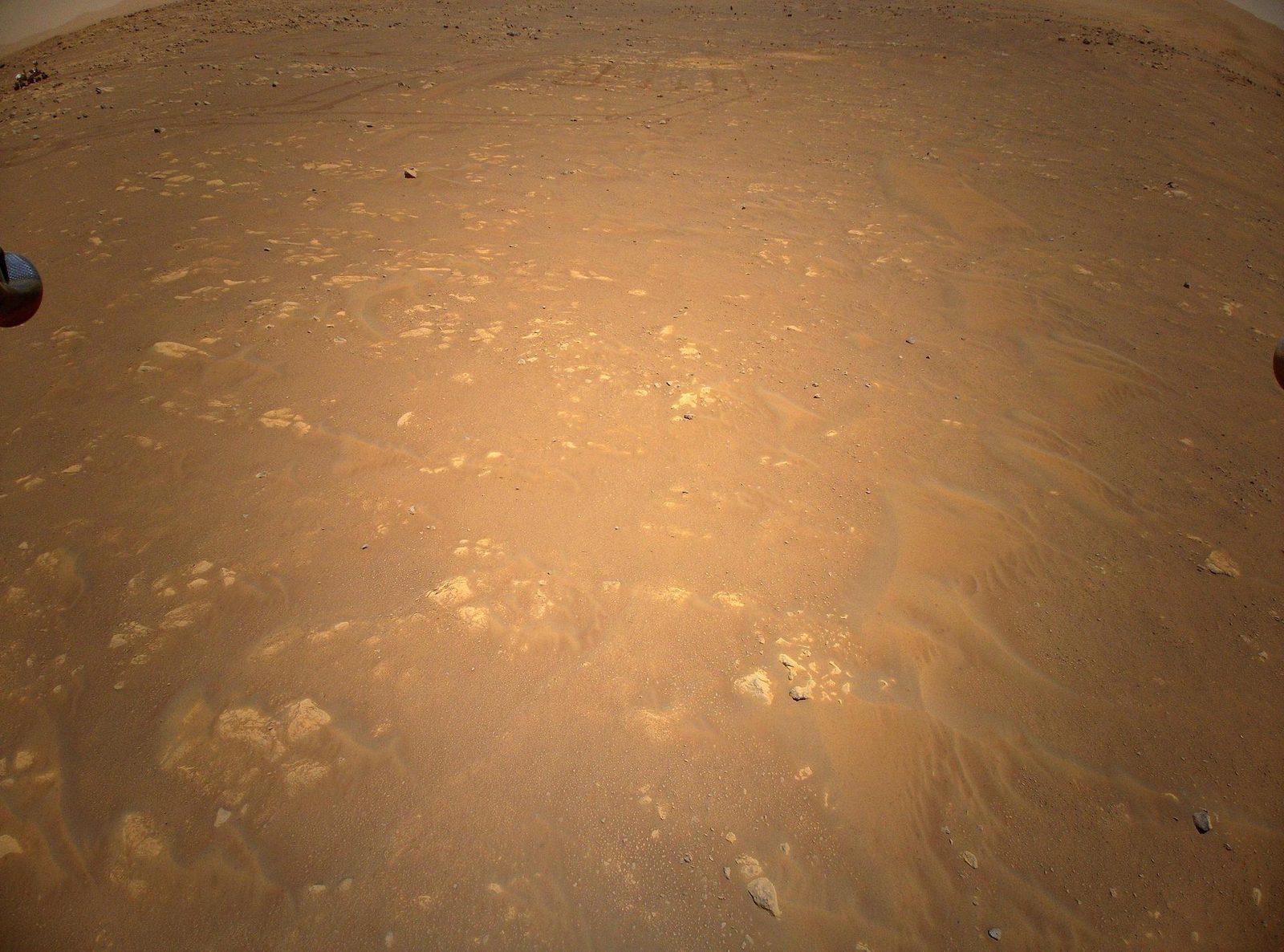
02Approximately 54 seconds after takeoff, an image-pipeline glitch lost an image and gave later images inaccurate timestamps. The system began correcting motion estimates using the wrong times.
NASA's Perseverance Mars rover is visible in the upper left corner of this image the agency's Ingenuity Mars Helicopter took during its third flight, on April 25, 2021.
IngenuityI tilted back and forth while my systems worked harder.
NASA/JPL-Caltech
03The record shows roll and pitch excursions beyond 20 degrees, large control inputs and power spikes. The team had designed stability margin to help the aircraft tolerate errors.
The landing design helped me reach the ground safely.
04During final descent, the navigation algorithm stopped using camera images as designed. The oscillation stopped, and I landed within about five meters of the target. The flight exposed a timing problem for engineers to investigate.

The big idea

Sensors need correct timing as well as correct measurements. Robust design can help a robot survive an unexpected error.

Think about it

Can a clear picture mislead a robot if its timestamp is wrong?

Fact file

Flight 6
22 May 2021
Event date, not the May 27 report publication date.
Source ↗
Anomaly onset
Approximately 54 seconds
Time after takeoff. The report does not specify a 50-millisecond timestamp shift.
Source ↗
Attitude excursions
More than 20 degrees
Reported roll and pitch excursions; not a perfectly symmetric ±20-degree oscillation.
Source ↗

In this chapter: Downward navigation camera, IMU, onboard control and stability margin

Sources: Main record

Machine illustration: AI-made. Photos: NASA Image and Video Library, credited on each picture.

Chapter 2 of 5

Next