Chapter 1 of 5

A place to listen

From an Earth cleanroom to Elysium Planitia

Told in InSight’s imagined voice · the events are real · source
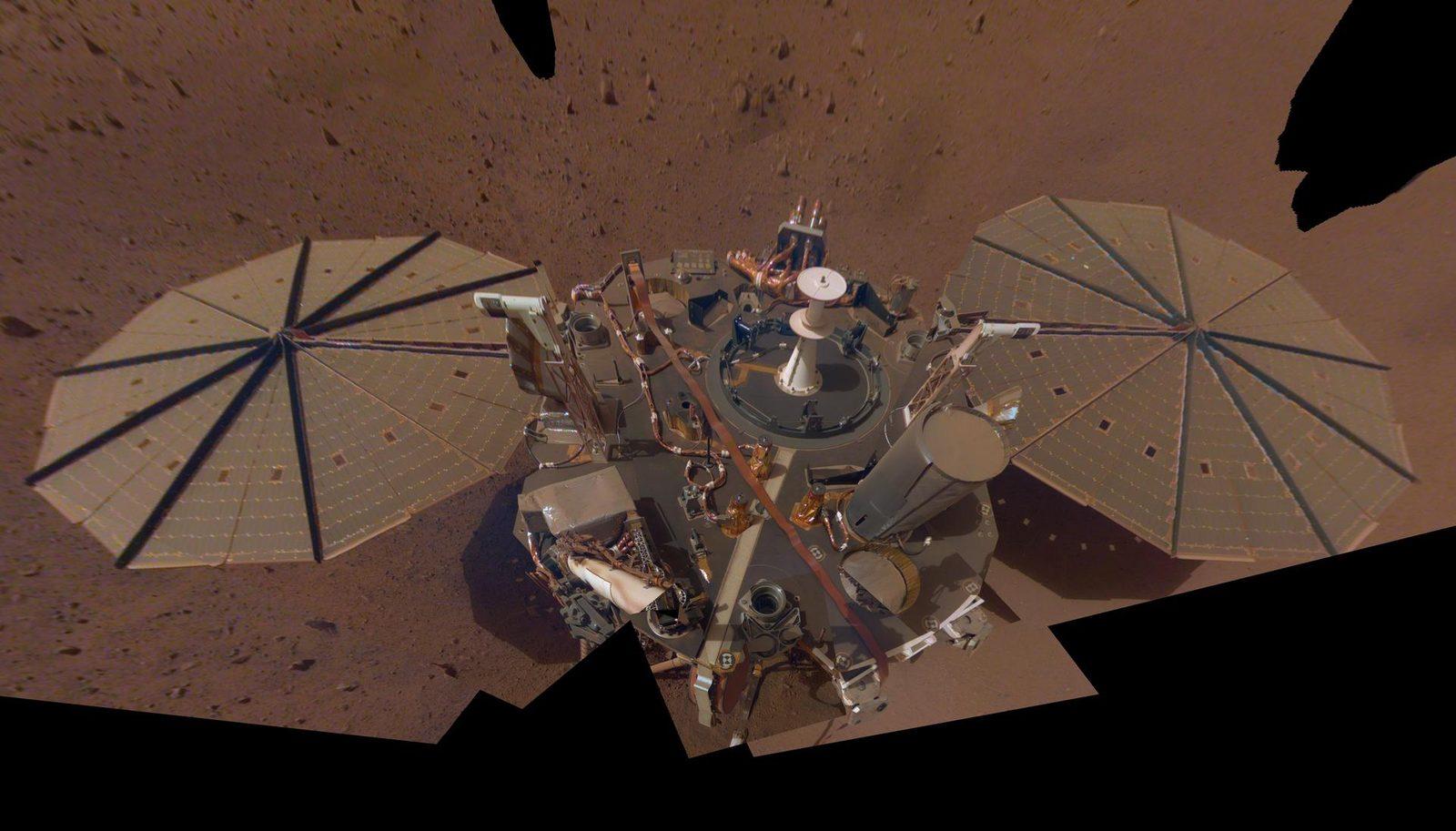
This is NASA InSight's second full selfie on Mars.
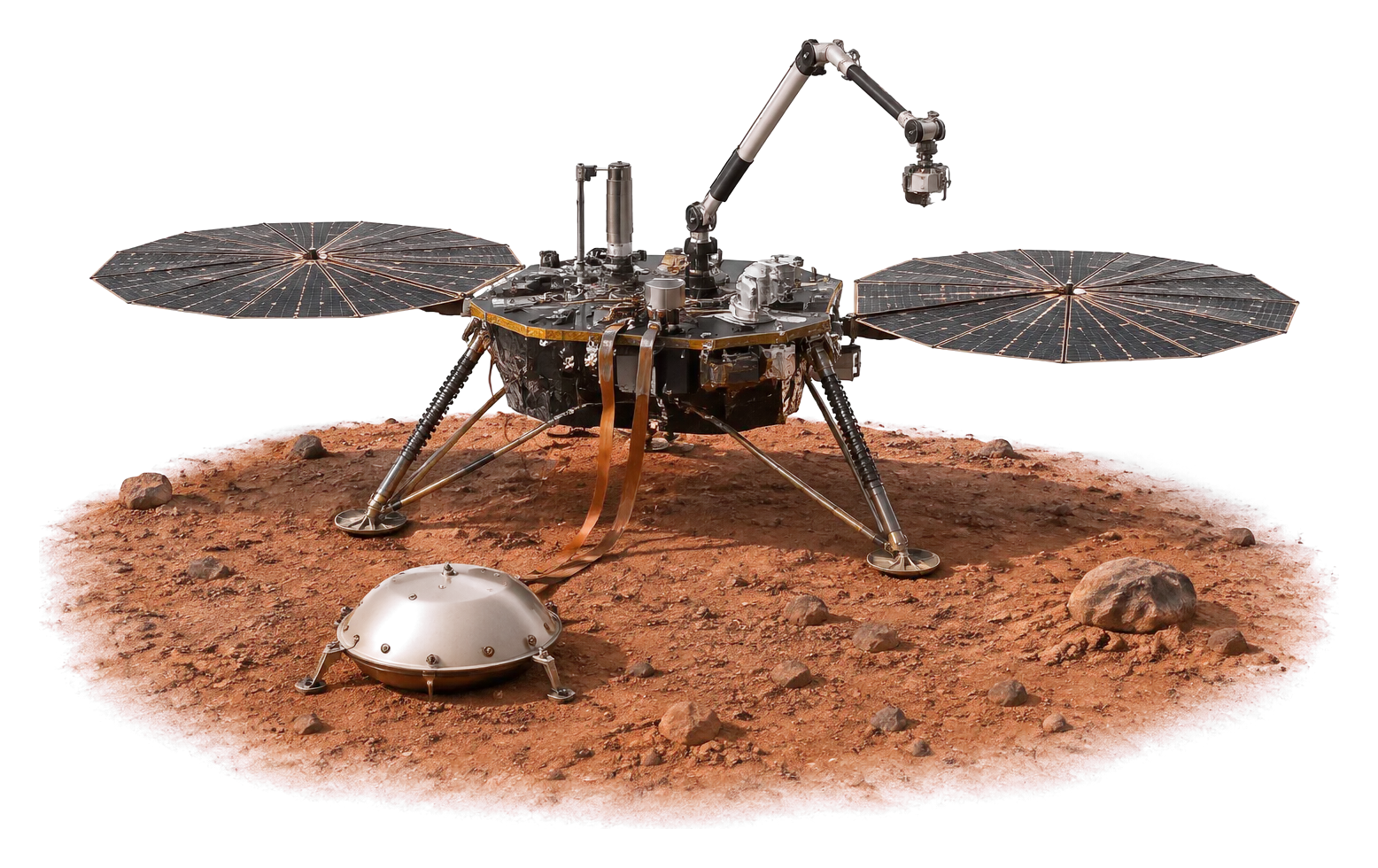
InSightBefore I listened to Mars, people tested my wings on Earth.
NASA/JPL-Caltech
01NASA’s cleanroom photograph shows my solar arrays open during a test on April 30, 2015. Lockheed Martin built me on the proven design of the Phoenix lander.
Two tiny spacecraft shared my launch, not my landing.
02I launched on May 5, 2018. The MarCO CubeSats traveled on their own paths behind me; they were a separate technology demonstration, not passengers on my deck.
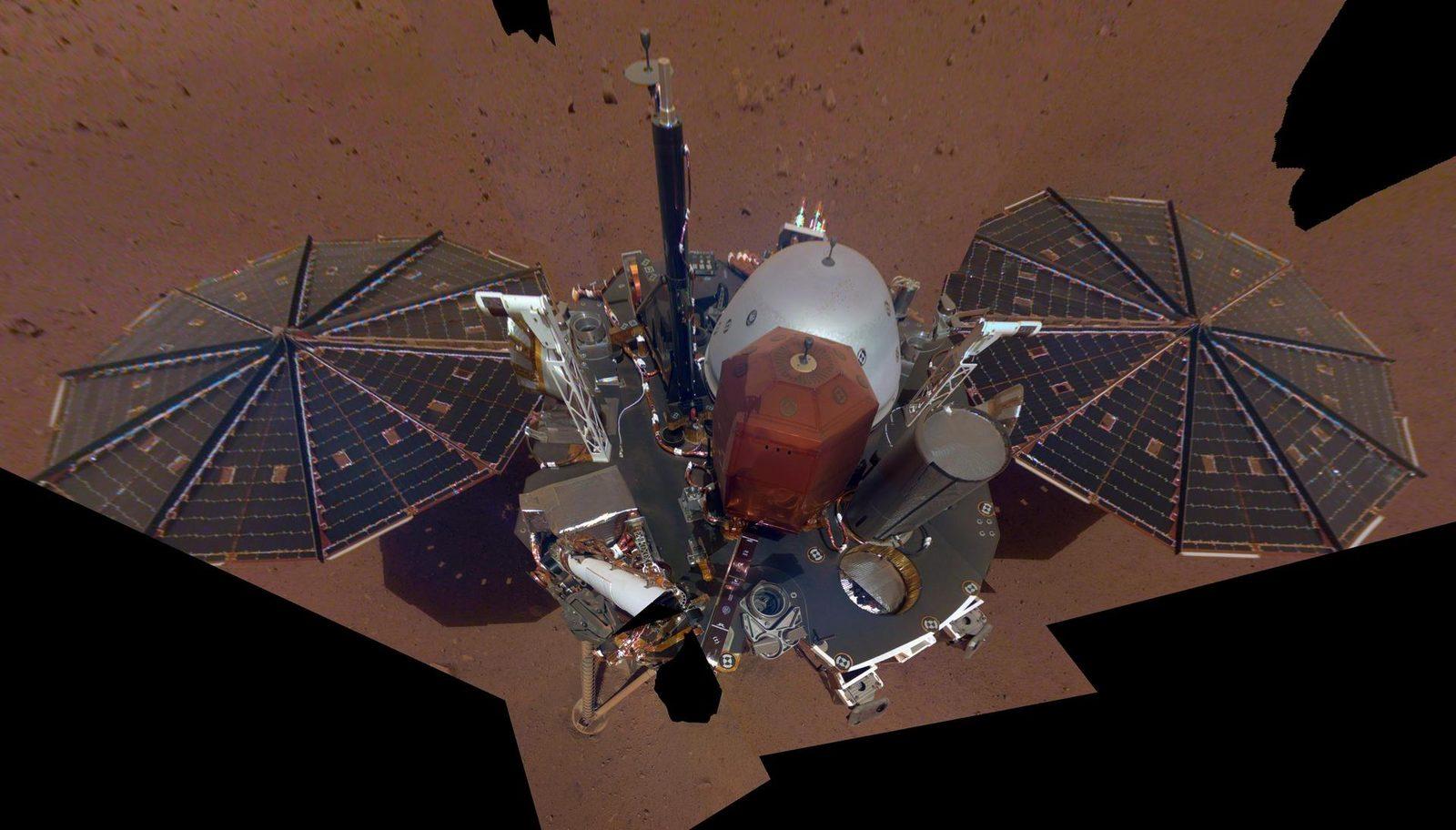
This is NASA InSight's first full selfie on Mars.
InSightOn November 26, I found my place on Mars.
NASA/JPL-Caltech
03I landed on the plain called Elysium Planitia. My job was to stay in one place and investigate the planet’s interior, rather than drive from rock to rock.
My round solar wings powered a laboratory that would not roam.
04With both arrays open, I spanned six meters. My arm would move instruments from the deck to the ground so scientists could study what lay below me.

The big idea

A mission does not need wheels to explore: instruments can investigate beneath a stationary lander.

Think about it

What could a lander learn without driving anywhere?

Fact file

Launch
5 May 2018
NASA mission chronology; Atlas V-401 from Vandenberg Air Force Base.
Source ↗
Landing
26 November 2018
Elysium Planitia. This story does not assign unverified component coordinates.
Source ↗
Open solar-array span
6 meters
Wingspan, not deck diameter; NASA spacecraft specifications.
Source ↗

In this chapter: Stationary lander, two circular solar arrays, robotic arm and the separate MarCO CubeSats

Sources: Main record · InSight · NSSDCA Master Catalog · InSight Spacecraft · NASA Science

Machine illustration: AI-made. Photos: NASA Image and Video Library, credited on each picture.

Chapter 1 of 5

Next