Chapter 4 of 5

Sand in the wind

A careful dust-removal experiment during the extended mission

Told in InSight’s imagined voice · the events are real · source
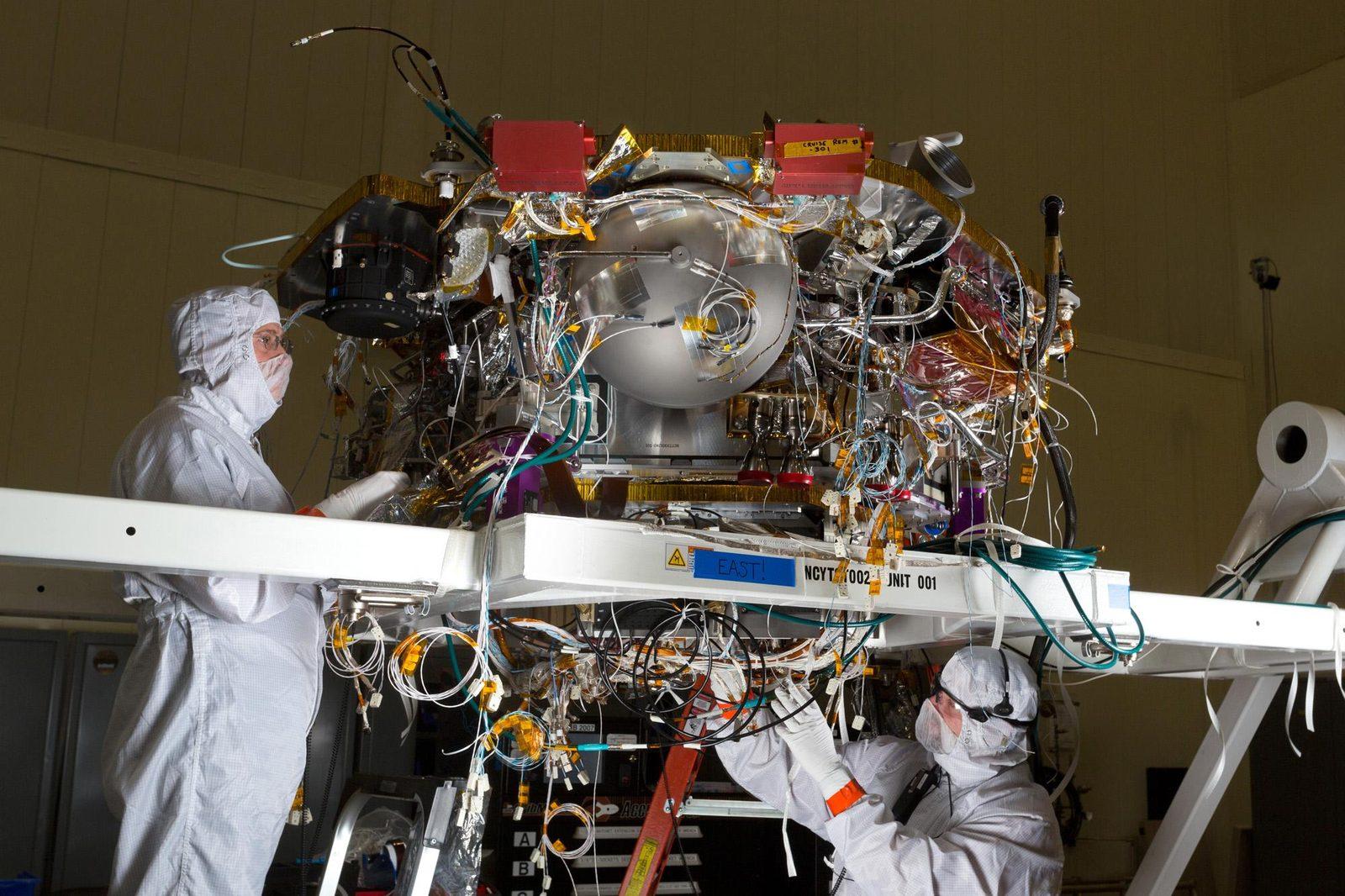
The Mars lander that NASA's InSight mission will use for investigating how rocky planets formed and evolved is being assembled by Lockheed Martin Space Systems, Denver.
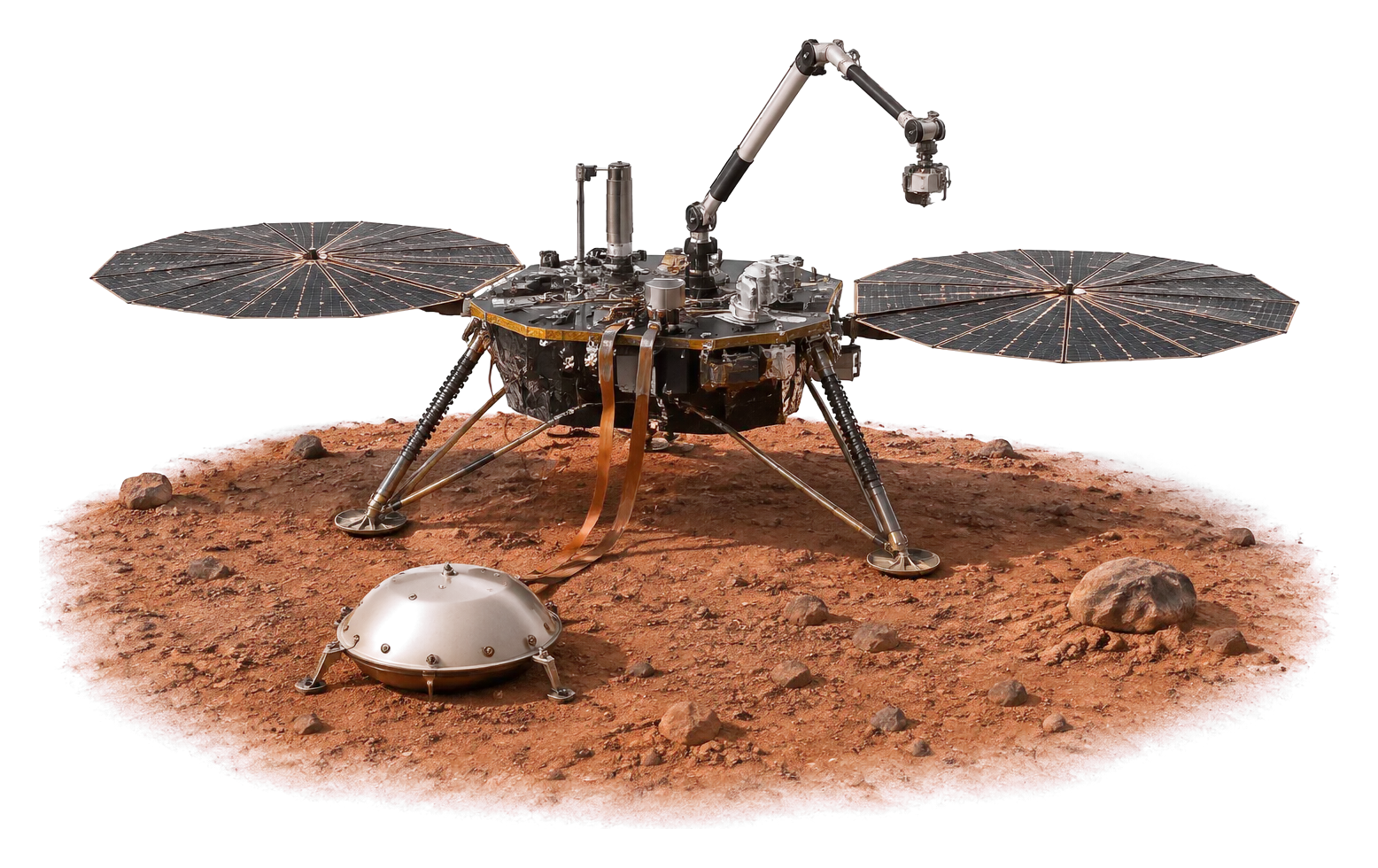
InSightDust on my solar panels left less sunlight for my work.
NASA/JPL-Caltech/Lockheed Martin
01As Mars approached the farthest part of its orbit from the Sun, the team planned to conserve energy. Less sunlight and dusty panels meant fewer resources for instruments and other equipment.
The surprising idea was to use sand—not a brush.
02On May 22, 2021, my scoop trickled sand near a panel, rather than directly on top of it. Wind carried the larger grains across the surface.
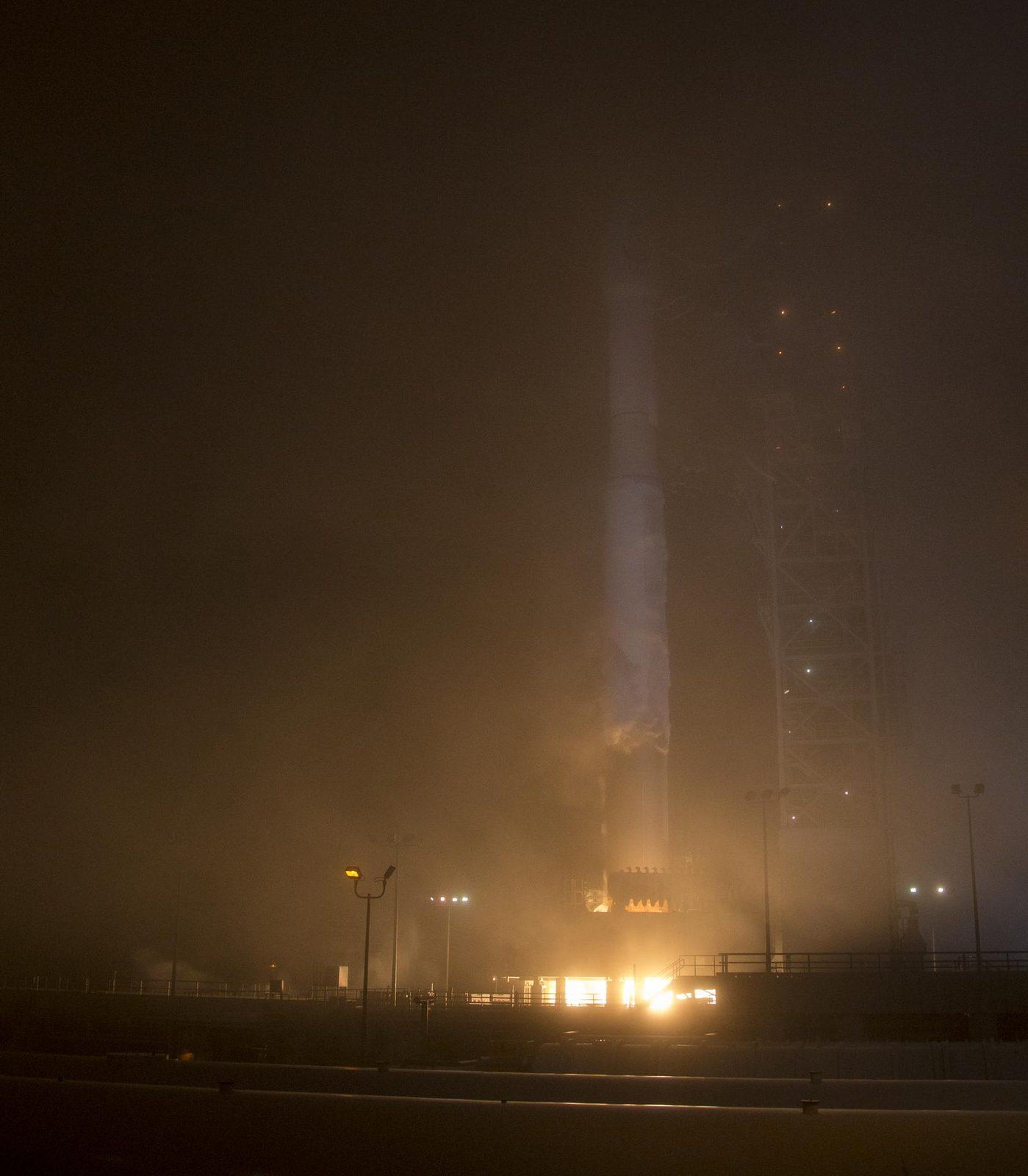
The NASA InSight spacecraft launches onboard a United Launch Alliance Atlas-V rocket, Saturday, May 5, 2018, from Vandenberg Air Force Base in California.
InSightBouncing grains helped carry some smaller dust away.
NASA/Bill Ingalls
03The team explored a process called saltation: grains hop through the air and across a surface. The trial produced a gain of about 30 watt-hours of energy per Martian day.
A little extra energy gave the team more room to work.
04NASA reported that the improvement could delay switching instruments off by a few weeks. It helped our power margin; it was not a permanent cleaning system or a guarantee of recovery.

The big idea

An unexpected material can help solve an engineering problem, but a measured improvement still has limits.

Think about it

Why was this different from dumping sand directly onto a solar panel?

Fact file

Cleaning trial
22 May 2021 / Sol 884
Sand was trickled near the panel around midday Mars time, not scraped across its cells.
Source ↗
Energy gain
About 30 watt-hours per sol
A reported additional daily energy yield, not an instantaneous power reading or a promise of a year’s survival.
Source ↗

In this chapter: Robotic scoop, solar cells and wind measurements

Sources: Main record

Machine illustration: AI-made. Photos: NASA Image and Video Library, credited on each picture.

Chapter 4 of 5

Next