Chapter 1 of 5

A careful arrival

Protecting the experiment before touching Mars

Told in Viking 1’s imagined voice · the events are real · source
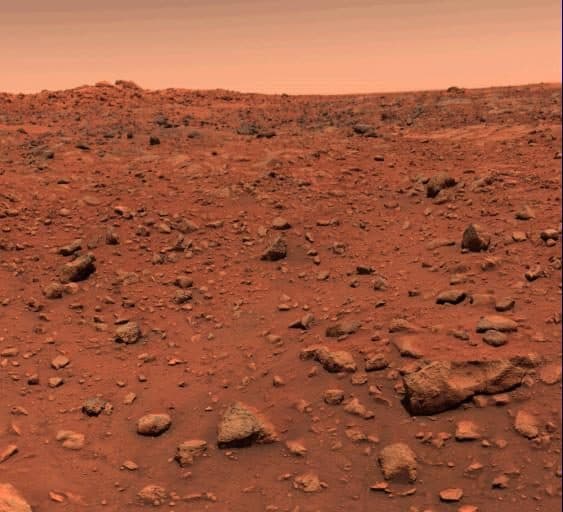
First Color Image From Viking Lander 1
Viking 1Before I could look for life, my team had to protect the question.
NASA/JPL
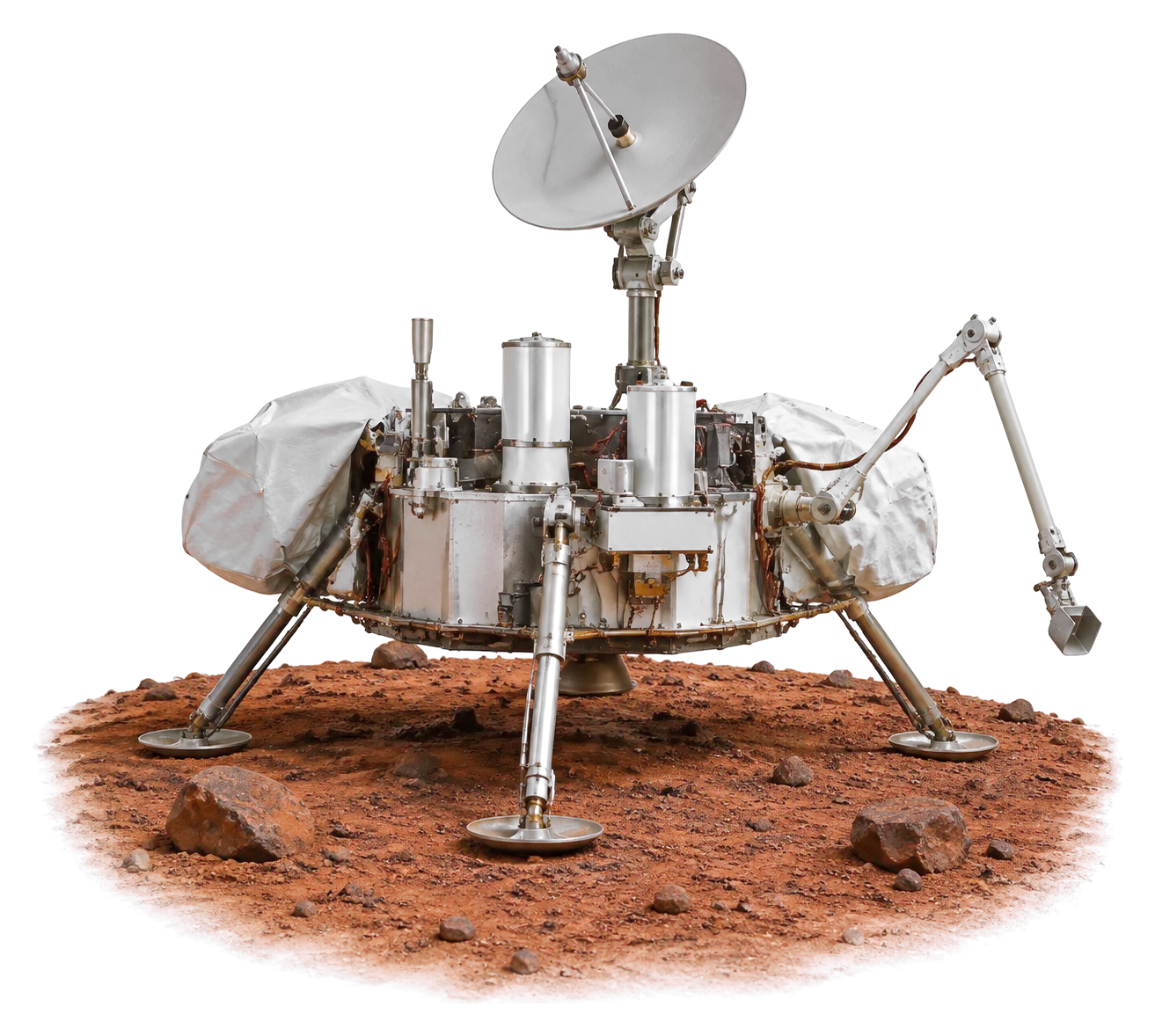
01I am Viking 1, a lander built to study Mars from one place. Before launch, my lander assembly was enclosed in a bioshield and heat-treated to reduce the risk of carrying Earth microbes. Discovering our own hitchhikers would not answer a question about Mars.
A birthday landing had to wait for safer ground.
02After entering Mars orbit in June 1976, my orbiter photographed the planned landing region. It looked rougher than expected. The team postponed the July 4 landing and searched for a safer site. A celebration was less important than a working explorer.
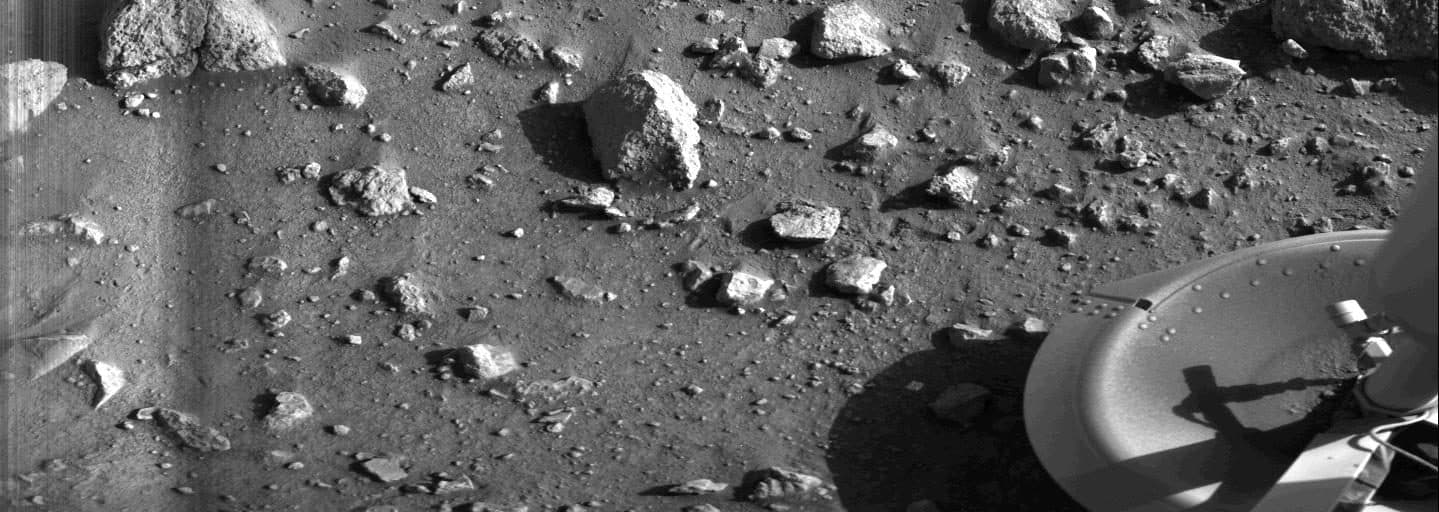
This is the first photograph ever taken on the surface of the planet Mars.
Viking 1Even my landing engines were designed with the soil in mind.
NASA/JPL
03A heat shield, a parachute and then three terminal engines slowed my descent. Each engine used eighteen small nozzles to spread its exhaust, and the fuel was purified to reduce contamination. Engineers wanted to disturb the material I would later examine as little as possible.
My feet reached Mars. My first picture began its trip to Earth.
04I touched Chryse Planitia on July 20, 1976, the seventh anniversary of Apollo 11's Moon landing. NSSDCA records first-image transmission beginning twenty-five seconds after touchdown. Viking became the first truly successful Mars surface mission; Mars 3 had made an earlier landing but lost contact almost immediately.

The big idea

A good experiment begins before the measurement. Clean hardware, a safer site and less-disturbing engines helped protect the science question.

Think about it

Why might carrying Earth microbes make a Mars life experiment misleading?

Fact file

Launch
20 August 1975 / 21:22 UT
Titan IIIE-Centaur from Cape Canaveral Launch Complex 41.
Source ↗
Touchdown
20 July 1976 / 11:53:06 UT
Western Chryse Planitia; approximately 22.27° N, 312.05° E, planetocentric. Not the draft's unverified four-decimal artifact coordinates.
Source ↗
Terminal engines
Three engines / 18 nozzles each
Designed to disperse exhaust and minimize disturbance of the soil.
Source ↗

In this chapter: Bioshield, heat-tested instruments, heat shield, parachute and three terminal engines

Sources: Main record · 45 Years Ago: Viking 1 and 2 off to Mars · NASA History · 45 years ago: Viking 1 Touches Down on Mars · NASA History · On Mars, Chapter 8: Viking Lander — Building a Complex Spacecraft

Machine illustration: AI-made. Photos: NASA Image and Video Library, credited on each picture.

Chapter 1 of 5

Next