Chapter 4 of 5
A patient weather watcher
Long-lived power made repeated measurements possible
Told in Viking 1’s imagined voice · the events are real · source

The big idea
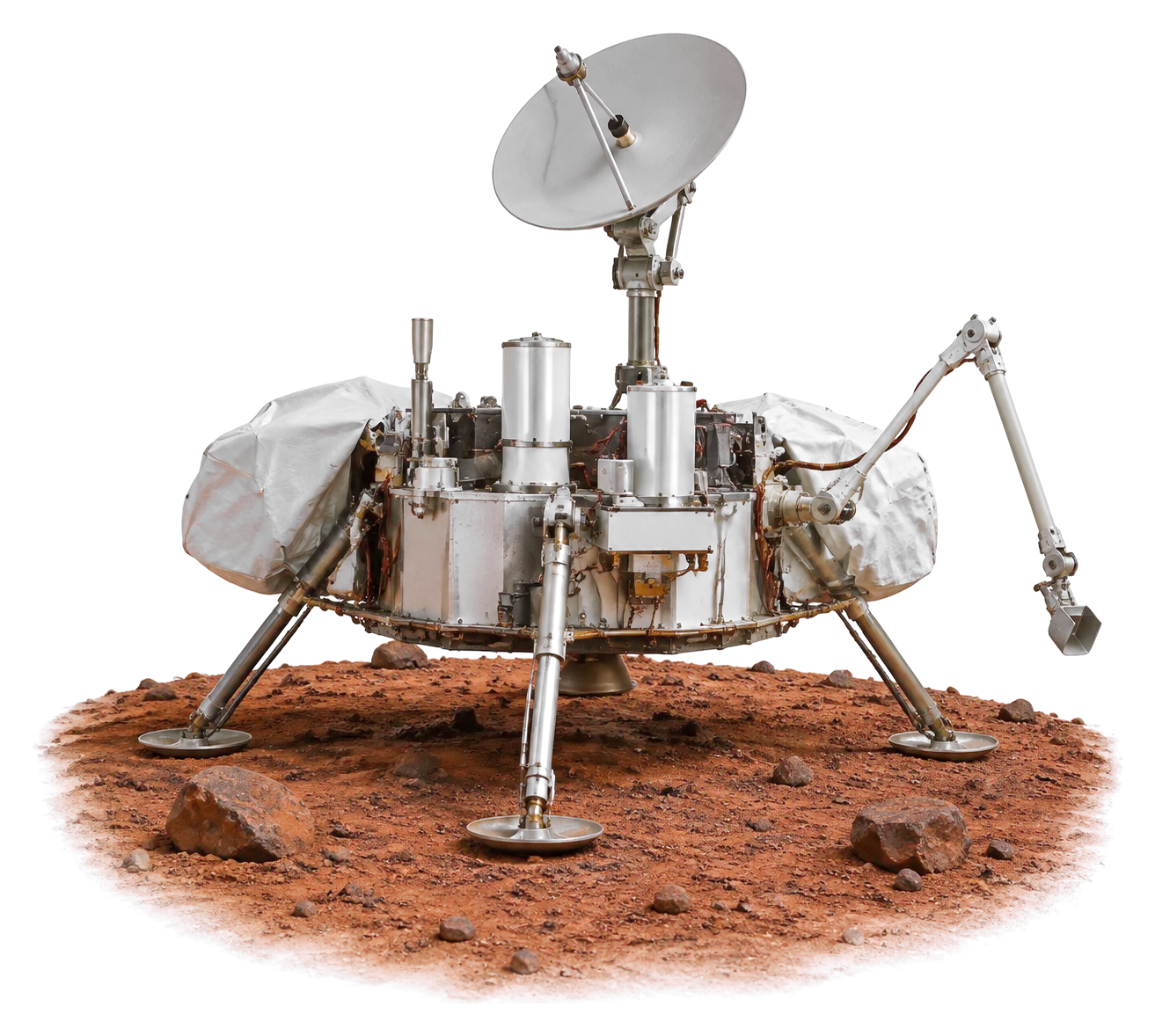
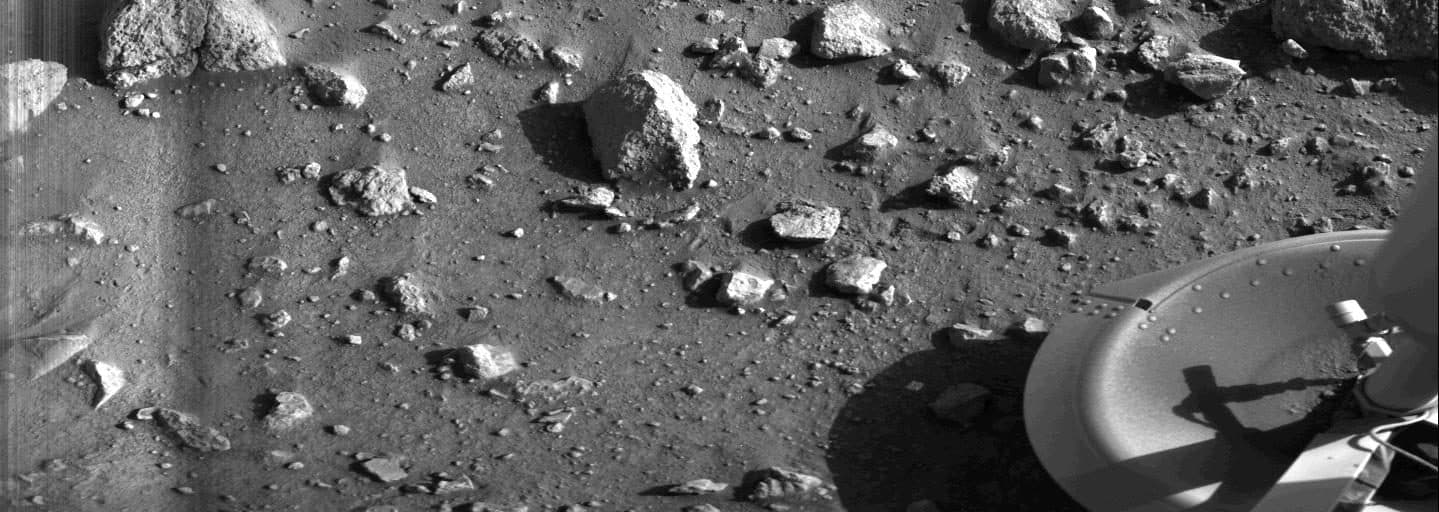
Reliable power and repeated observations turn a snapshot into a record. Communications hardware can also make precise scientific measurements.
Think about it
What can a year of weather measurements tell us that one photograph cannot?
Fact file
- Surface endurance
- 2,245 Martian sols
- NASA History's reported duration. More than six Earth years; no exact Earth-day conversion or four-Martian-year claim is added.
- Source ↗
- Power
- Two RTGs plus rechargeable batteries
- Heat from natural plutonium-238 decay supplies electricity. The catalog's nominal 70 W total and 30 W-per-unit prose are retained as differing descriptions, not a constant-output guarantee.
- Source ↗
- Radio experiment
- November 1976 / solar conjunction
- Viking radio links tested the predicted additional travel time near the Sun. Not a proof of every aspect of relativity.
- Source ↗
In this chapter: Two plutonium-238 RTGs, rechargeable batteries, weather sensors and radio links
Sources: Main record · Viking 1 Lander · NSSDCA Master Catalog · Viking Spacecraft and Science · NASA Science · 45 Years Ago: Viking 1 and 2 off to Mars · NASA History · Mars: The Viking Discoveries · NASA EP-146 (1977) · The Viking Lander Monitor Mission · JPL Publication 82-107
Machine illustration: AI-made. Photos: NASA Image and Video Library, credited on each picture.