Chapter 5 of 5

A relay and a resting place

Sending stored observations home, battery failure and later identification

Told in Viking 2’s imagined voice · the events are real · source
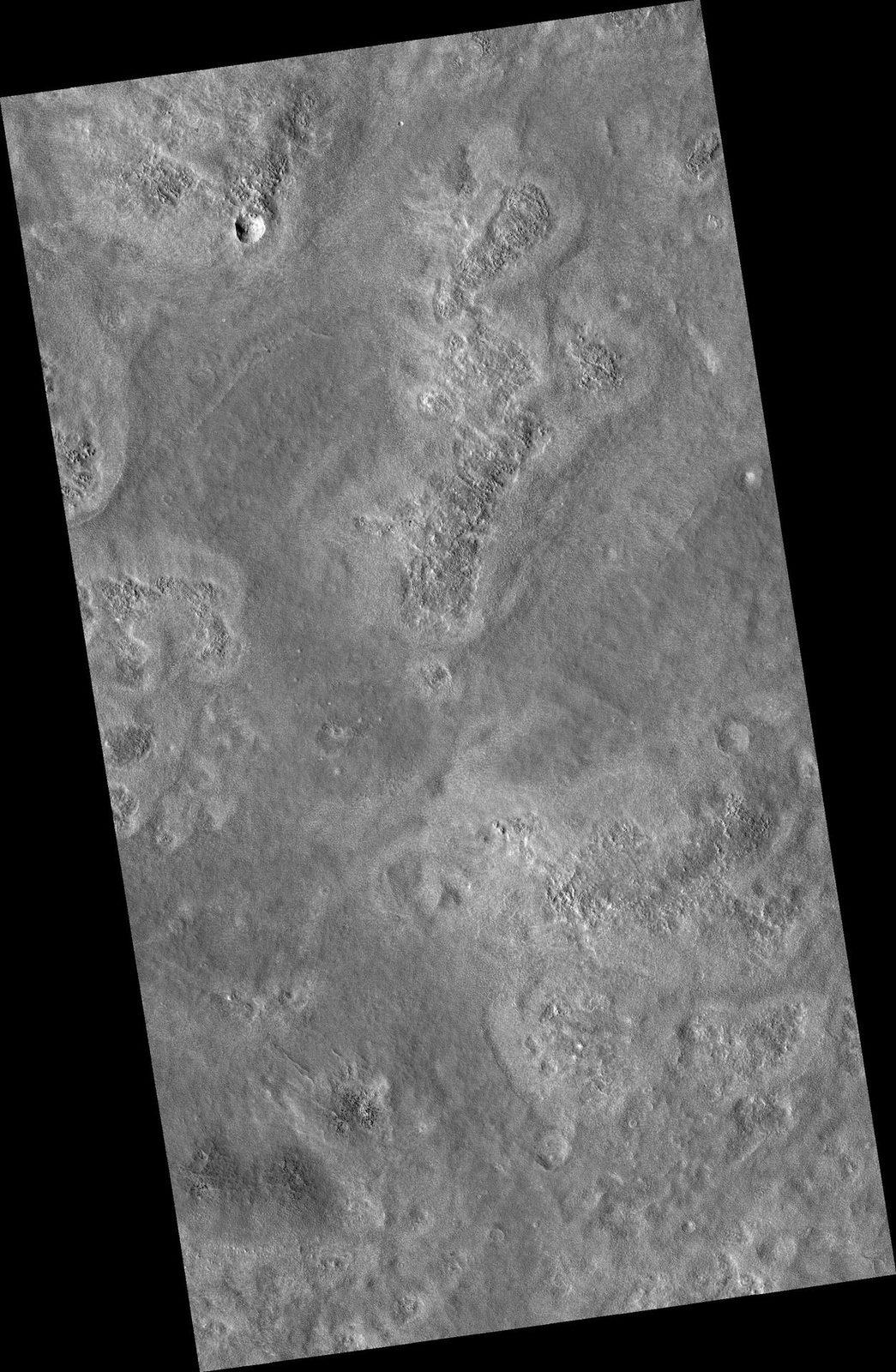
Plains West of Viking Lander 2
Viking 2A photograph needed more than a camera to reach home.
NASA/JPL/Univ. of Arizona
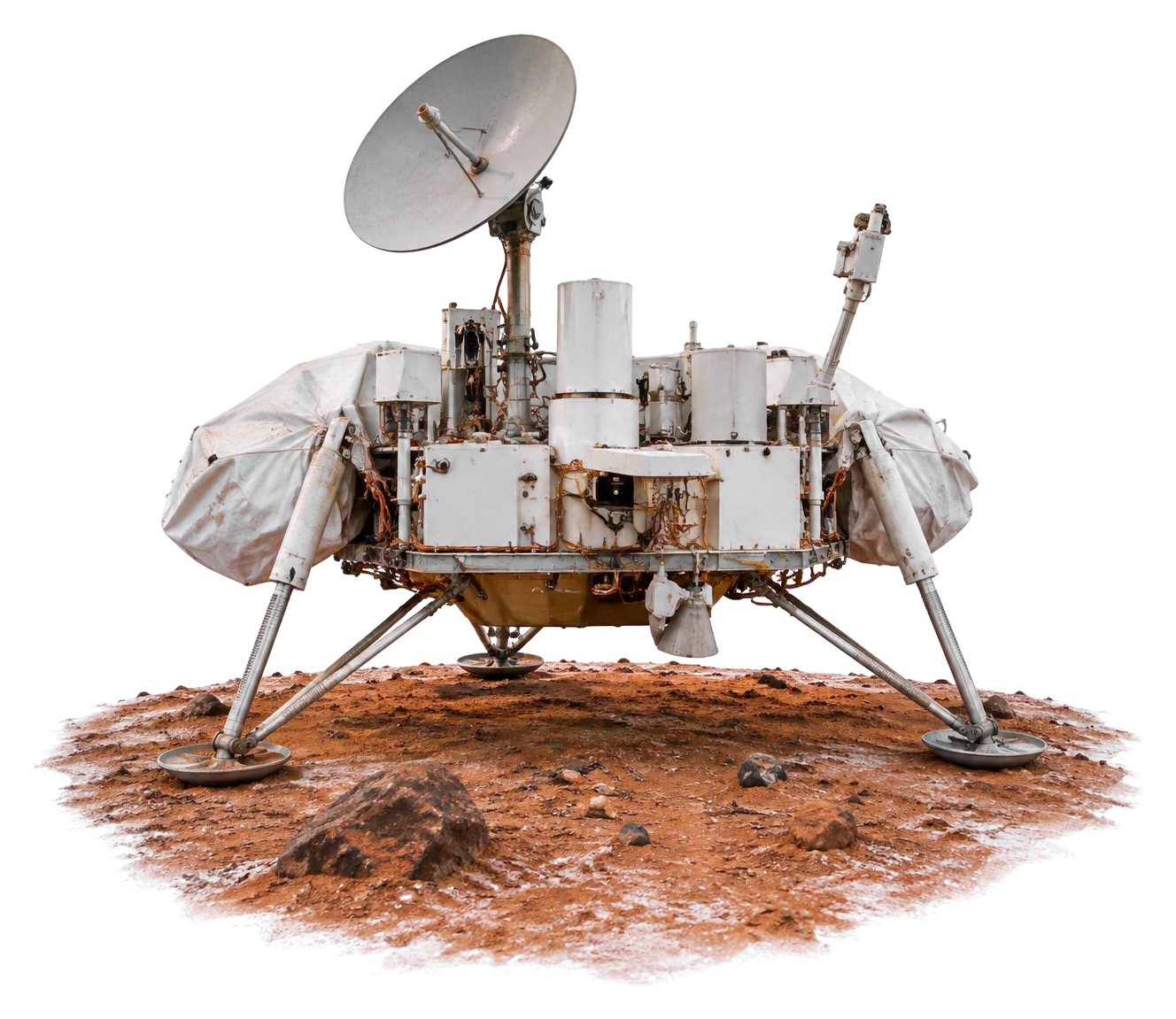
01My recorder could hold observations, and a UHF radio could send them to an orbiter for relay. The 1979 frost caption identifies Viking Orbiter 1 as the spacecraft that delivered that picture to Earth. Storage, a passing relay and the Earth link each had a role.
Long-lived generators did not make my batteries last forever.
02Two RTGs supplied electricity, while rechargeable batteries supported demanding operations. NSSDCA reports 1,281 Mars days of surface work before battery failure in April 1980. The mission ended far beyond its initial planned visit, but there was no recorded machine farewell.
Viking Lander 2 Gerald A.
Viking 2My resting place received a name that remembered a person too.
NASA/JPL-Caltech/University of Arizona
03In July 2001, NASA renamed the lander the Gerald Soffen Memorial Station in honor of the Viking project scientist. Remembering this hardware also means remembering the teams who designed, operated and questioned its experiments.
A later orbital image connected my old surface view with a precise place.
04In November 2006, HiRISE identified my lander by matching orbital terrain with topography derived from my surface observations. Other entry-hardware locations were described as candidates. Some of the new image was blurred by spacecraft motion; finding the lander did not reveal whether its electronics still worked.

The big idea

A communications chain makes remote science possible. Older surface records can identify hardware in later images, even after that hardware stops transmitting.

Think about it

How can an old landscape measurement help identify a lander in a new orbital image?

Fact file

Surface operations
1,281 Mars days
NSSDCA reports battery failure April 11, 1980; NASA Science gives April 12 as mission end.
Source ↗
Memorial name
Gerald Soffen Memorial Station / July 2001
Honors Viking project scientist Gerald Soffen.
Source ↗
HiRISE observation
PSP_001501_2280 / 21 November 2006
Original 31 cm/pixel; map-projected 25 cm/pixel. Landed hardware confirmed; entry hardware remains candidate identifications.
Source ↗

In this chapter: Tape recorder, UHF relay, RTGs, rechargeable batteries and HiRISE

Sources: Main record · Ice on Mars Utopia Planitia Again · NASA Photojournal PIA00571 · Viking 2 · NASA Science · Viking 2 Orbiter · NSSDCA · Viking Lander 2 (Gerald Soffen Memorial Station) · HiRISE

Machine illustration: AI-made. Photos: NASA Image and Video Library, credited on each picture.

Chapter 5 of 5

Next book