Chapter 2 of 5

Cosmic tag

Tandem gravity ranging and student MoonKAM imaging

Told in GRAIL’s imagined voice · the events are real · source
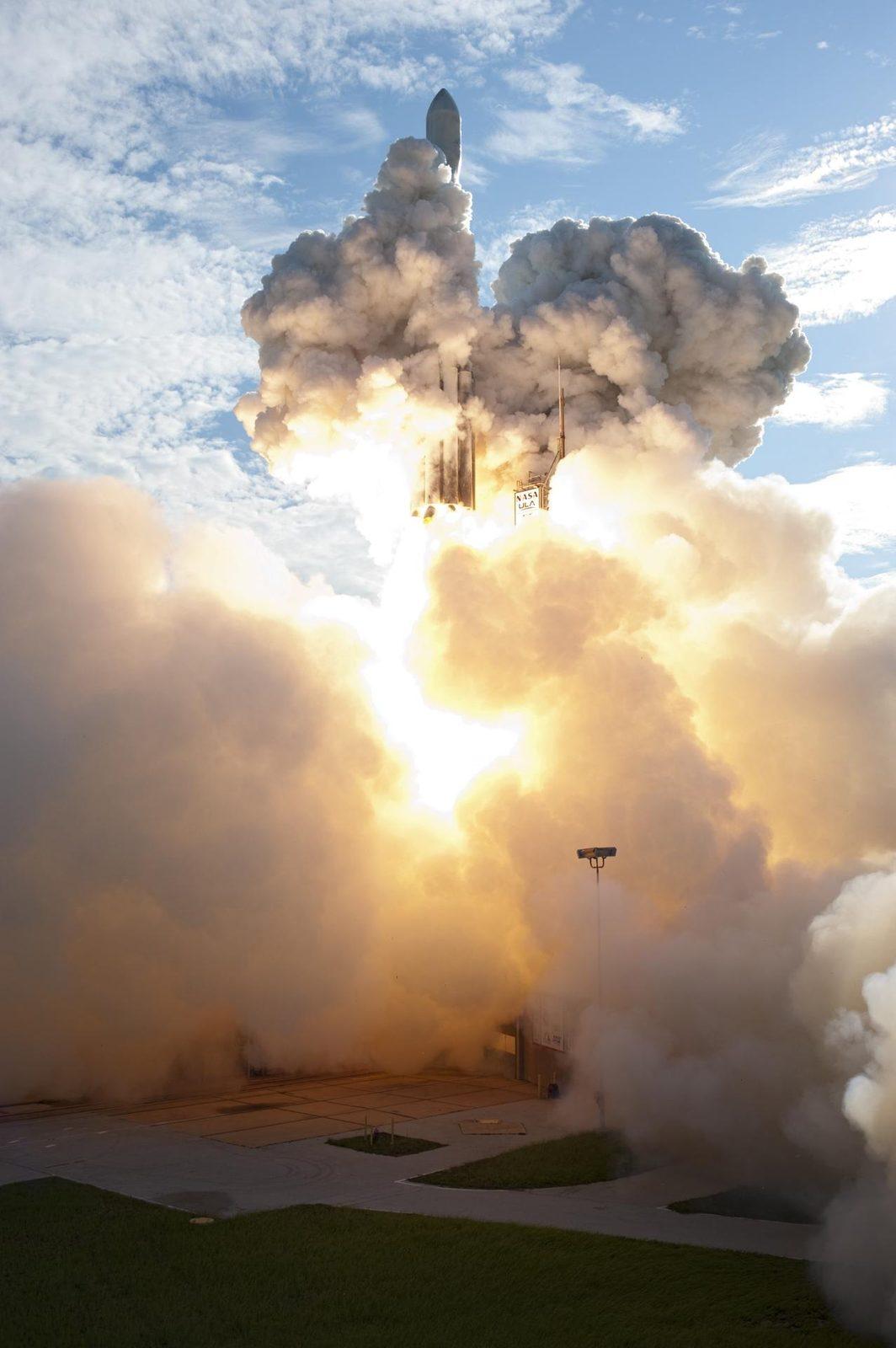
CAPE CANAVERAL, Fla.
GRAILWe flew single file over both poles.
NASA/Tony Gray and Tim Powers
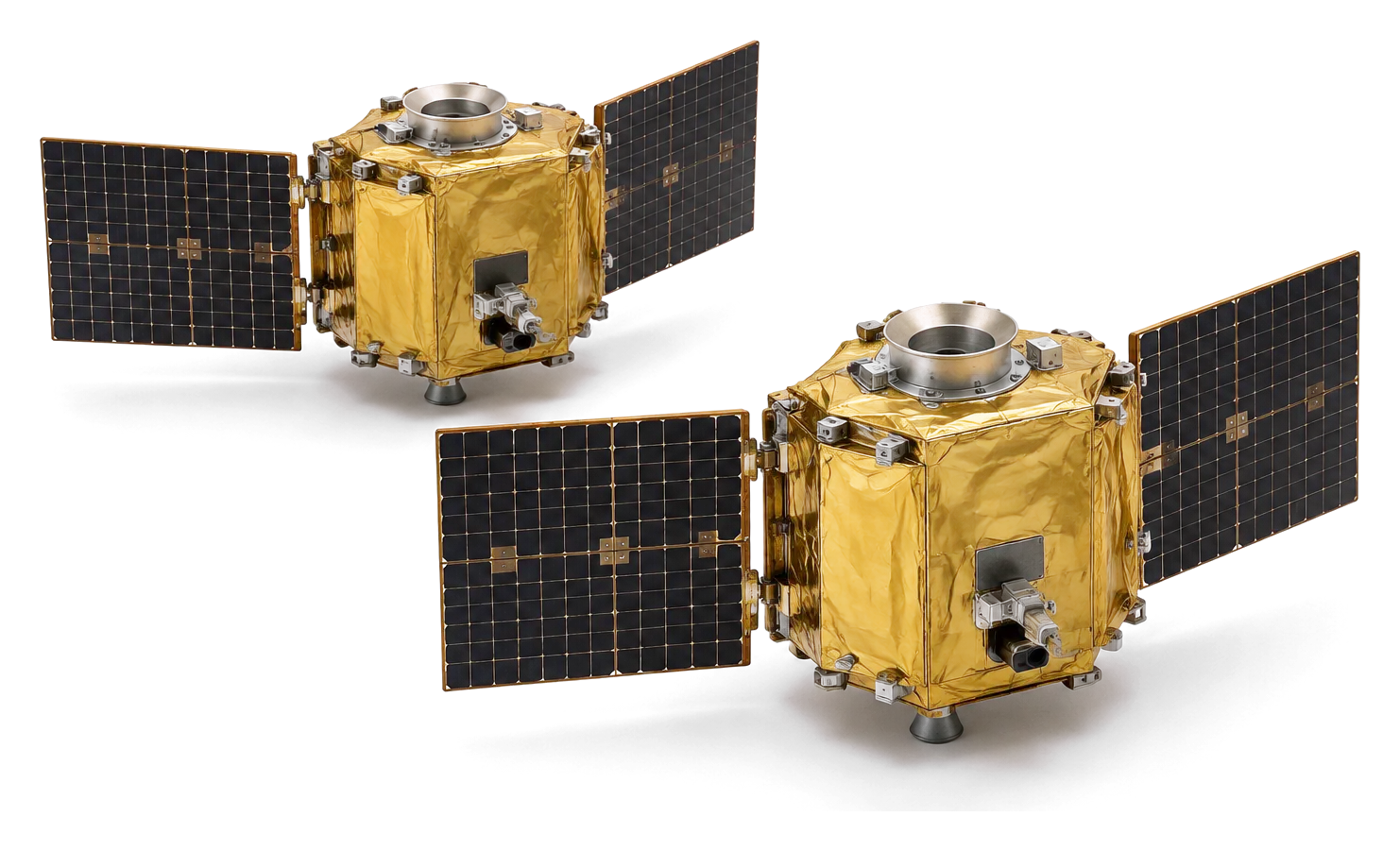
01Once in orbit, we flew one behind the other in polar paths, separated by roughly 175 to 225 kilometres. We did not point our main science instrument down at the ground like a camera. Instead, we stared at each other.
Gravity changed the game between us.
02Our Ka-band radio link measured how fast the distance between the twins changed — called range-rate. When one of us was pulled by extra mass below, our separation speed changed for a moment, then changed again as the other twin reached the same place. Those tiny speed changes became a gravity map.
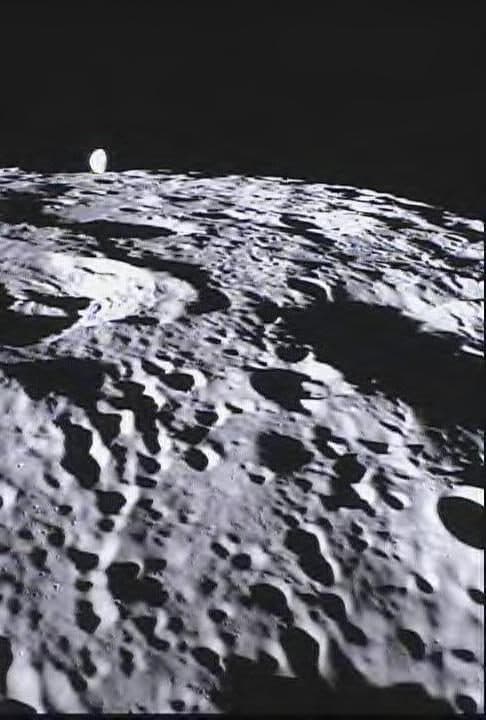
This image of the far side of the lunar surface, with Earth in the background, is of crater De Forest and was taken by NASA MoonKAM system onboard the Ebb spacecraft.
GRAILWe could map the far side too.
NASA/Caltech-JPL/MIT/SRS
03Because the twins measured each other directly, they did not need to be seen from Earth at every instant to keep working. Their paired signals kept recording how lunar gravity tugged their dance, including over the far side.
Students helped us take pictures.
04Alongside the gravity instrument, each of us carried MoonKAM cameras for middle-school students. NASA reports more than 115,000 total MoonKAM images of the lunar surface from targets proposed by students. The pictures were education payload, not the gravity measurement itself.

The big idea

Gravity can be measured by watching how it changes the motion between two spacecraft, not only by photographing the surface.

Think about it

If two satellites only measure each other, how can they learn where hidden mass is?

Fact file

What LGRS measures
Range-rate (meters per second)
NSSDCA describes high-precision range-rate between the twins; PDS describes instantaneous relative range-rate. It is not a single distance in microns.
Source ↗
MoonKAM images
More than 115,000 total images
NASA’s impact article counts total MoonKAM images from student-selected targets.
Source ↗

In this chapter: Lunar Gravity Ranging System (Ka-band link), ultra-stable oscillators and MoonKAM cameras

Sources: Main record · GRAIL-A (Ebb) · NSSDCA · PIA13966 · NASA Image Library

Machine illustration: AI-made. Photos: NASA Image and Video Library, credited on each picture.

Chapter 2 of 5

Next