Chapter 1 of 5

Carrying names and a microphone

Launch to Mars’s south polar layered terrain with education cargo

Told in Mars Polar Lander’s imagined voice · the events are real · source
KENNEDY SPACE CENTER, FLA.
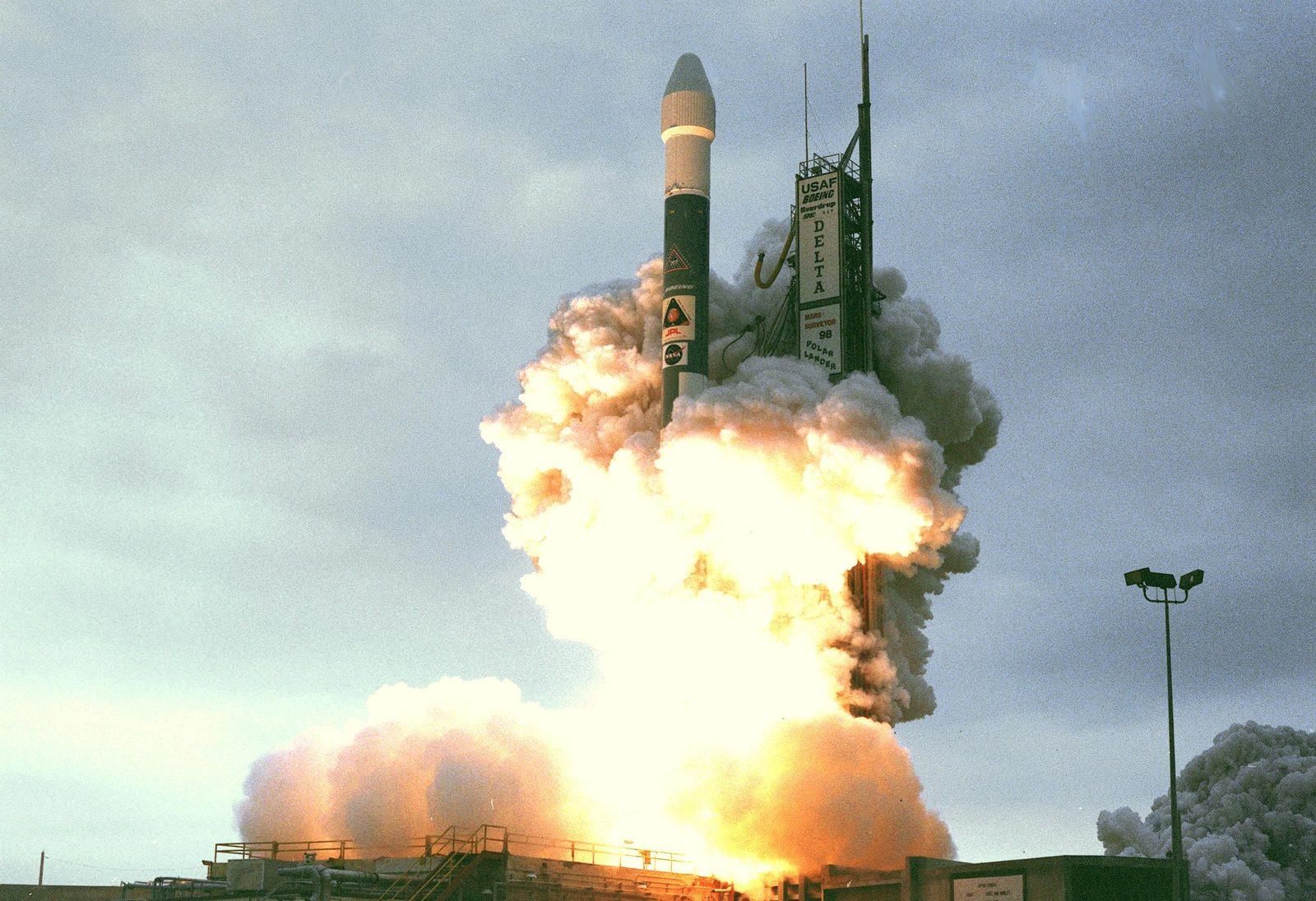
Mars Polar LanderI was bound for the bottom of Mars.
NASA/KSC
01I am Mars Polar Lander. I launched on January 3, 1999, on a Delta II toward the southern polar layered terrain, between 73 and 76 degrees south. No earlier lander had aimed so close to a pole, where stacked ice and dust might record the climate history of Mars.
I carried a lander full of firsts.
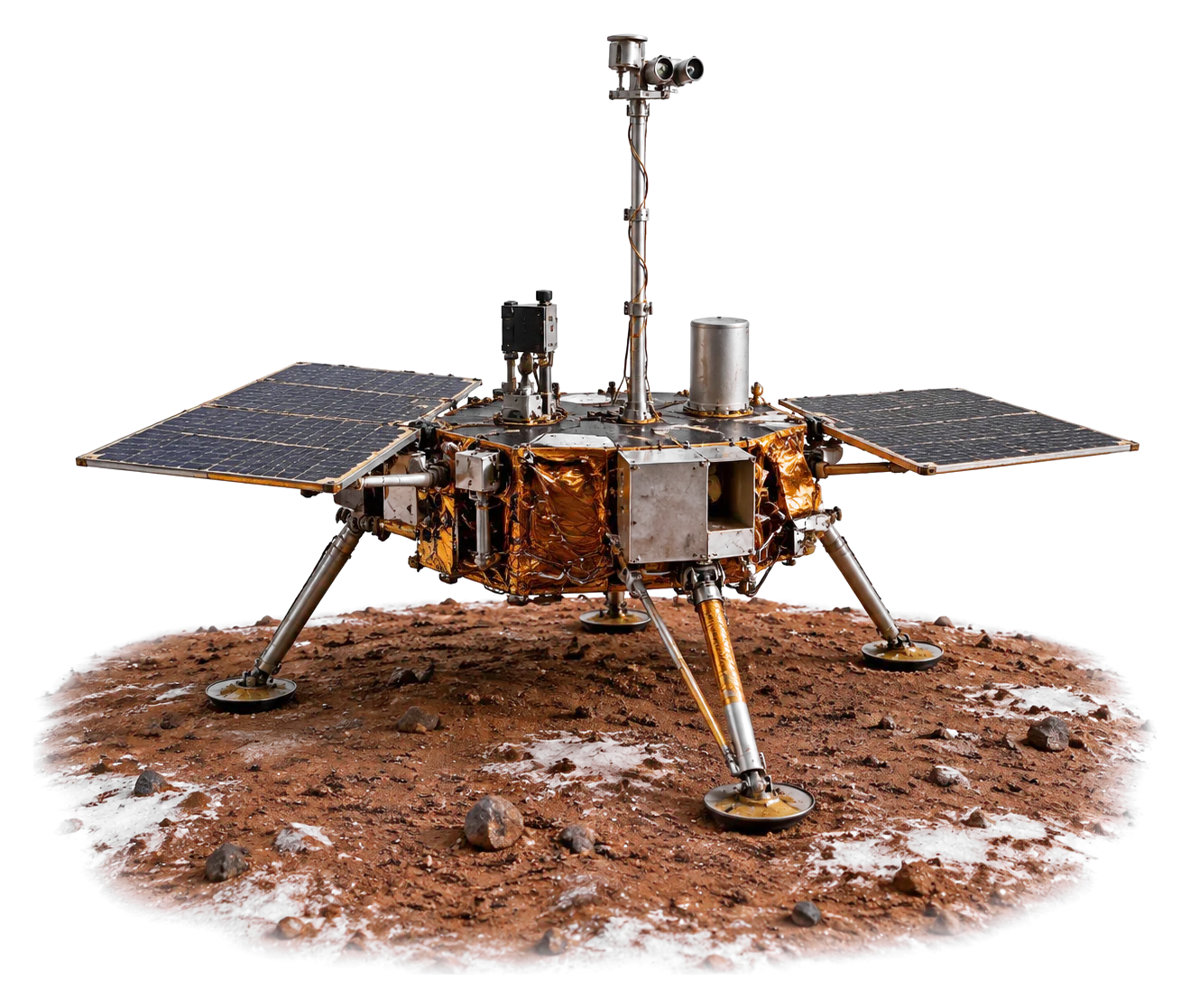
02My science package included a robotic arm and camera, a stereo imager and weather mast, a gas analyzer, and a Russian laser ranger. I also carried a microphone — an attempt to let Earth hear Mars for the first time — and a tiny artifact bearing schoolchildren’s names.
KENNEDY SPACE CENTER, FLA.
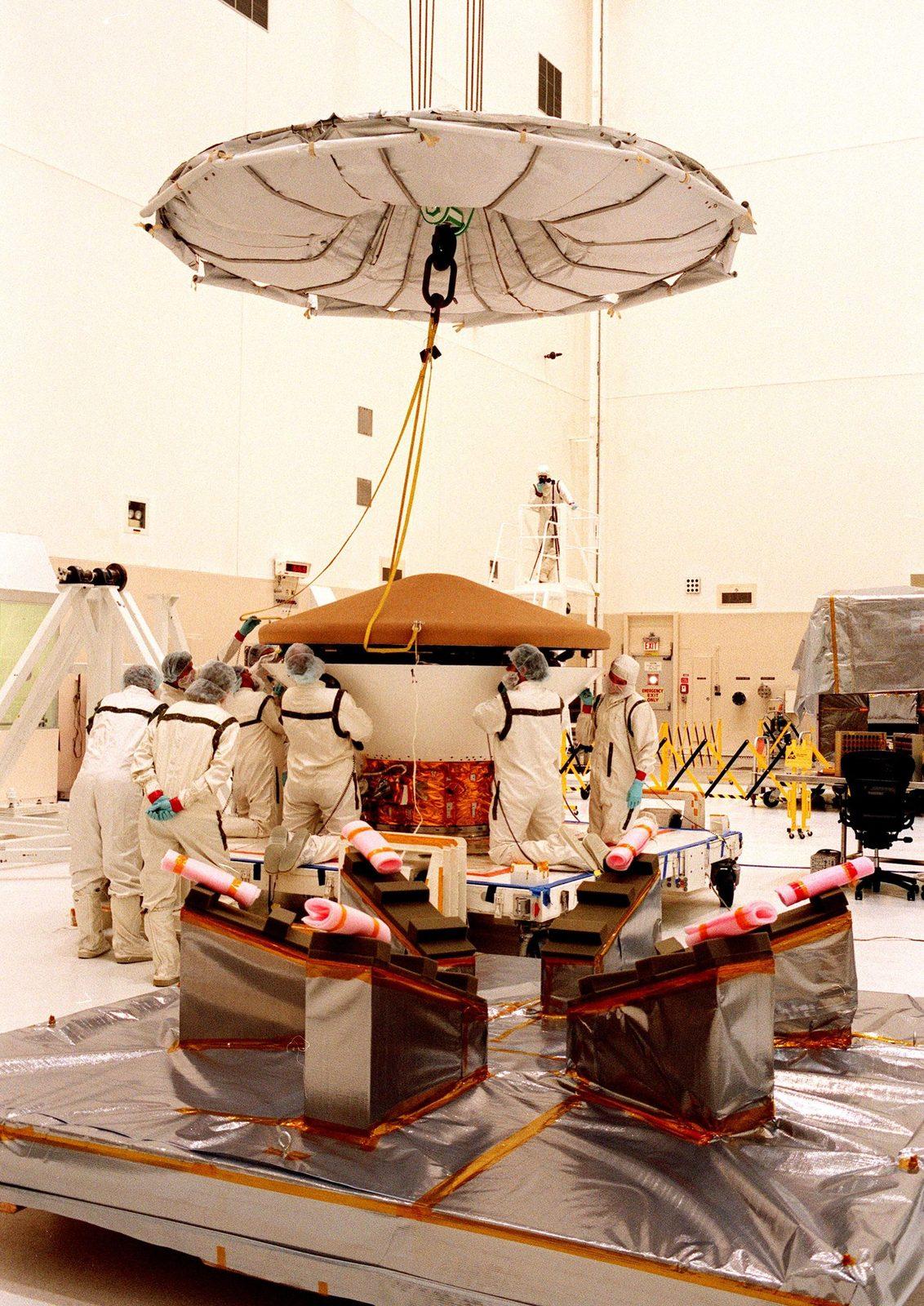
Mars Polar LanderMy touchdown was planned in late spring light.
NASA/KSC
03The plan called for a direct atmospheric entry in late southern spring, when the Sun would stay above the horizon at the landing site. That daylight was meant to give the solar-powered lander time to work before polar darkness returned.
Then my radio went quiet by design.
04My medium-gain antenna was turned for entry, and the last telemetry was sent just before atmospheric entry on December 3, 1999. After that, JPL had to wait in silence for the post-landing signal that was due about 24 minutes after touchdown.

The big idea

Exploring a hostile polar site requires planning for darkness, cold, and the data that will prove the spacecraft survived.

Think about it

Why aim a lander at a pole instead of a warmer place?

Fact file

Launch
3 January 1999
Delta II from Cape Canaveral; cruise about 11 months to Mars.
Source ↗
Target terrain
Between 73° S and 76° S
Southern polar layered terrain, less than 1000 km from the south pole (NSSDCA).
Source ↗
Last telemetry
3 December 1999, just before entry
NSSDCA records final tracking about 19:45–20:00 UT; the turn to entry attitude followed about 20:04.
Source ↗

In this chapter: Delta II, Mars Volatiles and Climate Surveyor, Russian lidar, Planetary Society microphone and student names artifact

Sources: Main record · Mars Polar Lander · NSSDCA

Machine illustration: AI-made. Photos: NASA Image and Video Library, credited on each picture.

Chapter 1 of 5

Next