Chapter 2 of 5

Amundsen and Scott

Two Deep Space 2 microprobes designed for hard impact and subsurface sampling

Told in Mars Polar Lander’s imagined voice · the events are real · source
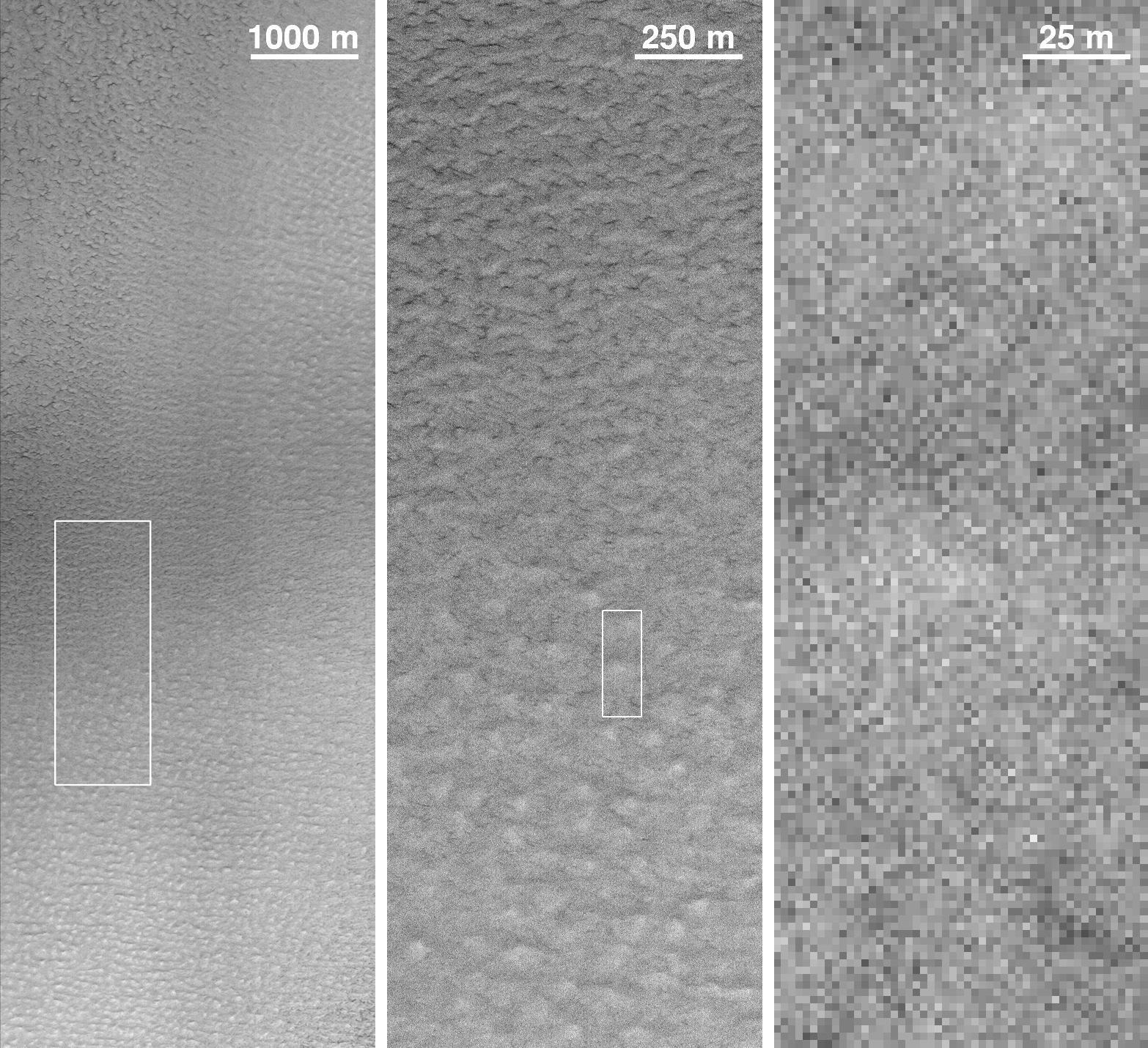
Mars Polar Lander: The Search Begins
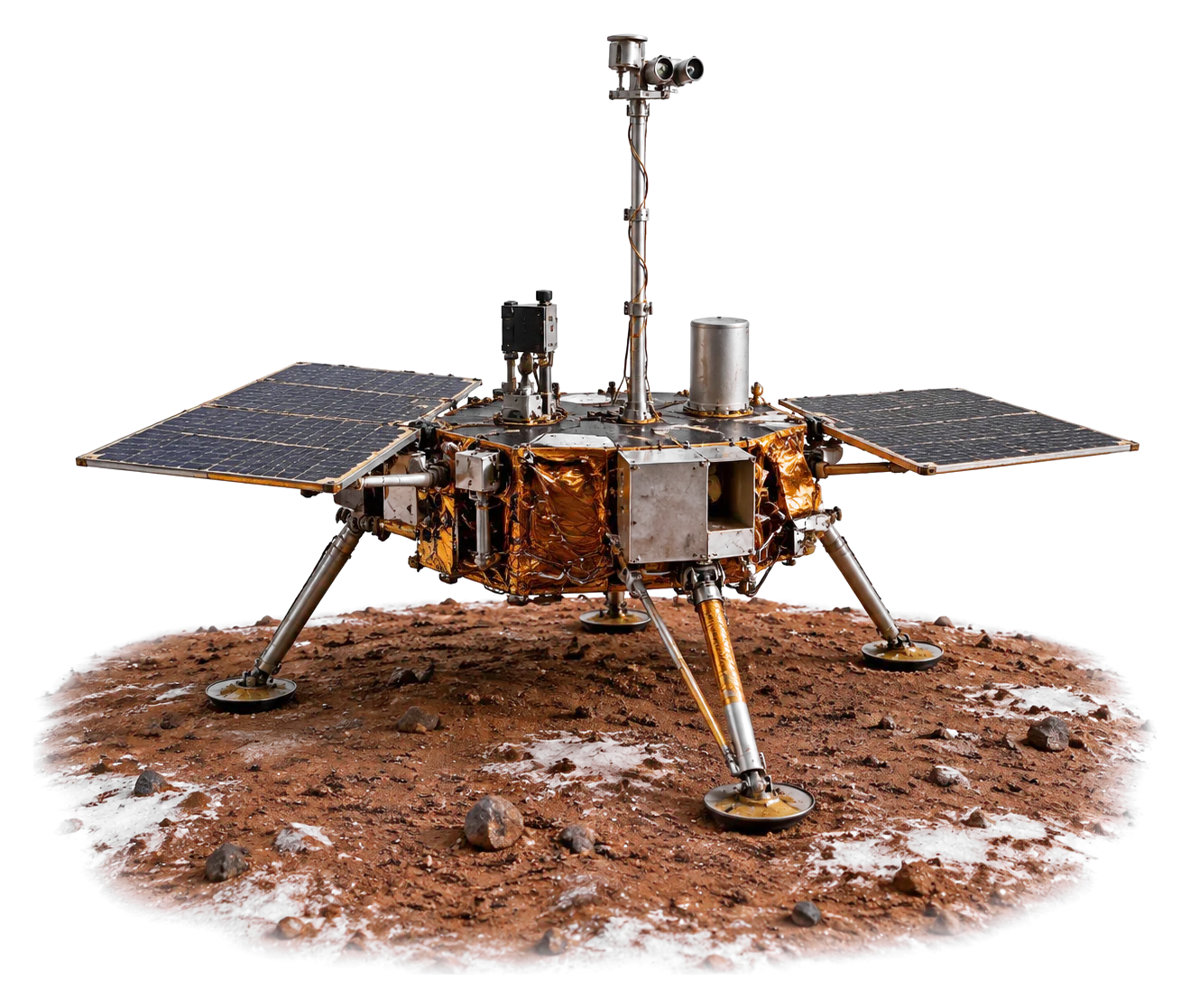
Mars Polar LanderI traveled with two small daredevils.
NASA/JPL/MSSS
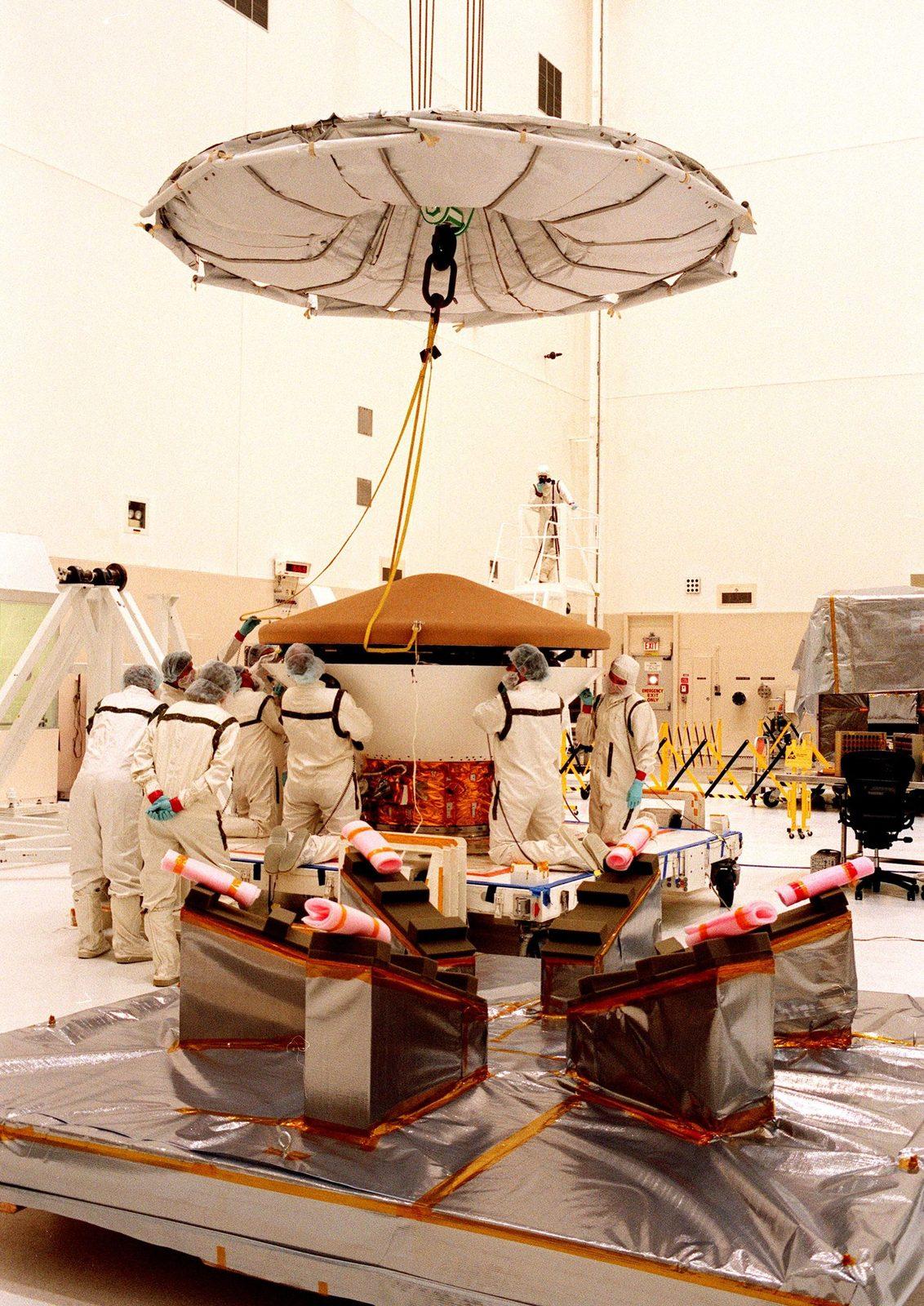
01Under my cruise stage rode two Deep Space 2 microprobes named Amundsen and Scott. Each weighed about 3.6 kilograms and was built to test whether tiny instruments could survive a hard impact and still measure underground properties.
They were built to split on impact.
02Each probe had a ceramic aeroshell, an aftbody that would stay on the surface for radio communication, and a thin forebody penetrator. On impact the aeroshell would shatter and the forebody would separate, carrying instruments into the ground.
KENNEDY SPACE CENTER, FLA.
Mars Polar LanderThe bullet was meant to burrow.
NASA/KSC
03The forebody was designed to penetrate roughly 0.3 to 1 metre into subsurface material. Inside were instruments to study soil, temperature and water-bearing minerals — a miniature laboratory buried by the crash itself.
Neither probe answered.
04No signals were received from either Deep Space 2 probe after landing. Because they sent no descent telemetry, the exact fate of Amundsen and Scott remains unknown; they may have been damaged, buried, or simply unable to communicate.

The big idea

Some instruments must survive being buried, so impact survival and communication are part of the science design.

Think about it

How can a falling probe measure soil if it has no parachute?

Fact file

Probe mass
3.572 kg each
NSSDCA Deep Space 2 profile; aeroshell 1.165 kg, forebody 0.670 kg.
Source ↗
Impact design
160 to 200 m/s
NSSDCA range; penetration 0.3 to 1 m depending on material. No single speed or peak-G value is asserted.
Source ↗
Target area
Near 73° S, 210° W
About 50 to 100 km from the lander touchdown site.
Source ↗

In this chapter: Deep Space 2 forebody penetrators, aftbodies, ceramic aeroshells and lithium batteries

Sources: Main record · Mars Polar Lander · NSSDCA

Machine illustration: AI-made. Photos: NASA Image and Video Library, credited on each picture.

Chapter 2 of 5

Next