Chapter 1 of 5

The landing that bounced

Opportunity’s airbag-cushioned arrival inside Eagle Crater

Told in Opportunity’s imagined voice · the events are real · source
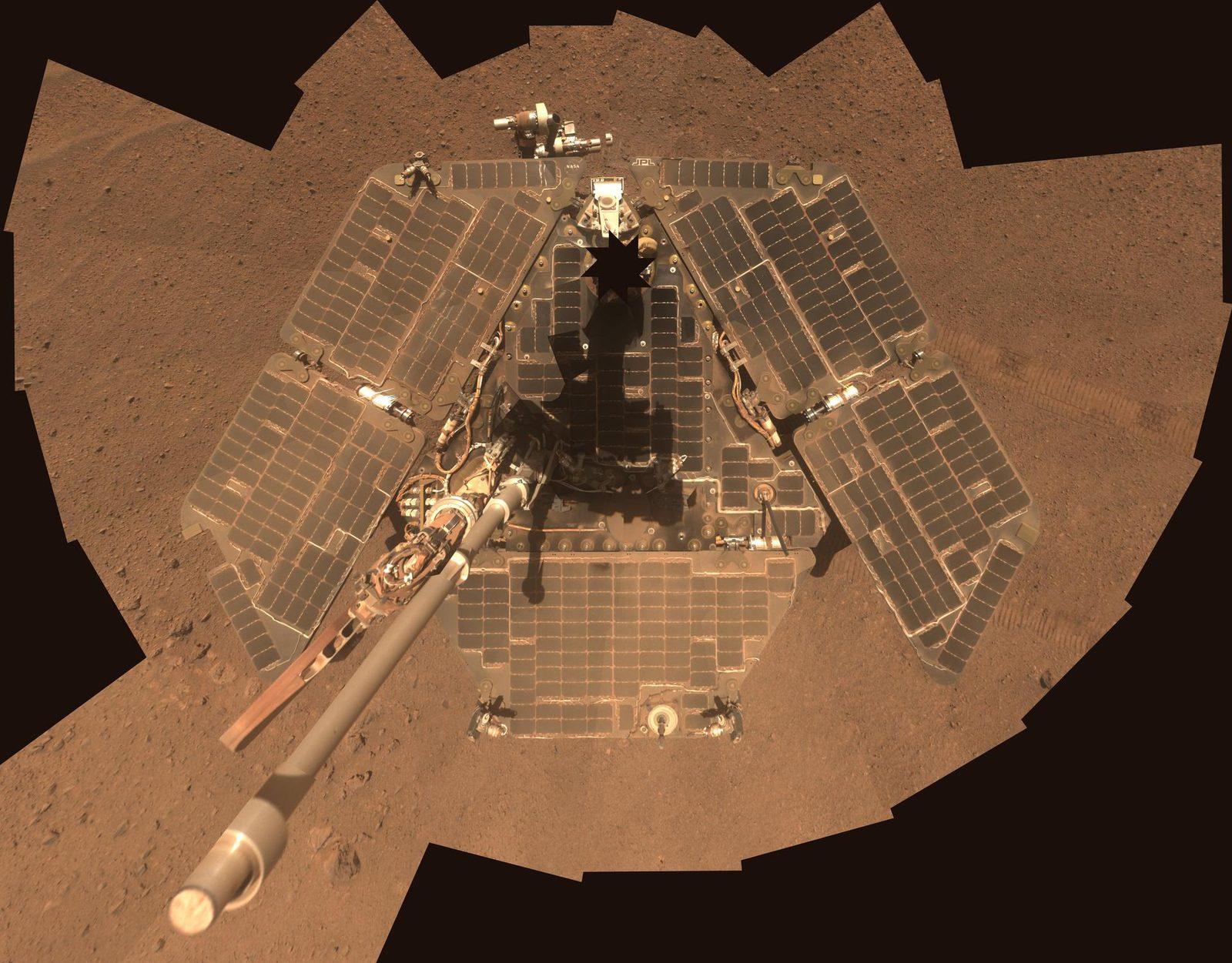
A self-portrait of NASA Mars Exploration Rover Opportunity taken by the rover panoramic camera Pancam in late March 2014 shows effects of recent winds removing much of the dust from the rover solar arrays.
OpportunityI didn’t arrive on Mars with my wheels neatly touching the ground. I arrived wrapped in airbags.
NASA/JPL-Caltech/Cornell Univ./Arizona State Univ.
01A heat shield, parachute and retrorockets helped slow the spacecraft carrying me. Then the airbag system took the landing loads. Its four connected bags had six rounded lobes each, made from tough Vectran fabric.
Bounce. Another bounce. And then a crater caught us.
02The mission record describes at least 26 bounces before the lander came to rest in Meridiani Planum. My landing place was inside Eagle Crater. Instead of a distant rock hunt, there was exposed outcrop close by.
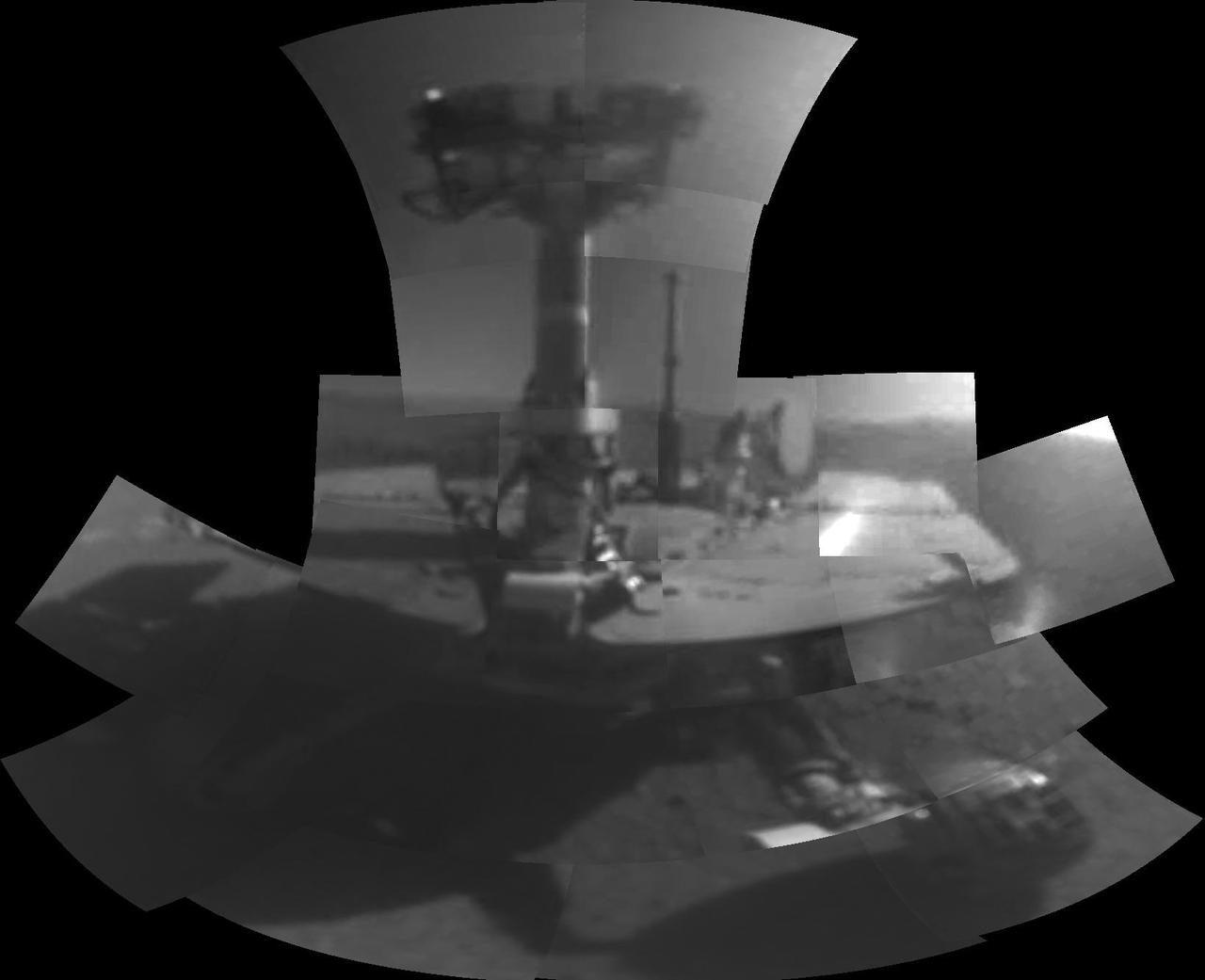
This self-portrait of NASA's Opportunity Mars rover shows the vehicle at a site called "Perseverance Valley" on the slopes of Endeavour Crater.
OpportunityThe bags deflated. The lander opened. Now there was room for a rover.
NASA/JPL-Caltech
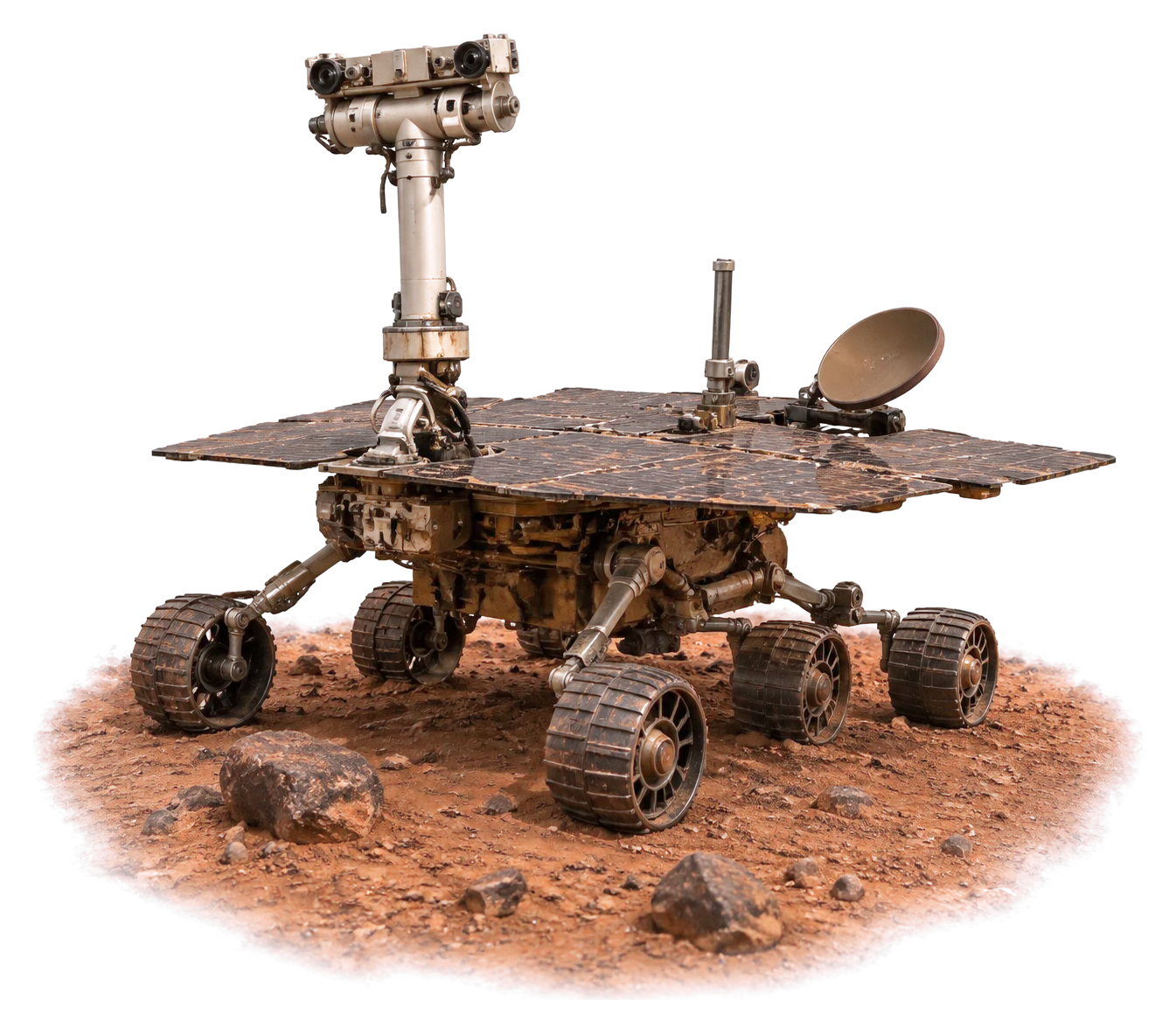
03The protective landing equipment had done its job. My solar panels, camera mast and wheels could be prepared for surface operations. Cameras would show my team the ground before they chose where to drive.
The plan was a short visit. The rocks had other plans for us.
04My primary mission was designed for 90 Martian days and 1,000 metres of driving. That was a starting goal, not a countdown to certain failure. Getting the rover to the ground intact had put a travelling geology laboratory beside its first evidence.

The big idea

Different landing systems did different jobs. Surviving the final bounces let cameras, wheels and instruments begin the science.

Think about it

Why did a rover need landing equipment that would never drive with it?

Fact file

Landing date
25 January 2004 · UTC date
The mission page also lists 24 January in Pacific time. A calendar date is not a continuous landing-time measurement.
Source ↗
Cushioning system
4 airbags / 24 lobes
Four interconnected airbags, each with six lobes. Not 24 separate airbags.
Source ↗
Primary mission plan
90 Martian days / 1,000 metres
A design goal described in the mission-end release, not a warranty or a predicted date of failure.
Source ↗

In this chapter: Heat shield, parachute, retrorockets, interconnected airbags and lander petals

Sources: Main record · JPL · Four airbags, six lobes each · JPL · The original mission plan

Machine illustration: AI-made. Photos: NASA Image and Video Library, credited on each picture.

Chapter 1 of 5

Next