Chapter 2 of 5

The mystery in the Berry Bowl

Comparing a cluster of Martian spherules with nearby rock in March 2004

Told in Opportunity’s imagined voice · the events are real · source
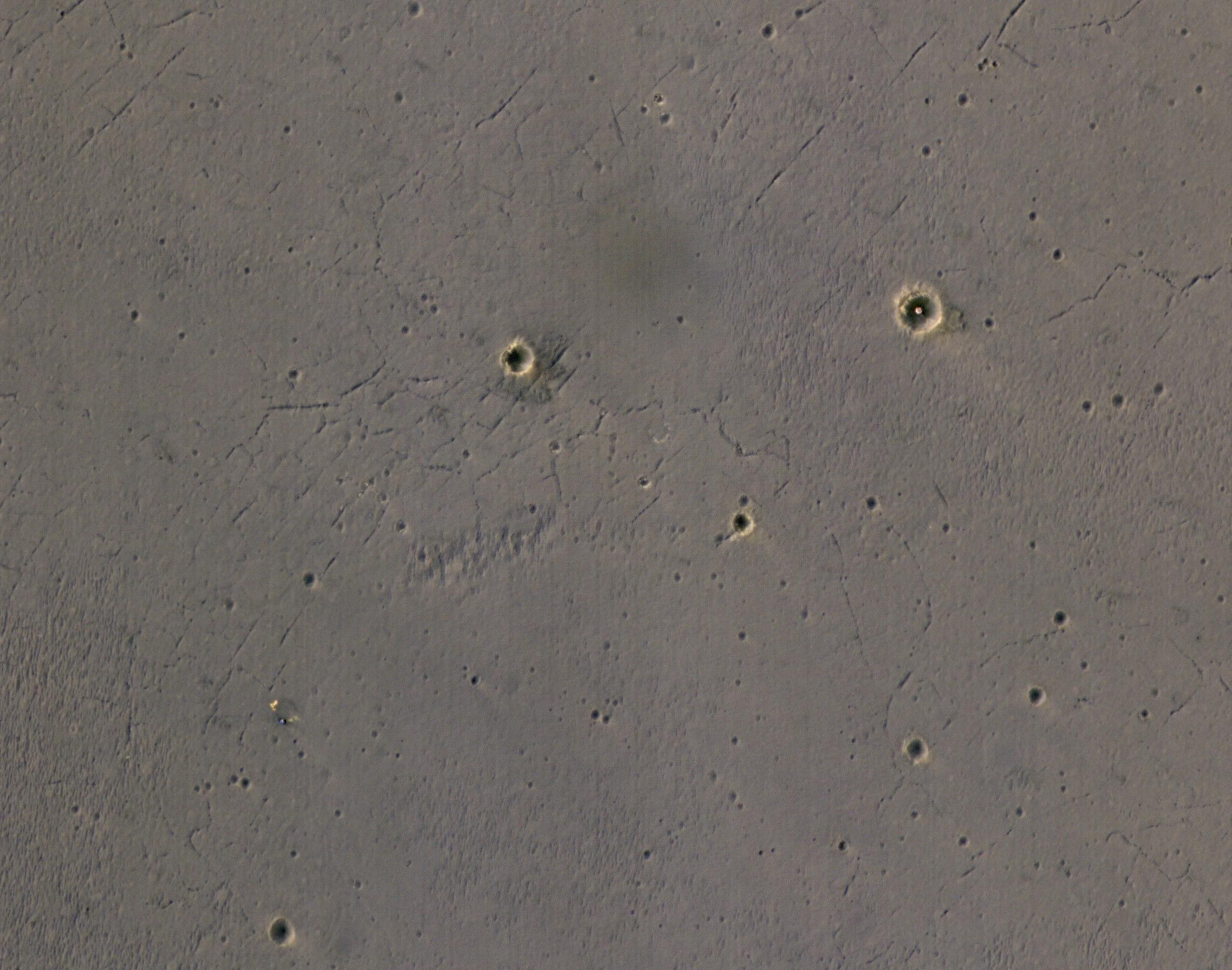
The bright landing platform left behind by NASA's Mars Exploration Rover Opportunity in 2004 is visible inside Eagle Crater, at upper right in this April 8, 2017, observation by NASA's Mars Reconnaissance Orbiter.
OpportunityThere were little grey spheres in the rocks. And little grey spheres on the ground. What were they?
NASA/JPL-Caltech/Univ. of Arizona
01My team nicknamed them blueberries. They were mineral spherules, not fruit, embedded in outcrop and scattered across soil inside Eagle Crater. Their shapes were interesting; their history was still a question.
One berry was too small for a good comparison. A bowlful gave us a better chance.
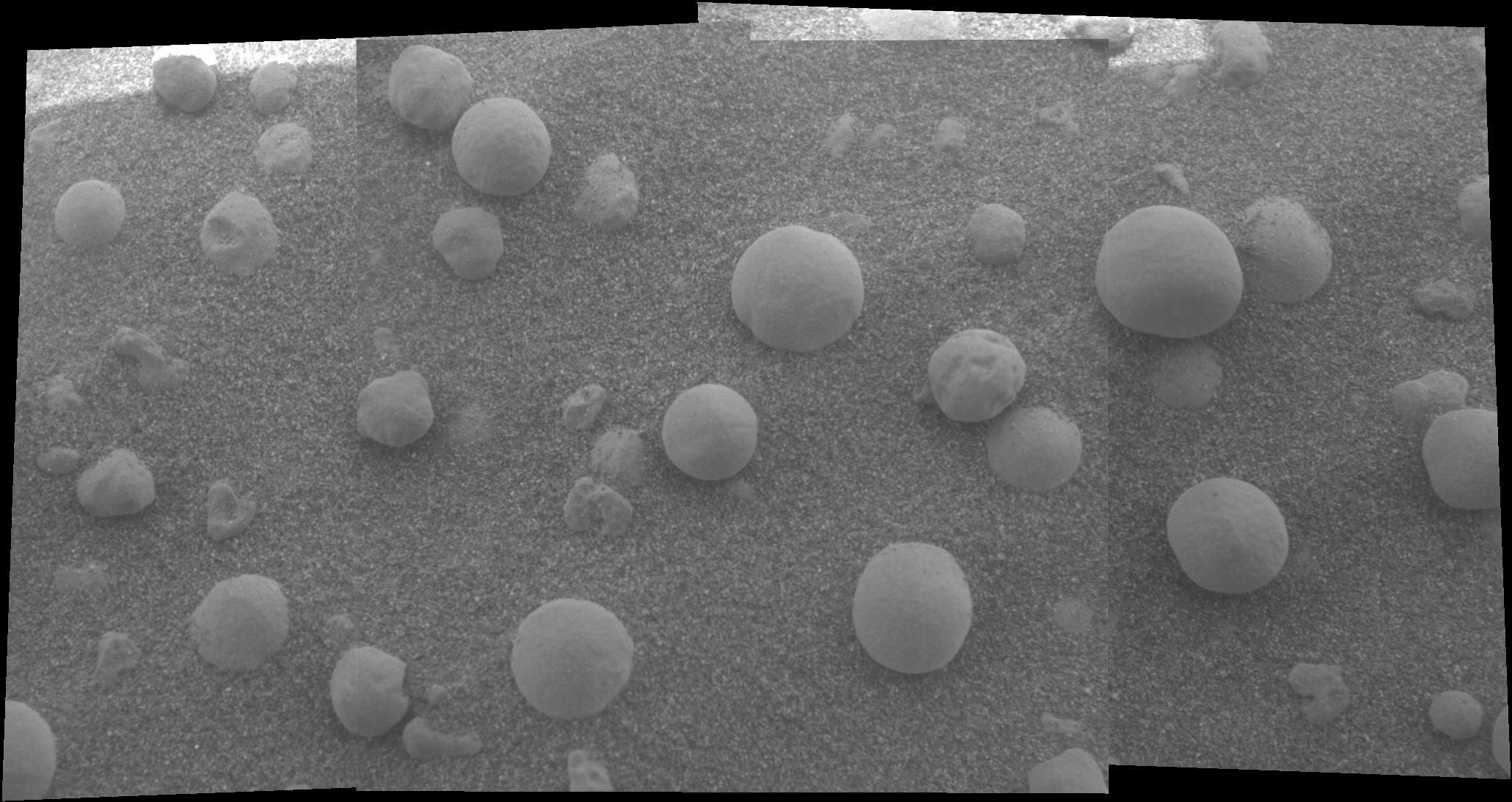
02Individual spheres were too small for my composition-reading tools to analyse on their own. A shallow depression in a rock called Berry Bowl held a group close together. The team compared that cluster with a berry-free patch of the underlying rock.
This mosaic image shows an extreme close-up of round, blueberry-shaped formations in the martian soil near a part of the rock outcrop at Meridiani Planum called Stone Mountain.
OpportunityMy spectrometer found a difference the camera couldn’t see.
NASA/JPL-Caltech
03The Mössbauer instrument identified iron-bearing minerals. Its comparison showed that hematite was the major iron-bearing mineral in the spheres. The arrangement of the spheres within the rocks had already pointed toward concretions growing in water-soaked deposits.
The little spheres had kept clues from a much wetter Mars.
04Hematite strengthened that interpretation when considered alongside the other evidence. Interlocking spheres and their distribution helped test alternatives such as volcanic droplets. The answer came from looking, comparing and measuring together—not from one photograph.

The big idea

A mineral measurement becomes more useful when scientists also know where the material sits and how it is arranged.

Think about it

Why did the team compare berries with a berry-free patch instead of measuring only the berries?

Fact file

Published finding
18 March 2004
Date of JPL’s report on the Berry Bowl comparison, not an invented timestamp for one instrument reading.
Source ↗
Major iron-bearing mineral
Hematite
The instrument result and the spheres’ geological context supported the interpretation of water-formed concretions. Hematite alone is not a universal proof of water.
Source ↗

In this chapter: Microscopic Imager, robotic arm and Mössbauer spectrometer

Sources: Main record

Machine illustration: AI-made. Photos: NASA Image and Video Library, credited on each picture.

Chapter 2 of 5

Next