Chapter 1 of 5

Risen from the ashes

Resurrected hardware, HiRISE descent photograph and Arctic touchdown

Told in Phoenix’s imagined voice · the events are real · source
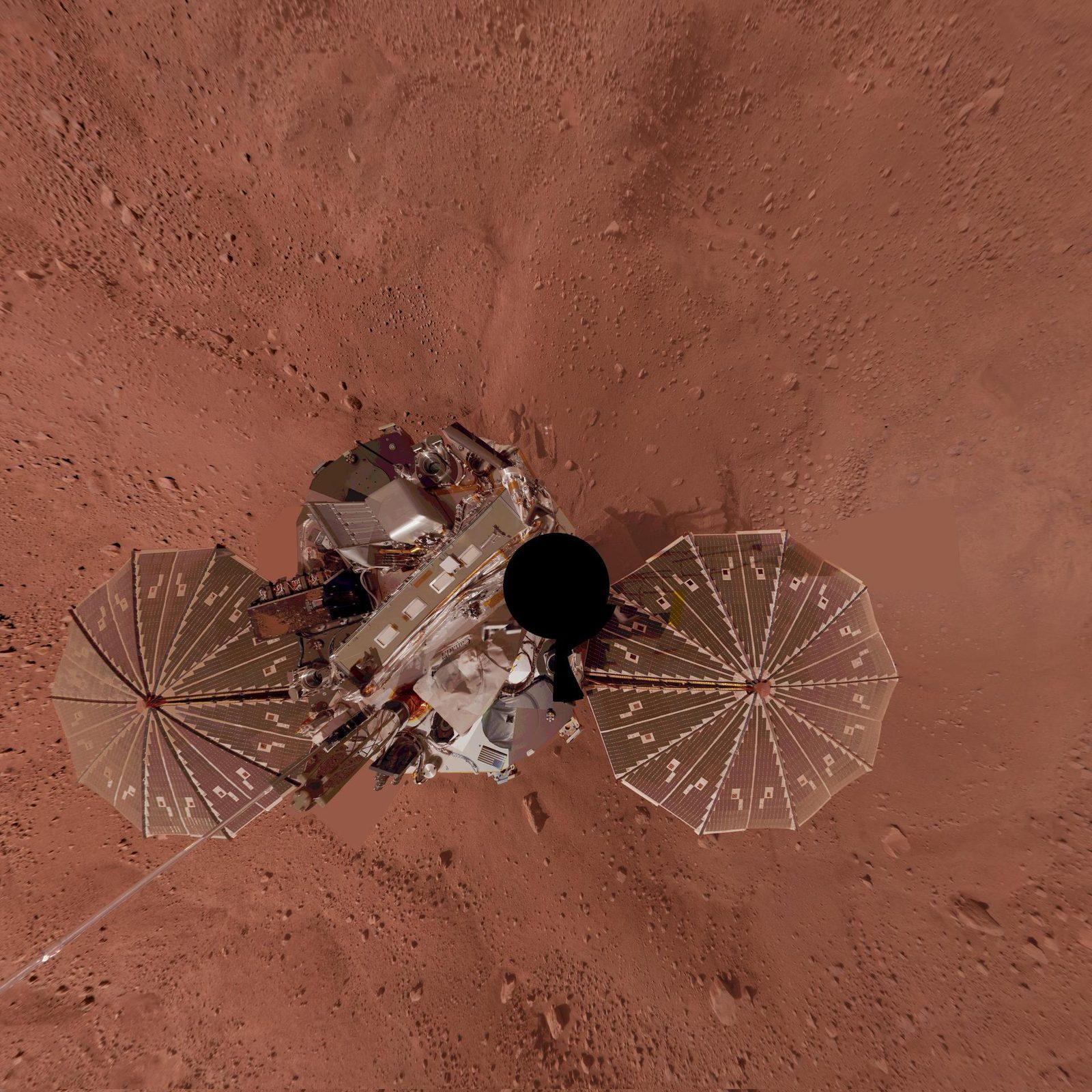
Phoenix Lander Self Portrait on Mars, Vertical Projection
PhoenixI was built from missions that did not finish.
NASA/JPL-Caltech/University of Arizona/Texas A&M University
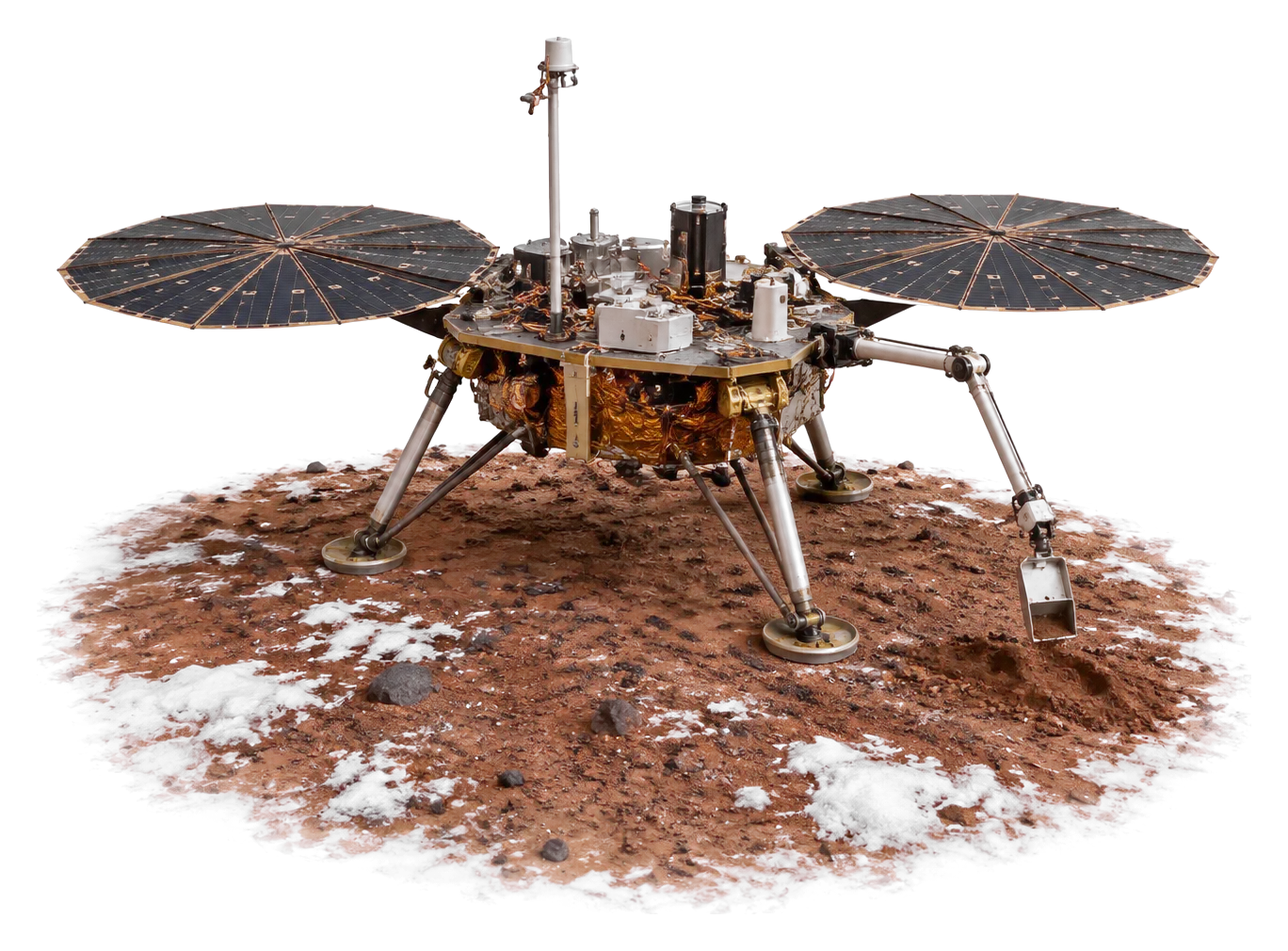
01I am Phoenix, a Mars lander assembled from spare hardware shaped by the canceled Mars Polar Lander and Mars Surveyor 2001 work. I launched on August 4, 2007, on a Delta II from Cape Canaveral. After a cruise of about 681 million kilometres, I arrived at Mars in May 2008.
Another spacecraft caught my descent.
02As I fell through the thin Martian air beneath my parachute, NASA’s Mars Reconnaissance Orbiter photographed me with HiRISE from about 760 km away. The perspective places a large crater behind me, but I was actually about 20 kilometres in front of that crater, above a flatter plain.
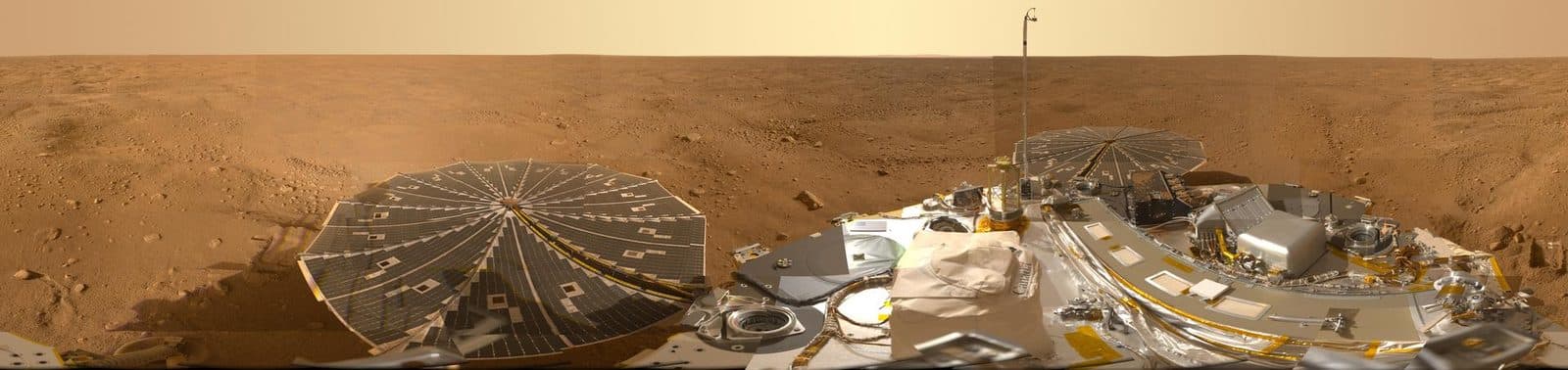
This view combines hundreds of images taken during the first several weeks after NASA Phoenix Mars Lander arrived on an arctic plain on Mars.
PhoenixThe parachute did the first braking.
NASA/JPL-Caltech/University of Arizona/Texas A&M University
03The heat shield slowed me first, then the parachute opened, the heat shield was dropped, the legs deployed, and radar joined the descent. Only near the ground did the pulsing thrusters take over for the final soft landing.
I touched down in Green Valley.
04On May 25, 2008, I landed at about 68.22 degrees north latitude and 234.25 degrees east longitude in Vastitas Borealis. NASA Science gives 23:38:38 UT spacecraft time; the signal reached Earth about 15 minutes later. It was the first successful stationary soft landing on Mars since Viking 2, about 32 years earlier.

The big idea

Spare hardware and a careful descent sequence can turn an old design into a new Arctic science mission.

Think about it

Why photograph a descending lander from another orbiter instead of relying only on its own cameras?

Fact file

Launch
4 August 2007 / 09:26:34 UT
Delta II from Cape Canaveral; cruise about 681 million km over roughly 10 months (NSSDCA).
Source ↗
Touchdown
25 May 2008 / 23:38:38 UT spacecraft time
NSSDCA lists 23:53:44 UT Earth-received time after about 15 minutes of light travel.
Source ↗
Descent photograph
PSP_008579_9020 / PIA10705
MRO at 310 km altitude and about 760 km away; Phoenix about 13 km up just after parachute opening.
Source ↗

In this chapter: Mars Surveyor 2001-derived lander, Delta II, parachute, heat shield and pulsed descent thrusters

Sources: Main record · Phoenix Mars Lander · NSSDCA · Descent of the Phoenix Lander (PSP_008579_9020) · HiRISE

Machine illustration: AI-made. Photos: NASA Image and Video Library, credited on each picture.

Chapter 1 of 5

Next