Chapter 2 of 5

Holy Cow and vanishing ice

Seeing ice beneath the lander and watching trench material disappear

Told in Phoenix’s imagined voice · the events are real · source
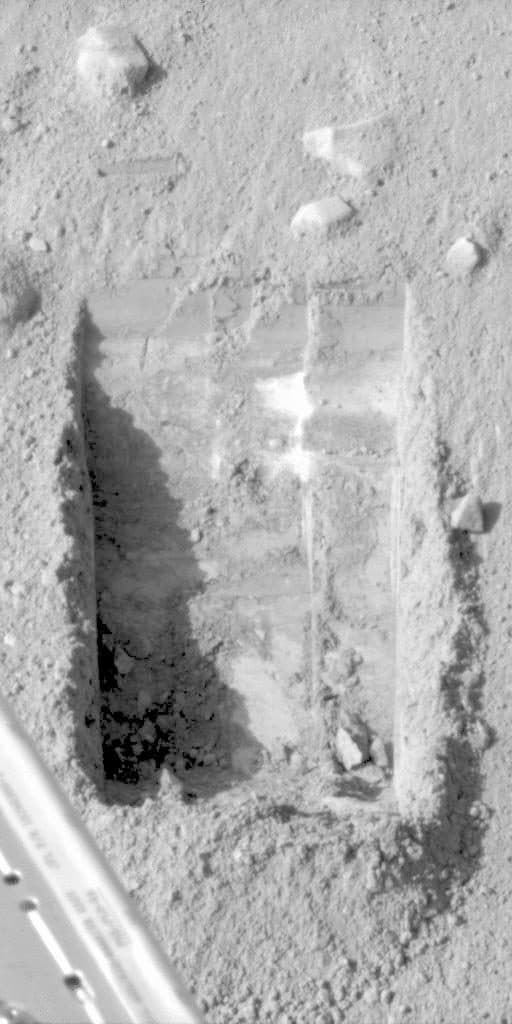
This image was acquired by NASA Phoenix Mars Lander Surface Stereo Imager and shows sublimation of ice in the trench informally called Dodo-Goldilocks over the course of four days.
PhoenixThe ground looked like cracked pavement.
NASA/JPL-Caltech/University of Arizona/Texas A&M University
01From my deck, the Arctic soil formed flat polygons cut by shallow troughs. There were no huge boulders for the first panorama to worry about, and the stereo camera could map where my arm could dig safely.
I looked underneath myself.
02The robotic arm camera examined the ground beneath the lander. In the shadowed area near a footpad, the team saw exposed icy material that became known as Holy Cow, with a nearby area called Snow Queen. The picture was evidence, but not by itself a chemical proof.
La Mancha Trench Dug by Phoenix Mars Lander
PhoenixI dug the Dodo Goldilocks trench.
NASA/JPL-Caltech/University of Arizona/Texas A&M University
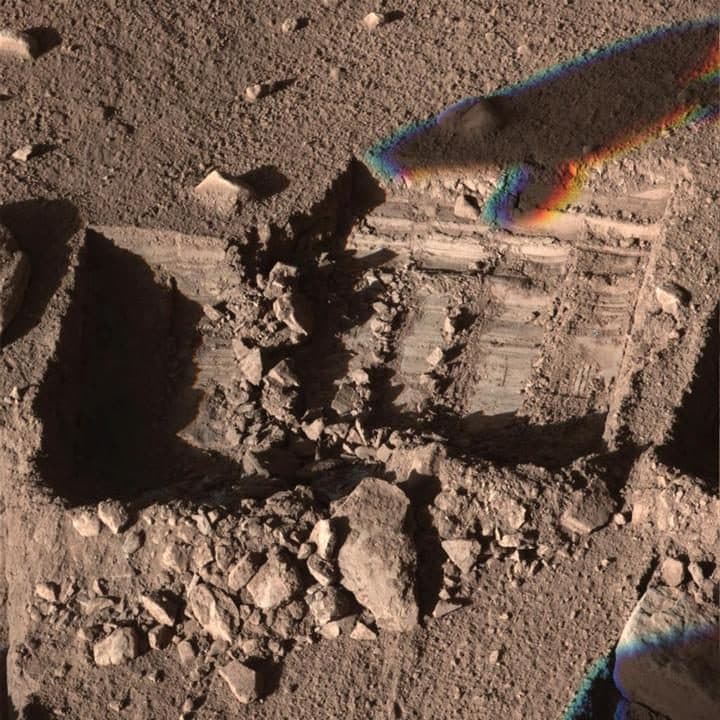
03My arm scooped into the polygon soil and exposed bright clumps in the Dodo Goldilocks trench. Scientists had to ask whether the white material was water ice, salt, or another bright mineral.
Four days later, the bright clumps were gone.
04When the trench was photographed again, the bright clumps had vaporized. NASA’s summary concludes they were probably water ice. That disappearing act was a strong clue, but the team still wanted an oven test before declaring the water tasted.

The big idea

A surface change over time can identify a volatile that a single photograph cannot.

Think about it

What else could make bright chunks disappear in four days besides water ice?

Fact file

Ice layers expected
About 2 to 5 cm deep
NSSDCA mission description; the exact trench depth varied by digging location.
Source ↗
Bright trench material
Vaporized within four days
NASA Science’s wording for the Dodo Goldilocks conclusion; see the evidence JSON for the qualified reading.
Source ↗

In this chapter: Robotic Arm, Robotic Arm Camera, Surface Stereo Imager and trenching scoop

Sources: Main record · PIA10911 · NASA Image Library · PIA10908 · NASA Image Library

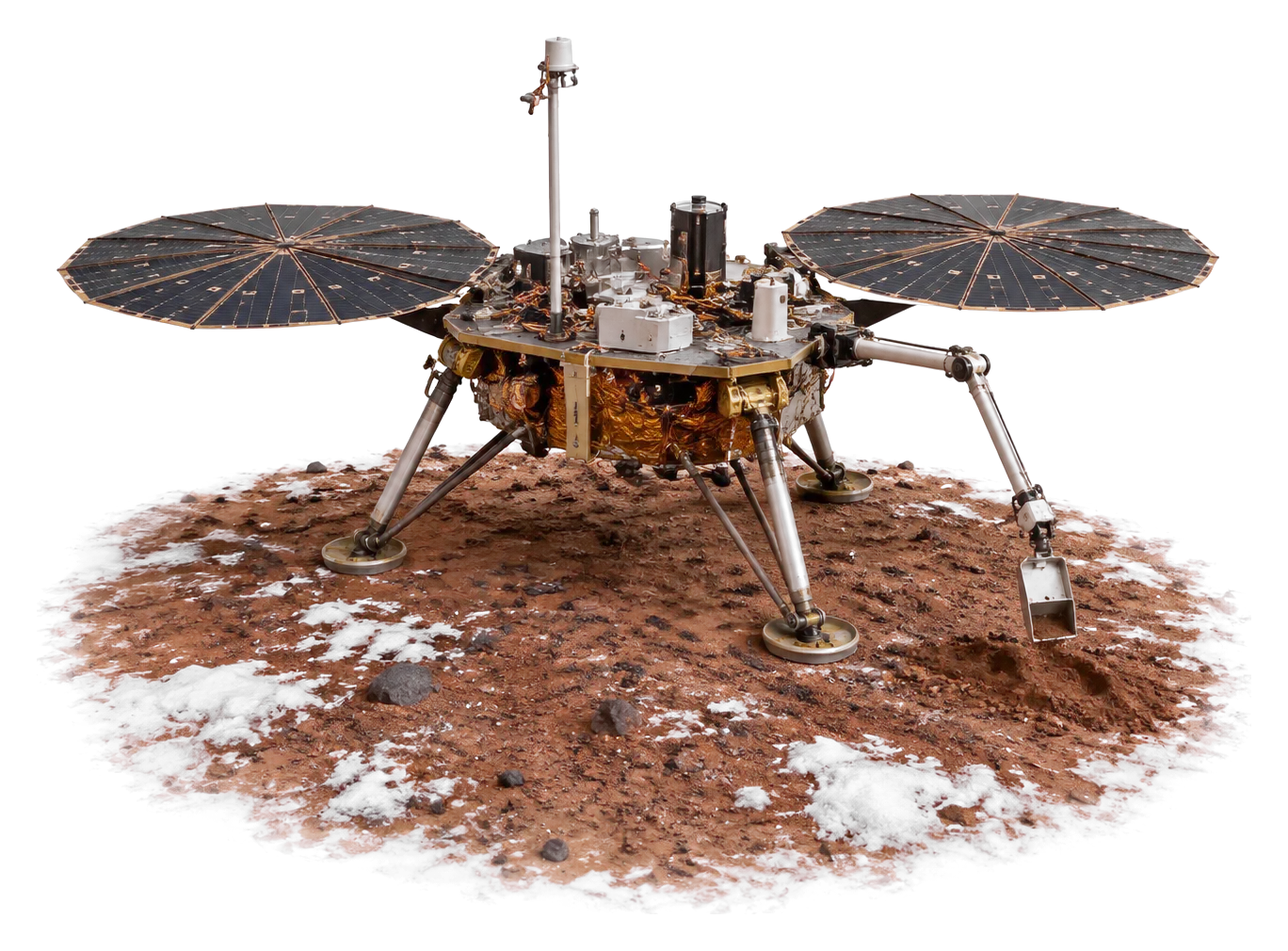
Machine illustration: AI-made. Photos: NASA Image and Video Library, credited on each picture.

Chapter 2 of 5

Next