Chapter 5 of 5
The half-finished final frame
Ranger 7's final transmission and its impact in Mare Cognitum
Told in Ranger 7’s imagined voice · the events are real · source
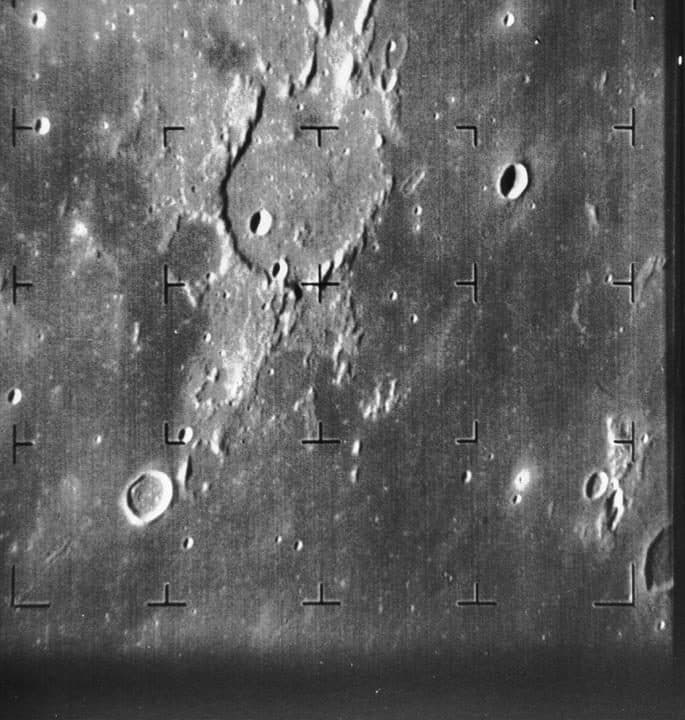
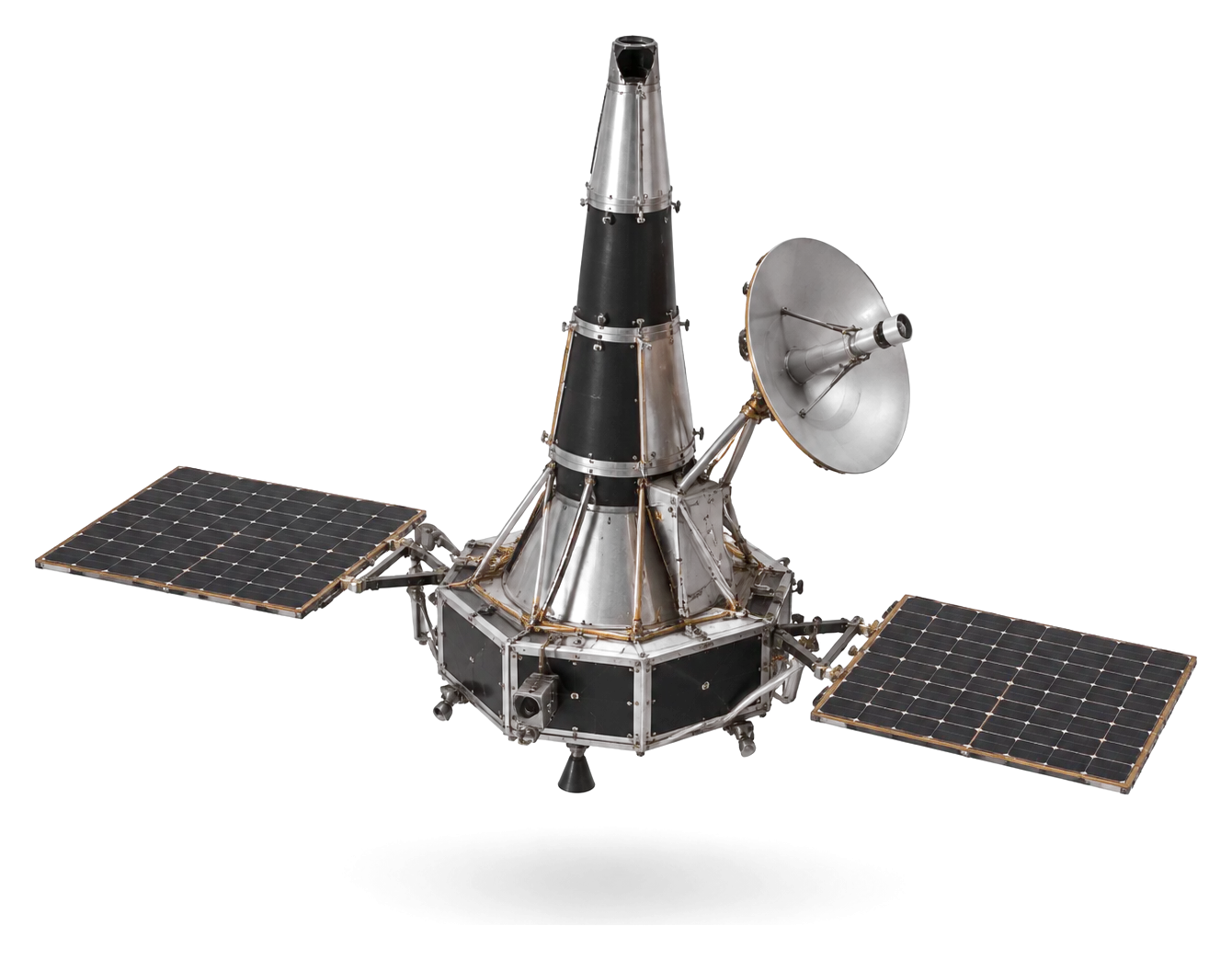
The right side of that last picture became a wall of static.
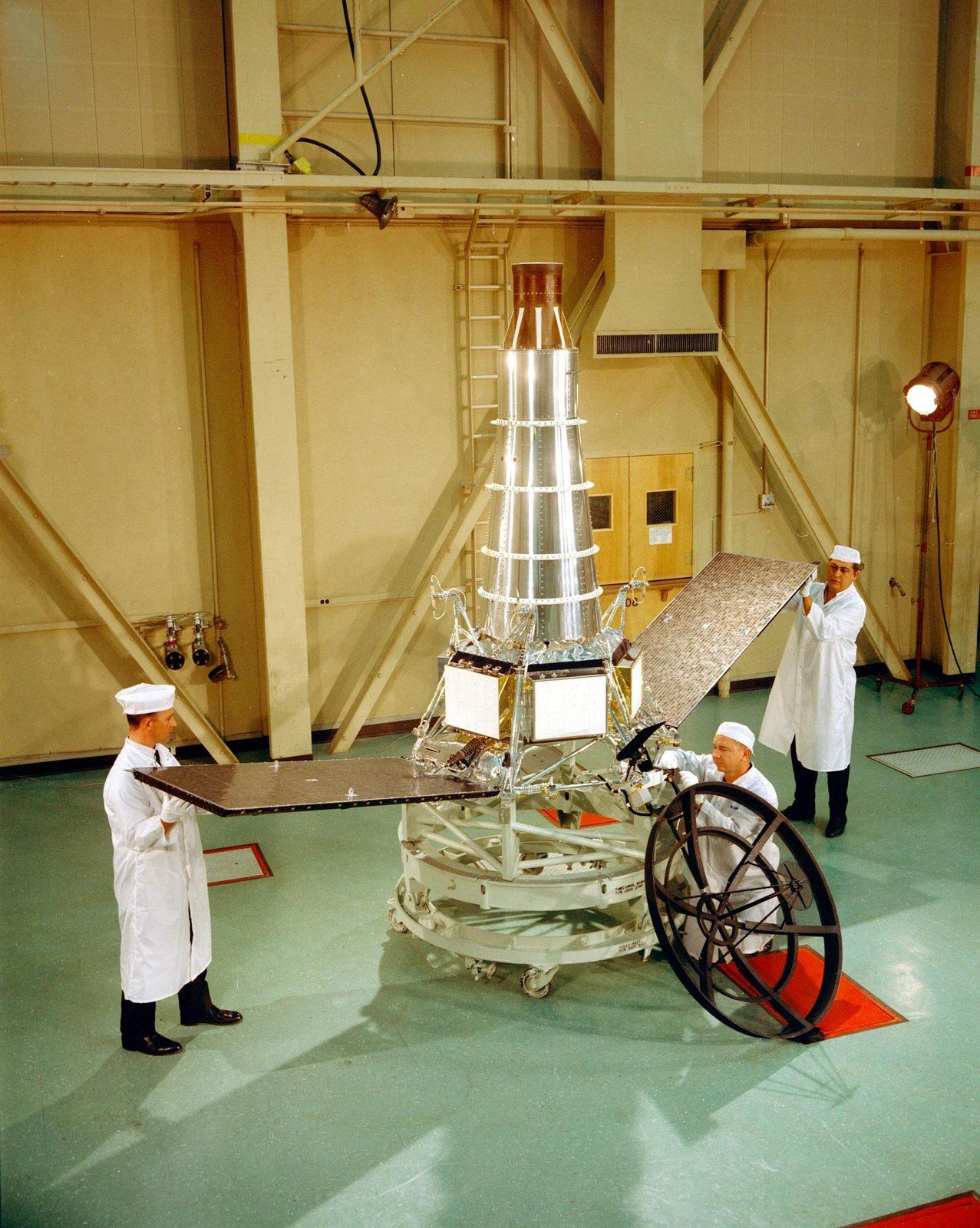
Ranger 7The area where I fell was named Mare Cognitum: the Sea That Has Become Known.
Years later, a camera in orbit found the crater I left behind.
The big idea
The impact ended the spacecraft, but the images and the crater became evidence that later missions could revisit.
Think about it
How can a place where a machine was destroyed become a useful scientific site?
Fact file
- Impact
- 31 July 1964 · 13:25:48.82 UTC
- Ranger 7 struck the Moon at about 2.62 km/s (9,432 km/h).
- Source ↗
- Impact site
- Mare Cognitum · 10.6340° S, 339.3230° E
- The same location is 20.6771° W. The region was renamed Mare Cognitum, the Sea That Has Become Known.
- Source ↗
- Crater
- 14 m across · LROC frame M153014430L
- The Lunar Reconnaissance Orbiter imaged the fresh crater in 2010. Apollo 16 photographed the site from lunar orbit in 1972.
- Source ↗
- Final transmission
- Cut off during the last partial frame
- The last full frame was taken about 2.3 seconds before impact. A final partial-scan exposure was still being transmitted when the spacecraft struck.
- Source ↗
In this chapter: Vidicon camera, radio transmitter and the impact crater left behind
Sources: Main record · LPI · Ranger 7 frame P/200 (final transmission) · LROC · Ranger 7 impact crater M153014430L · NSSDCA · Ranger 7 mission data
Machine illustration: AI-made. Photos: NASA Image and Video Library, credited on each picture.