Chapter 1 of 5
The six-eyed camera tower
Ranger 7 is built to photograph the Moon during a deliberate impact
Told in Ranger 7’s imagined voice · the events are real · source
The big idea
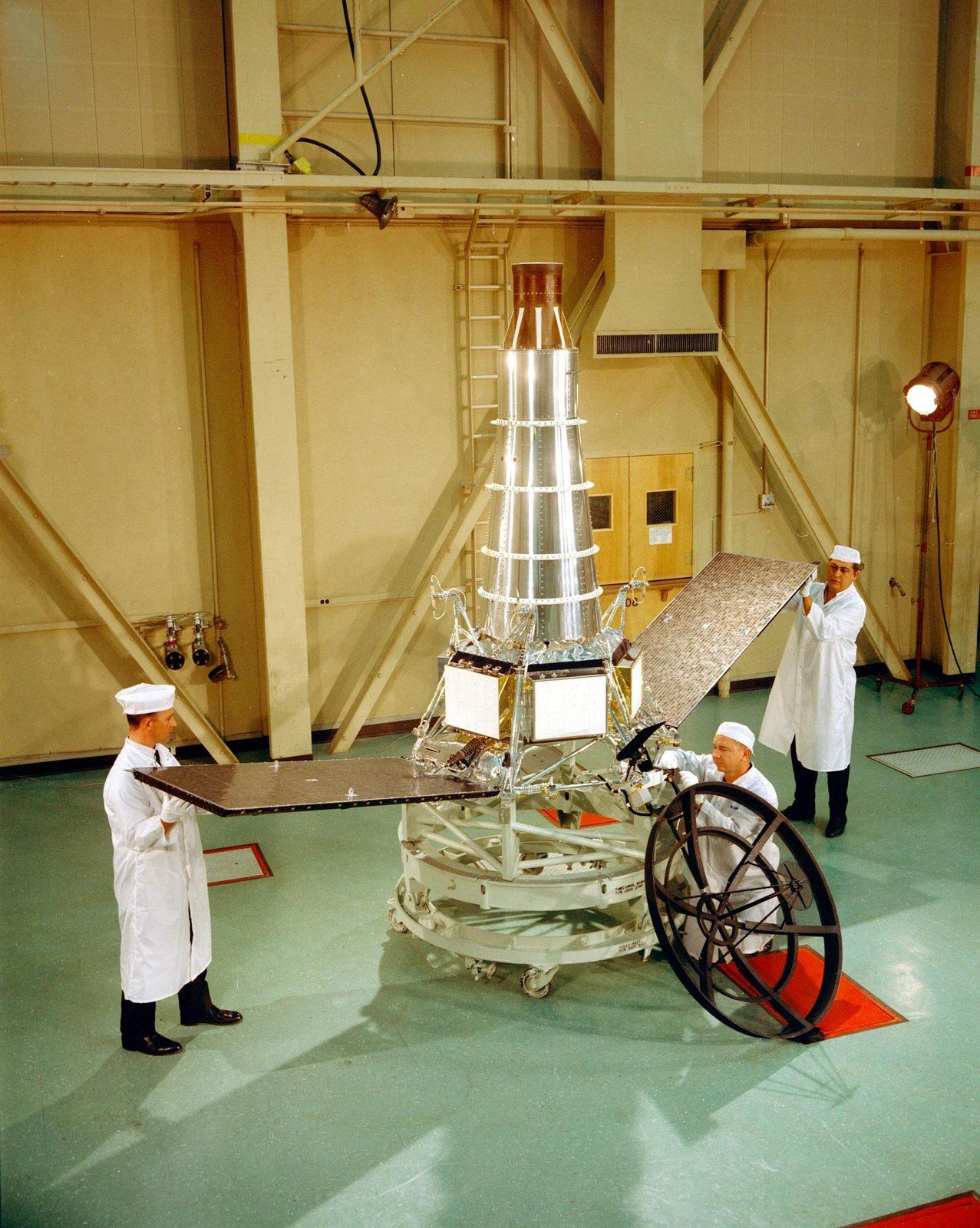
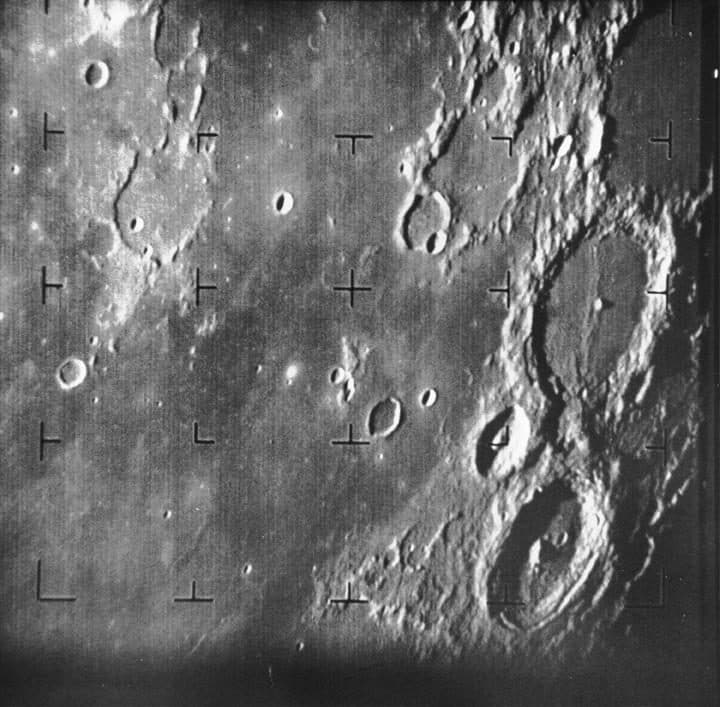
Ranger 7 was designed around a one-way journey. Its cameras and radio had to do the work while the spacecraft could not return.
Think about it
Why would a camera on a spacecraft need a radio system as much as it needed a lens?
Fact file
- Spacecraft size
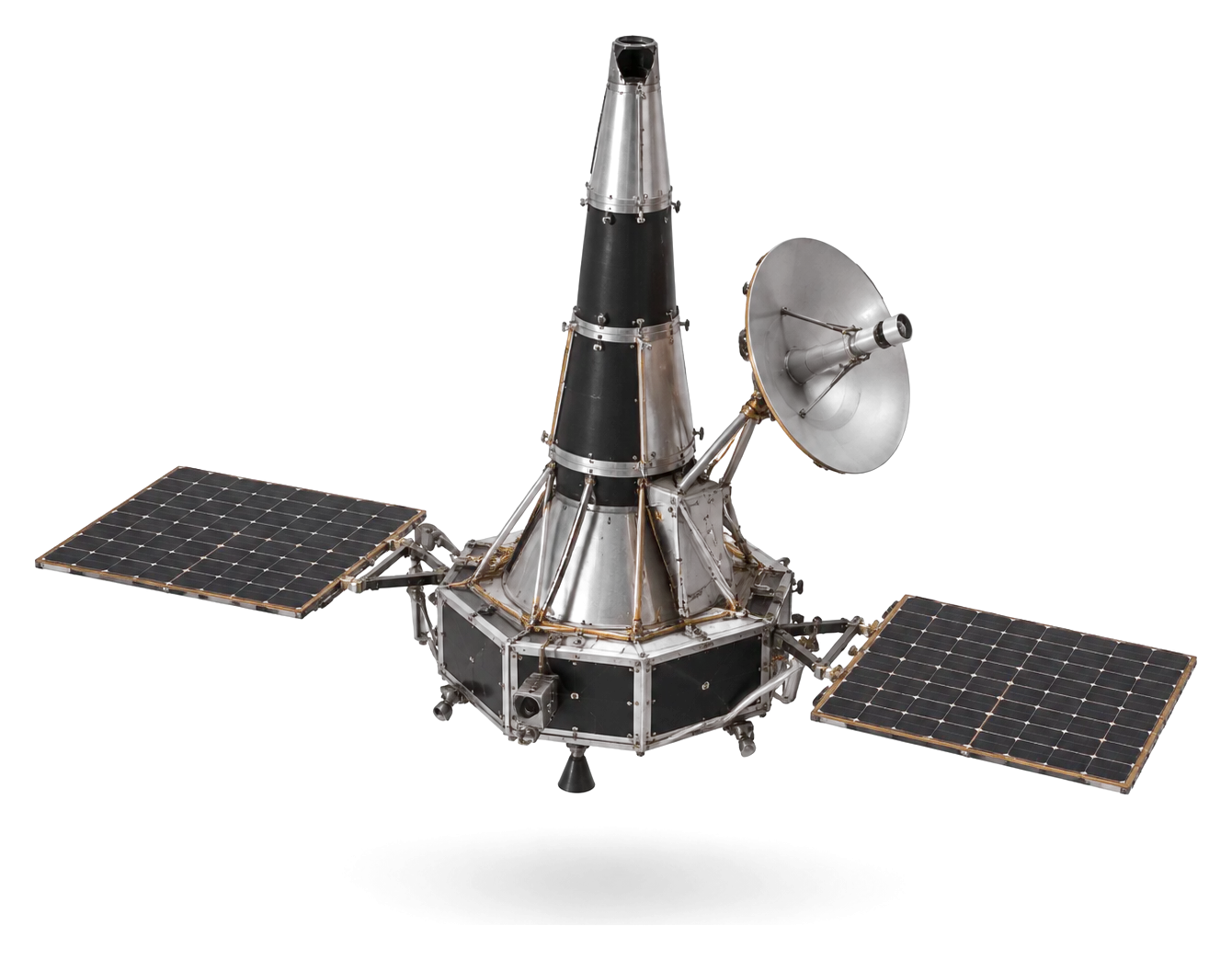
- 3.6 m tall · 1.52 m across the base · 4.57 m solar-panel span
- The hexagonal base carried the spacecraft systems; the conical tower carried the cameras.
- Source ↗
- Mass and power
- 365.7 kg · 9,792 silicon solar cells · 200 W nominal
- NSSDCA lists 365.7 kg. NASA Science's mission overview rounds the same spacecraft to 365.6 kg.
- Source ↗
- Camera system
- 6 RCA Vidicon cameras · 2 full-scan + 4 partial-scan
- One full-scan camera was wide-angle and one was narrow-angle. The four partial-scan cameras could return rapid sequences of smaller frames.
- Source ↗
- Television mass
- 173 kg
- The television package was a large share of the 365.7 kg spacecraft because it included cameras, power supplies, timers and transmitters.
- Source ↗
In this chapter: RCA Vidicon television system, two solar panels, high-gain antenna and a hydrazine midcourse engine
Sources: Main record · NSSDCA · The Ranger 7 television experiment · NASA Science · Ranger 7 mission overview · NASA History · 60 Years Ago: Ranger 7 Photographs the Moon
Machine illustration: AI-made. Photos: NASA Image and Video Library, credited on each picture.