Chapter 1 of 5

A rocky welcome

Landing in Gusev Crater, inspecting volcanic rock and looking back at Earth

Told in Spirit’s imagined voice · the events are real · source
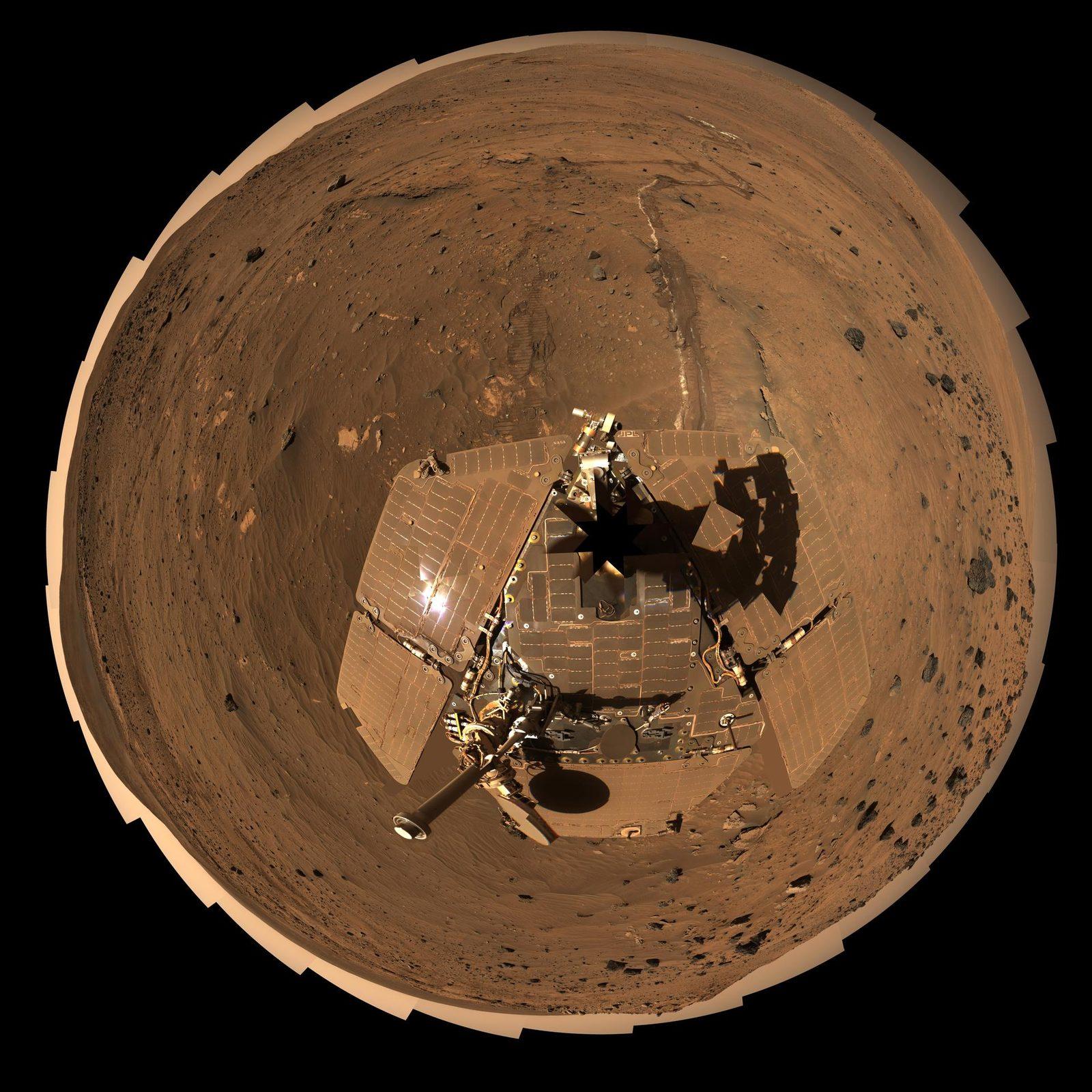
This self-portrait of NASA Mars Exploration Rover Spirit is a polar projection of the 360-degree McMurdo panorama made from images taken by Spirit from April through October 2006.
SpiritMy welcome to Mars came with a lot of bouncing.
NASA/JPL-Caltech/Cornell Univ./Arizona State Univ.
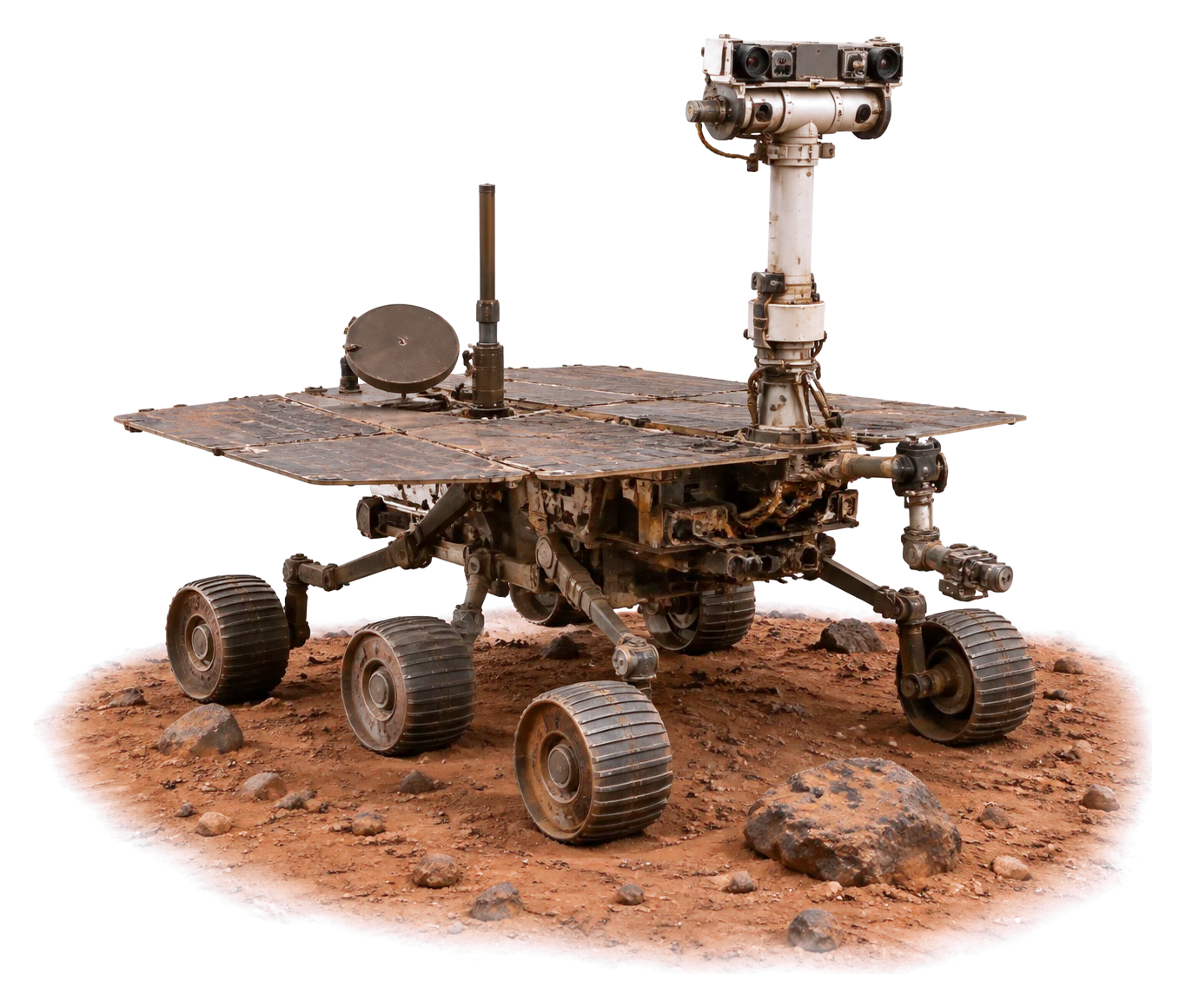
01I am Spirit, one of NASA’s twin Mars Exploration Rovers. After launching in June 2003, my airbag-wrapped lander bounced 28 times in Gusev Crater. Earth received the landing signal on January 4, 2004. The site was named Columbia Memorial Station.
The rocks had a different story from the one people expected.
02Gusev’s shape suggested an ancient lake. Once an early computer problem was resolved, my abrasion tool ground into Adirondack to expose fresh rock for my instruments. The plains were volcanic: lava deposits appeared to cover the older lakebed evidence scientists hoped to find.
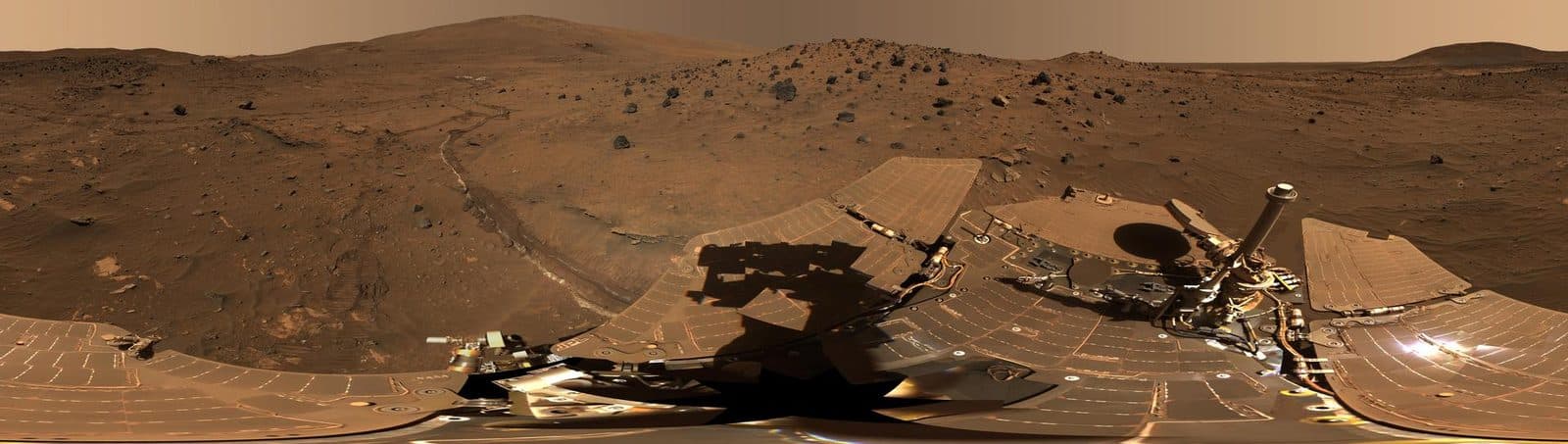
This 360-degree view, called the McMurdo panorama, from NASA Mars Exploration Rover Spirit, where the rover stayed on a small hill known as Low Ridge from April through October 2006.
SpiritBefore sunrise, I helped make a tiny picture of home.
NASA/JPL-Caltech/Cornell Univ./Arizona State Univ.
03On Sol 63, my navigation and panoramic cameras supplied the images combined into PIA05547. Earth was a faint point, made easier to see by processing. NASA identifies it as the first picture of Earth taken from the surface of another planet.
Faraway hills gave us somewhere new to look.
04The Columbia Hills stood about three kilometers from my landing site. Their older rocks offered another chance to investigate water’s history. My wheels would take the instruments across the plain, turning a view on the horizon into a place to explore.

The big idea

An orbital view suggests questions; a rover tests them against real rocks. Finding something unexpected can change the route of an investigation.

Think about it

Why inspect a rock’s interior instead of only photographing its dusty surface?

Fact file

Launch
10 June 2003 / 17:58:47 UTC
NASA mission summary: Delta 7925-9.5 from Cape Canaveral SLC-17A.
Source ↗
Landing signal received
4 January 2004 / 04:35 UT
Earth-received time in NSSDCA; January 3 in Pacific time.
Source ↗
Adirondack grinding
Sol 34 / 6 February 2004
PIA05223: a 45.5 mm diameter patch, 2.65 mm deep. Exposure date differs from publication date.
Source ↗
Earth image
PIA05547 / Sol 63
A processed Navcam/Pancam composite, taken one hour before sunrise.
Source ↗

In this chapter: Airbag landing system, Rock Abrasion Tool, Navcam and Pancam

Sources: Main record · Spirit · NSSDCA Master Catalog · First Grinding of a Rock on Mars · PIA05223 · You are here: Earth as seen from Mars · PIA05547 · NASA’s Durable Spirit Sends Intriguing New Images From Mars

Machine illustration: AI-made. Photos: NASA Image and Video Library, credited on each picture.

Chapter 1 of 5

Next