Chapter 1 of 5

A question in flight

Launch and an antenna that did not deploy as expected

Told in Surveyor 1’s imagined voice · the events are real · source
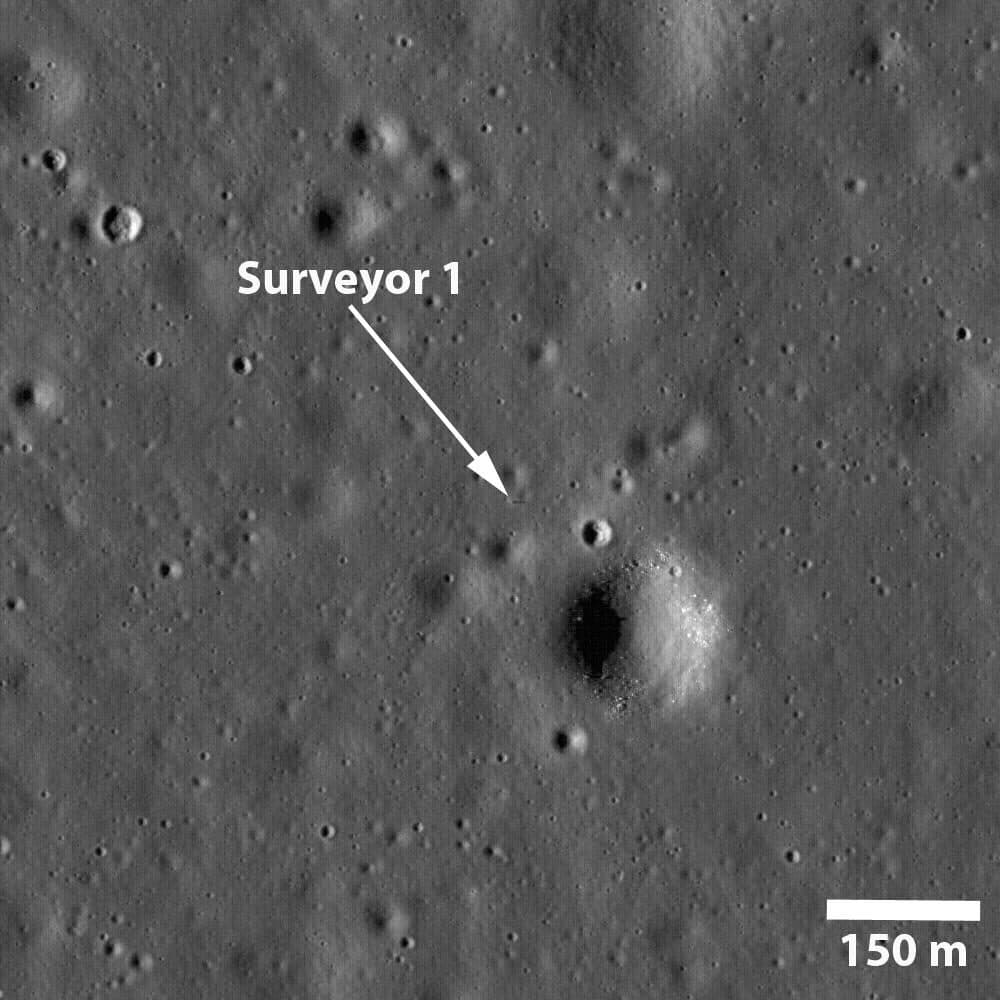
NASA Surveyor 1 spacecraft sitting silently on Oceanus Procellarum, the first US spacecraft to land on another planet on June 2, 1966 in this image taken by NASA Lunar Reconnaissance Orbiter.
Surveyor 1Before astronauts could land, there was more to learn about the ground.
NASA/GSFC/Arizona State University
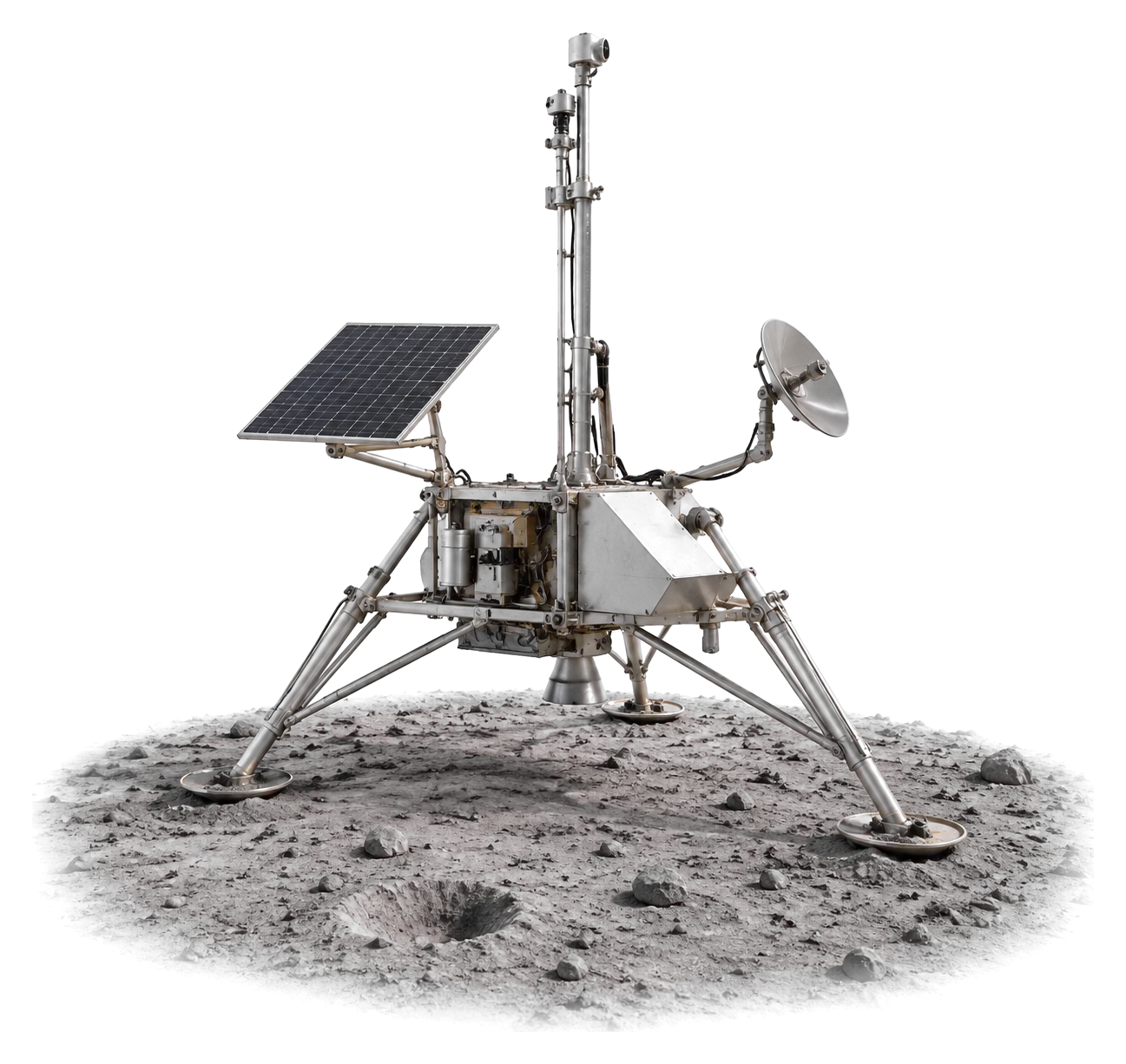
01I am Surveyor 1, a robotic lander built by Hughes under JPL’s technical direction. Luna 9 had already soft-landed on the Moon. My job was to test an American landing system and gather evidence about the surface that future Apollo missions would encounter.
On May 30, 1966, my journey began above Florida.
02An Atlas-Centaur launched me toward the Moon. My lightweight frame carried three landing legs, a camera, solar power and radio equipment. A Sun sensor, a Canopus star tracker and gyros helped establish how I was pointing.
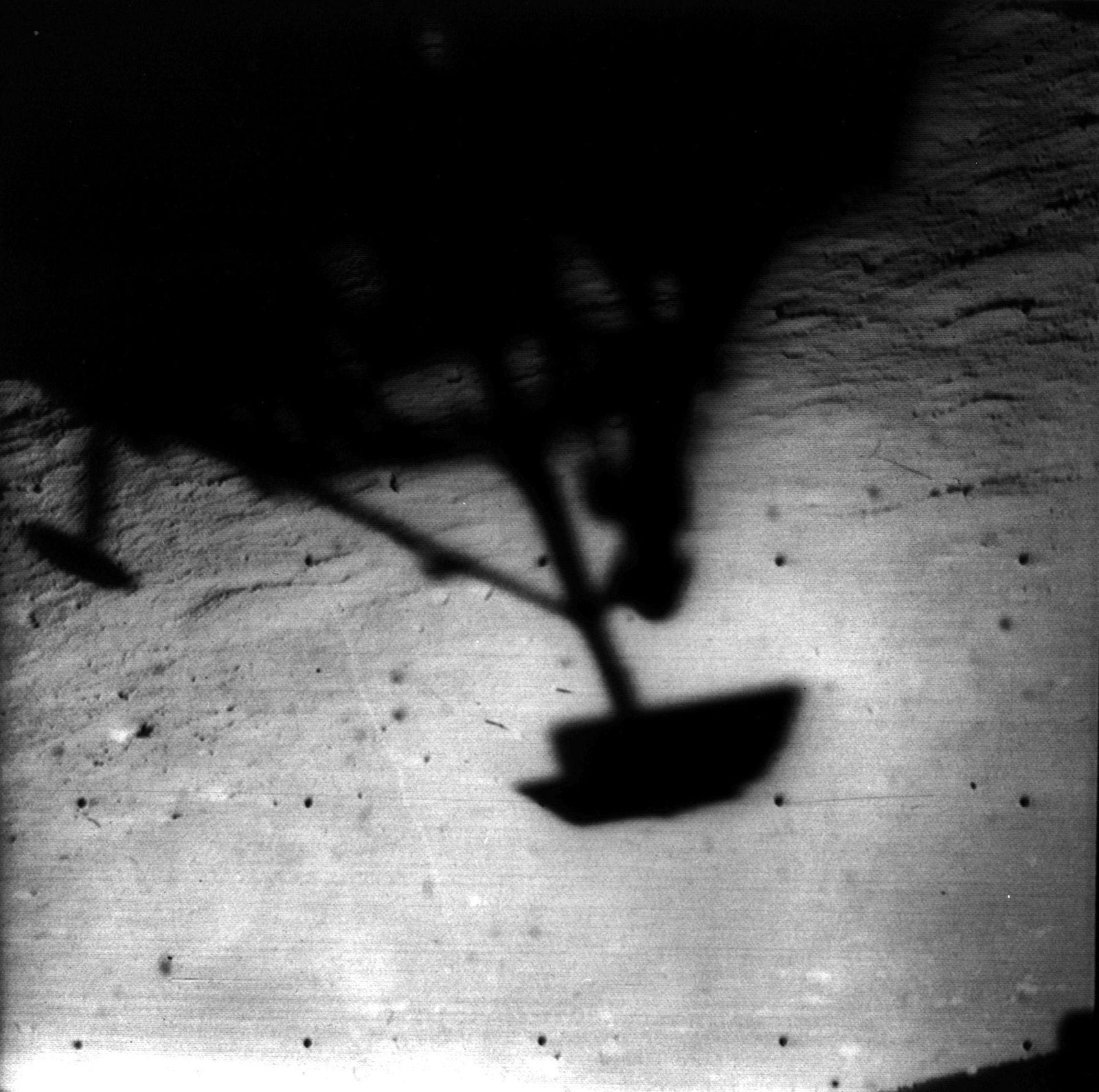
Image of Surveyor 1 shadow against the lunar surface in the late lunar afternoon, with the horizon at the upper right.
Surveyor 1One radio antenna left the team with a question.
NASA/JPL
03Antenna A did not give the expected deployment indication. Engineers sent more commands, but its exact position remained uncertain. My other antenna maintained the communications path; JPL did not expect this fault to jeopardize the mission.
We kept checking the evidence while I travelled onward.
04The team corrected my course and prepared the attitude needed for descent. After landing, photographs and radio readings would show Antenna A extended. They would not reveal whether it opened during braking or at touchdown.

The big idea

Redundant hardware and careful checks can keep a mission going through uncertainty. A later observation does not reveal every moment that came before it.

Think about it

If an antenna is open after landing, do we know exactly when it opened?

Fact file

Launch
30 May 1966 / Atlas-Centaur AC-10
Cape Canaveral Launch Complex 36A. NASA’s mission summary gives 14:41:01 UT.
Source ↗
Mass
995.2 kg at launch / 294.3 kg at landing
Mass changes through propellant use and discarded hardware, not because gravity changes.
Source ↗
Antenna A
Deployment unconfirmed during cruise
Confirmed extended after landing; release during retro fire or touchdown remains uncertain.
Source ↗

In this chapter: Atlas-Centaur, aluminum frame, two omnidirectional antennas and attitude sensors

Sources: Main record · Surveyor 1 · NSSDCA Master Catalog · Surveyor 1 · NASA Science · Luna 9: First Soft Lander · NASA APOD

Machine illustration: AI-made. Photos: NASA Image and Video Library, credited on each picture.

Chapter 1 of 5

Next