Chapter 2 of 5
Three feet down
Automatic braking, radar-controlled descent and touchdown
Told in Surveyor 1’s imagined voice · the events are real · source
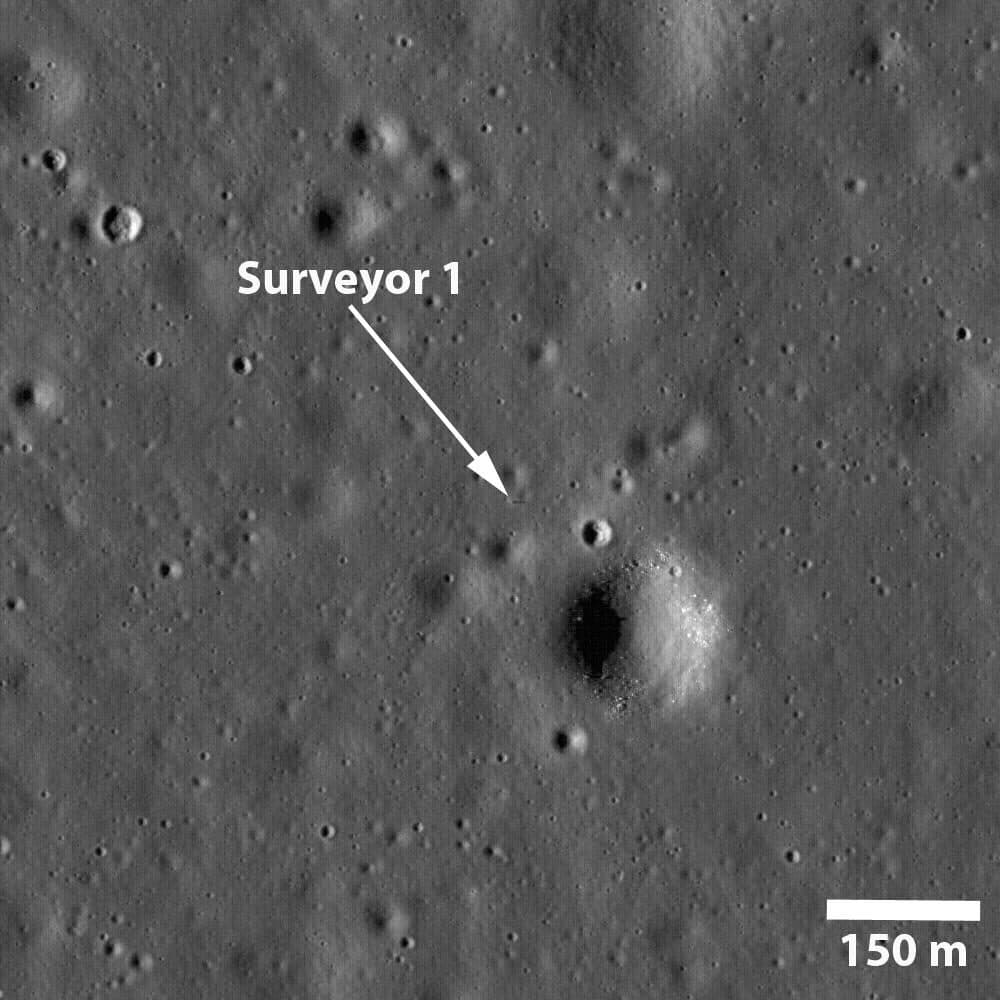
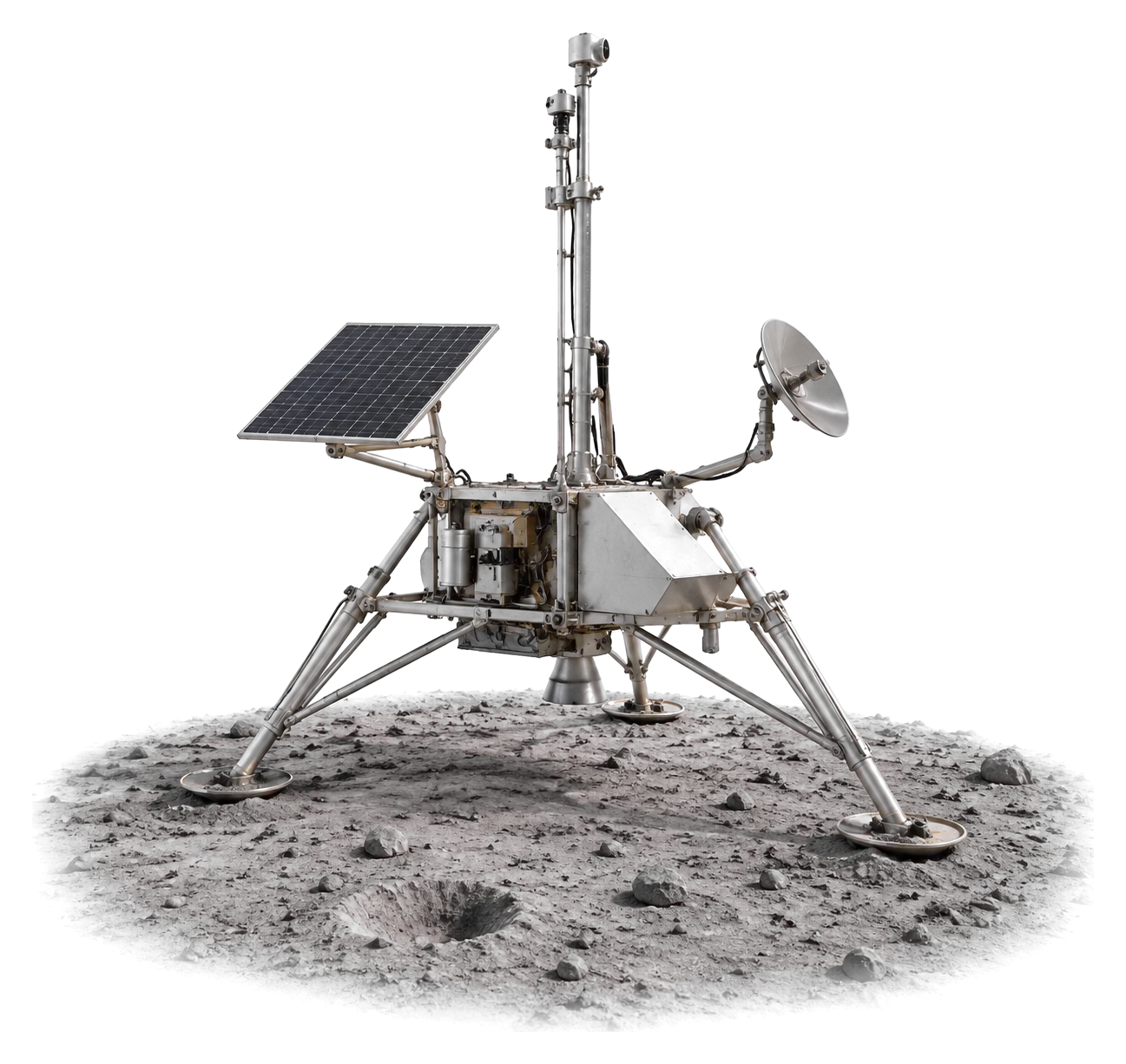
The big rocket finished its job before my feet reached the ground.
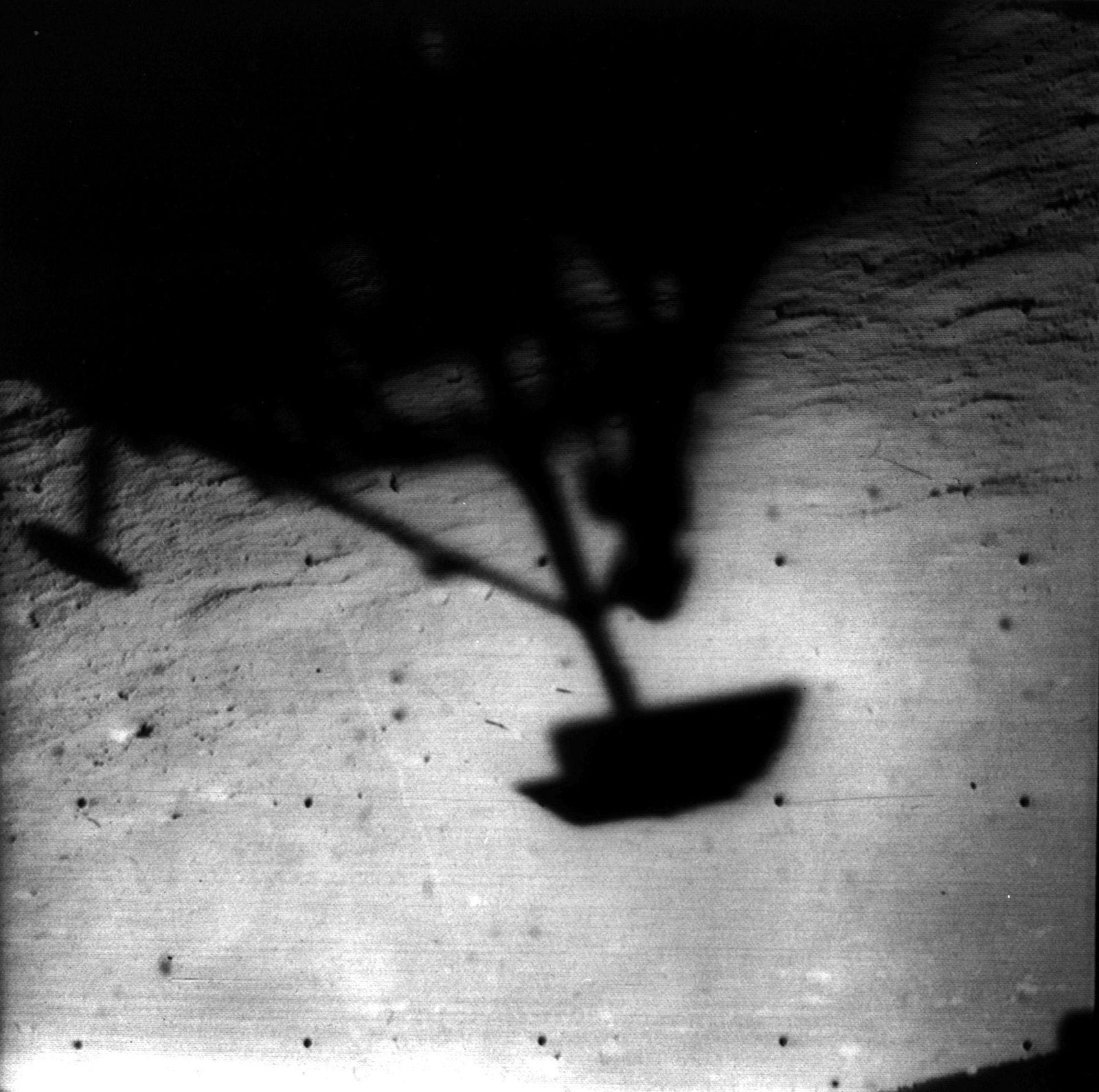
On June 2, my three feet met the Moon.
The big idea
Landing brings sensing, control, propulsion and impact absorption together. A successful system needs each stage to hand over to the next.
Think about it
Why does a landing controller need measurements as well as an engine?
Fact file
- Landing date
- 2 June 1966
- NASA’s summary rounds touchdown to 06:17:36 UT; Part I gives 06:17:37 GMT. June 1 appears in Pacific-time reports.
- Source ↗
- Footpad contact span
- Within 19 milliseconds
- Documented in the landing report; not a reconstructed force curve or perfectly simultaneous contact.
- Source ↗
- Final descent
- Radar feedback → vernier control → short free fall
- Accounts differ on exact cutoff height. The sequence is retained without the draft’s asserted 4.3 m hover.
- Source ↗
In this chapter: Altitude-marking radar, solid retrorocket, three vernier engines, RADVS and shock-absorbing legs
Sources: Main record · Surveyor I Mission Report, Part I · JPL TR 32-1023 · Surveyor 1 · NSSDCA Master Catalog
Machine illustration: AI-made. Photos: NASA Image and Video Library, credited on each picture.