Chapter 3 of 5

A footprint and a picture

Television images and landing measurements reveal the local surface

Told in Surveyor 1’s imagined voice · the events are real · source
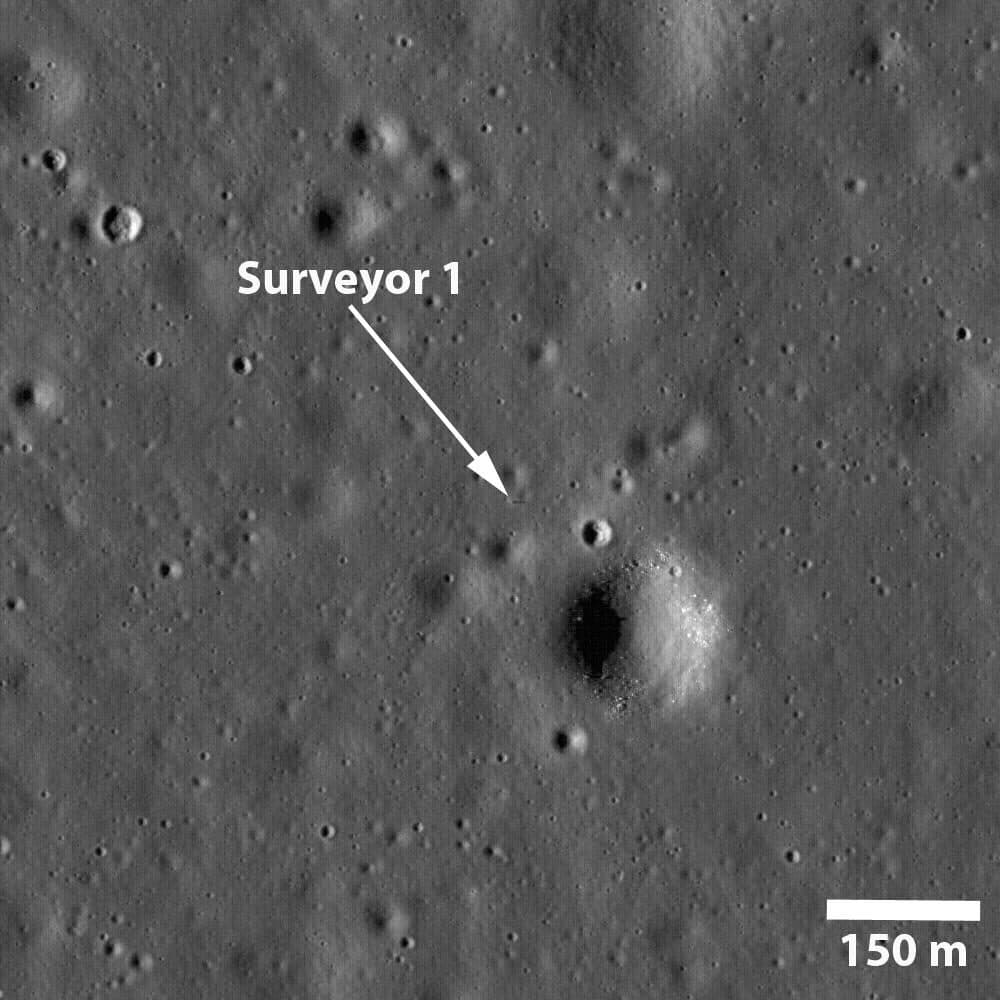
NASA Surveyor 1 spacecraft sitting silently on Oceanus Procellarum, the first US spacecraft to land on another planet on June 2, 1966 in this image taken by NASA Lunar Reconnaissance Orbiter.
Surveyor 1One of my first subjects was my own foot.
NASA/GSFC/Arizona State University
01After engineering checks, my television camera began sending pictures. A movable mirror aimed the view without turning the whole lander. The first lower-resolution frames were followed by 600-line images through the high-gain antenna.
A small footprint answered part of a very big question.
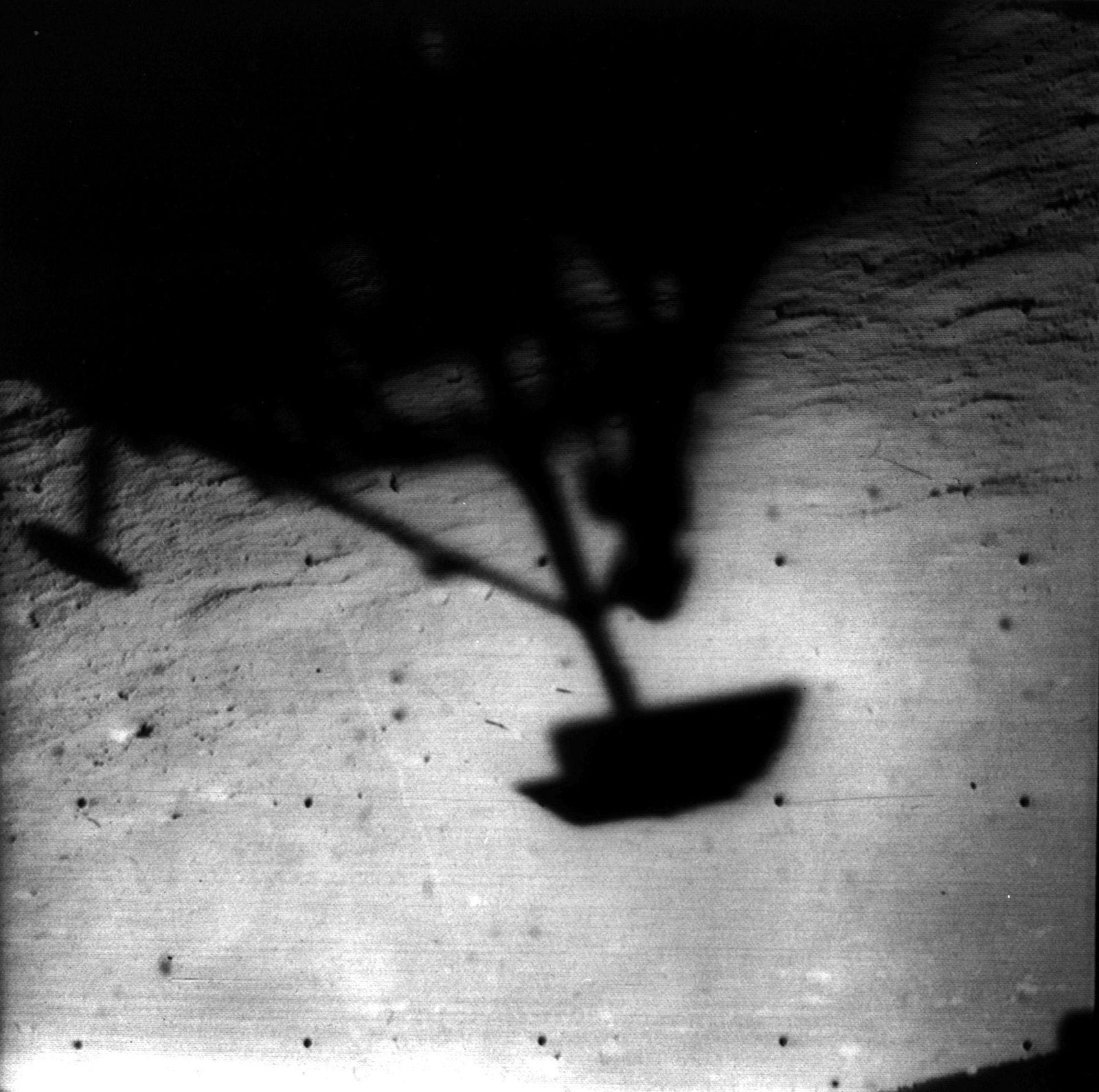
02Pictures showed that I had stayed on the surface rather than disappeared into deep dust. My footpads and the disturbed soil around them let scientists investigate the local ground. These were observations at one landing site, not a guarantee about every place on the Moon.
Image of Surveyor 1 shadow against the lunar surface in the late lunar afternoon, with the horizon at the upper right.
Surveyor 1The pictures and the leg readings worked together.
NASA/JPL
03Strain gauges recorded the landing loads. Scientists compared those measurements with photographs and Earth tests. More than one soil model could fit the evidence, so the report kept uncertainty about the exact static bearing capacity instead of declaring a single universal strength.
Turning my mirror opened a whole landscape.
04I photographed rocks, craters, distant hills and changing shadows. In nitrogen-jet tests, no soil disturbance was discernible in the pictures. Near the first sunset, the camera also observed the solar corona and made a long exposure of a footpad lit by Earthshine.

The big idea

Useful science combines images, measurements and models. It also keeps track of what the observations cannot establish.

Think about it

What extra information do landing measurements add to a photograph?

Fact file

First image
About 36 minutes after landing
NASA’s 2021 history article; engineering checks came first. Initial frames used 200 scan lines.
Source ↗
Picture modes
200 lines / 600 lines
June report: fourteen 200-line images before high-gain 600-line imaging began.
Source ↗
Footpad 2 penetration estimate
4–8 cm, assuming no pad crushing
Part II, printed p. 78. Maximum penetration and soil structure remain uncertain; not an exact 5–8 psi safety certificate.
Source ↗

In this chapter: Vidicon camera, movable mirror, radio antennas, footpads and landing-leg strain gauges

Sources: Main record · 55 Years Ago: Surveyor 1 Makes a Soft Landing on the Moon · Surveyor I Mission Report, Part II · Scientific Data and Results · Surveyor 1 · NSSDCA Master Catalog

Machine illustration: AI-made. Photos: NASA Image and Video Library, credited on each picture.

Chapter 3 of 5

Next