Chapter 4 of 10
The Secret Door That Let Earth Watch
Pulling the D-ring lanyard to deploy the MESA camera bay (GET 109:23:38)
Told in Eagle’s imagined voice · the events are real · source
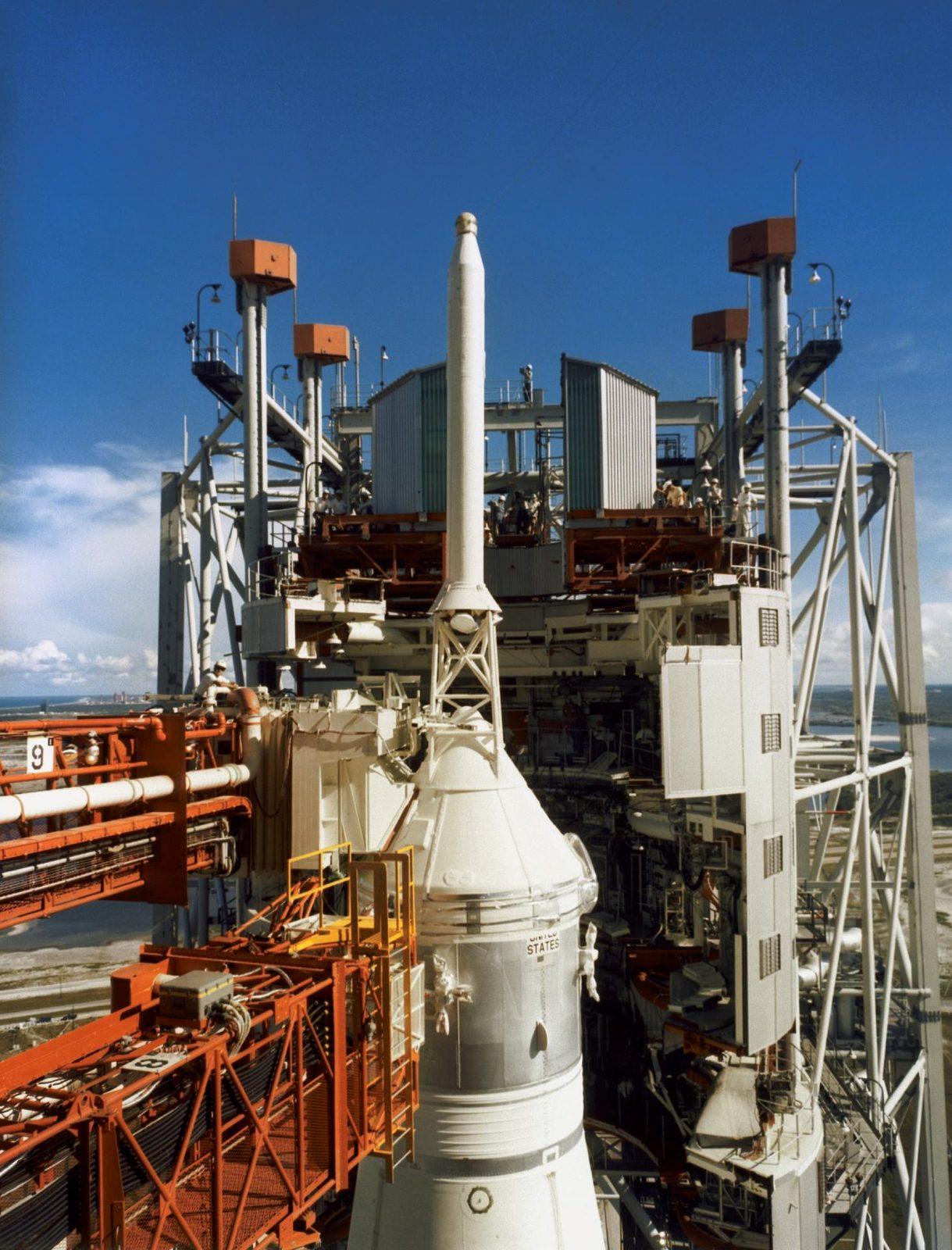
EagleSix hours after landing, my cabin air hissed out into the vacuum, my front hatch swung open, and Neil crawled backward onto my porch.
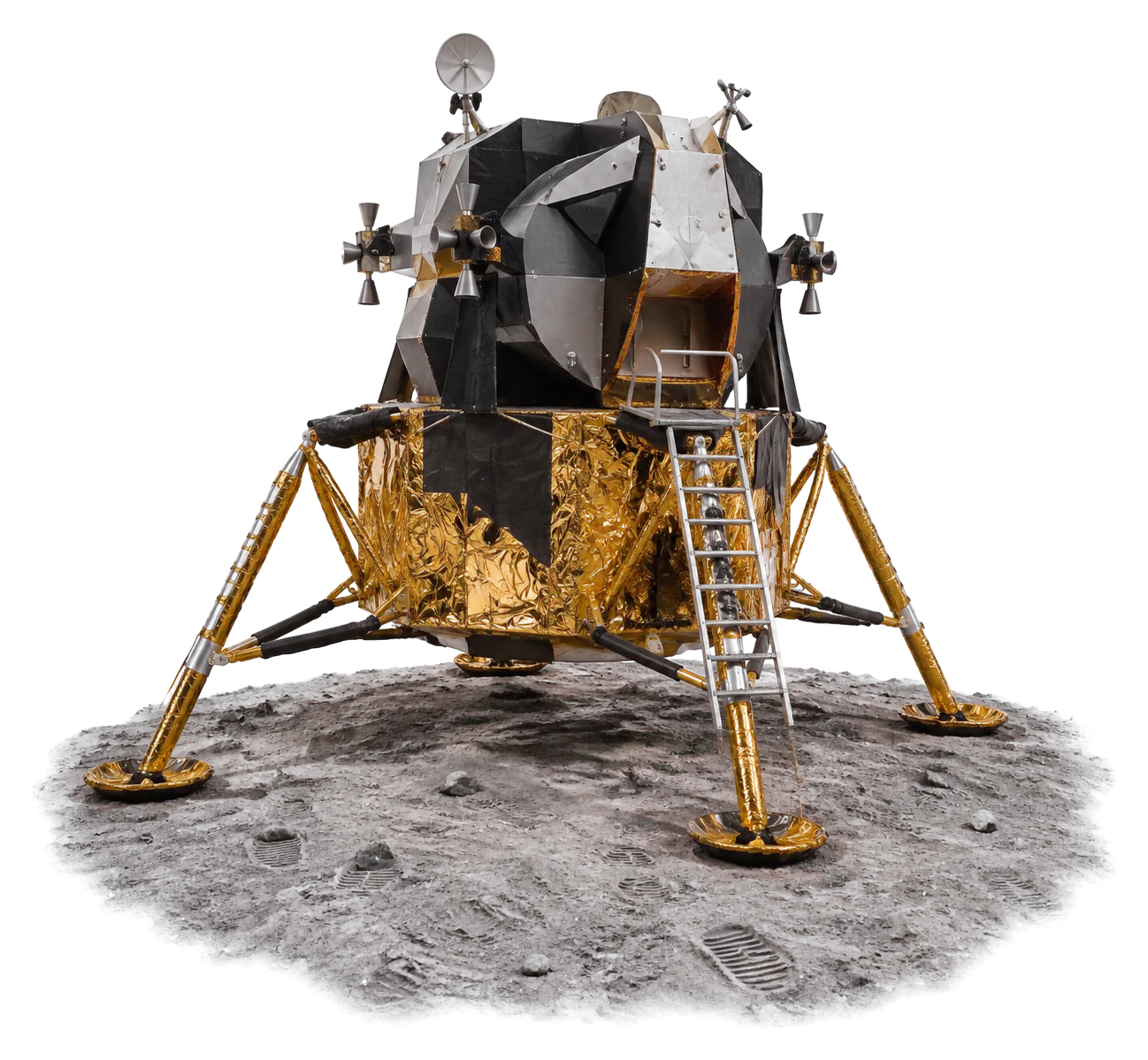
Before climbing down my nine-rung ladder, Neil reached to his left and yanked a metal D-ring handle.
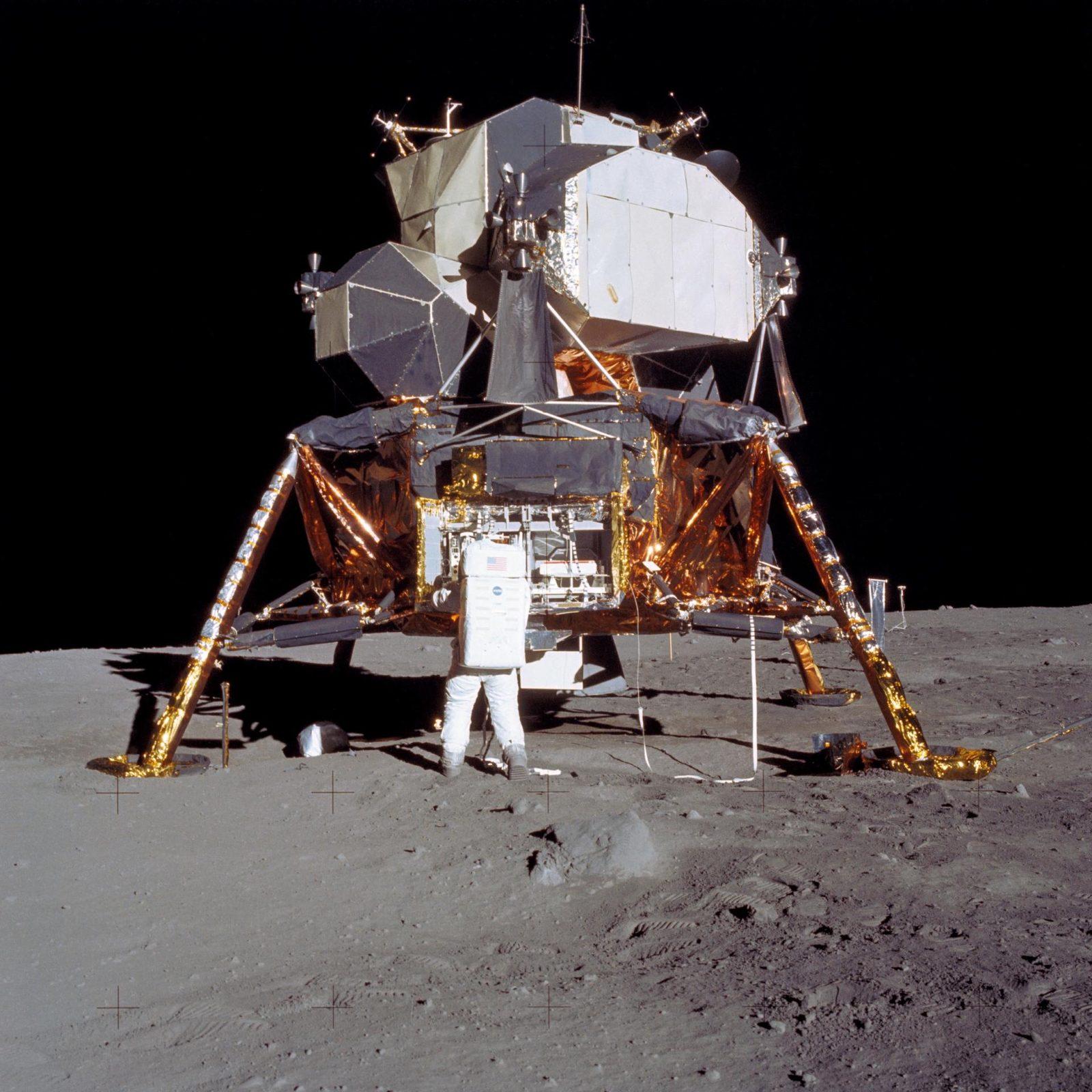
EagleBolted upside-down inside that folding shelf, a black-and-white television camera blinked open—aimed squarely at my ladder and footpad.
When Neil pressed his boot into the dark dust beside my footpad, a hidden equipment box turned the whole planet into eye-witnesses.
The big idea
Nobody stood on the Moon waiting to film Neil Armstrong; pulling a cable on the porch unfolded the MESA equipment bay, aiming an onboard TV camera directly at the bottom of the ladder.
Think about it
How did NASA film the very first step on the Moon when no astronaut was on the ground yet to hold the camera?
In this chapter: D-ring cable lanyard, hinged Quad IV MESA table, Westinghouse slow-scan TV camera, and S-band antenna
Sources: Main record
Machine illustration: AI-made. Photos: NASA Image and Video Library, credited on each picture.