Chapter 5 of 10

The Tin Can That Heard Footsteps in a Vacuum

Unpacking and leveling the Passive Seismic Experiment Package (PSEP)

Told in Eagle’s imagined voice · the events are real · source
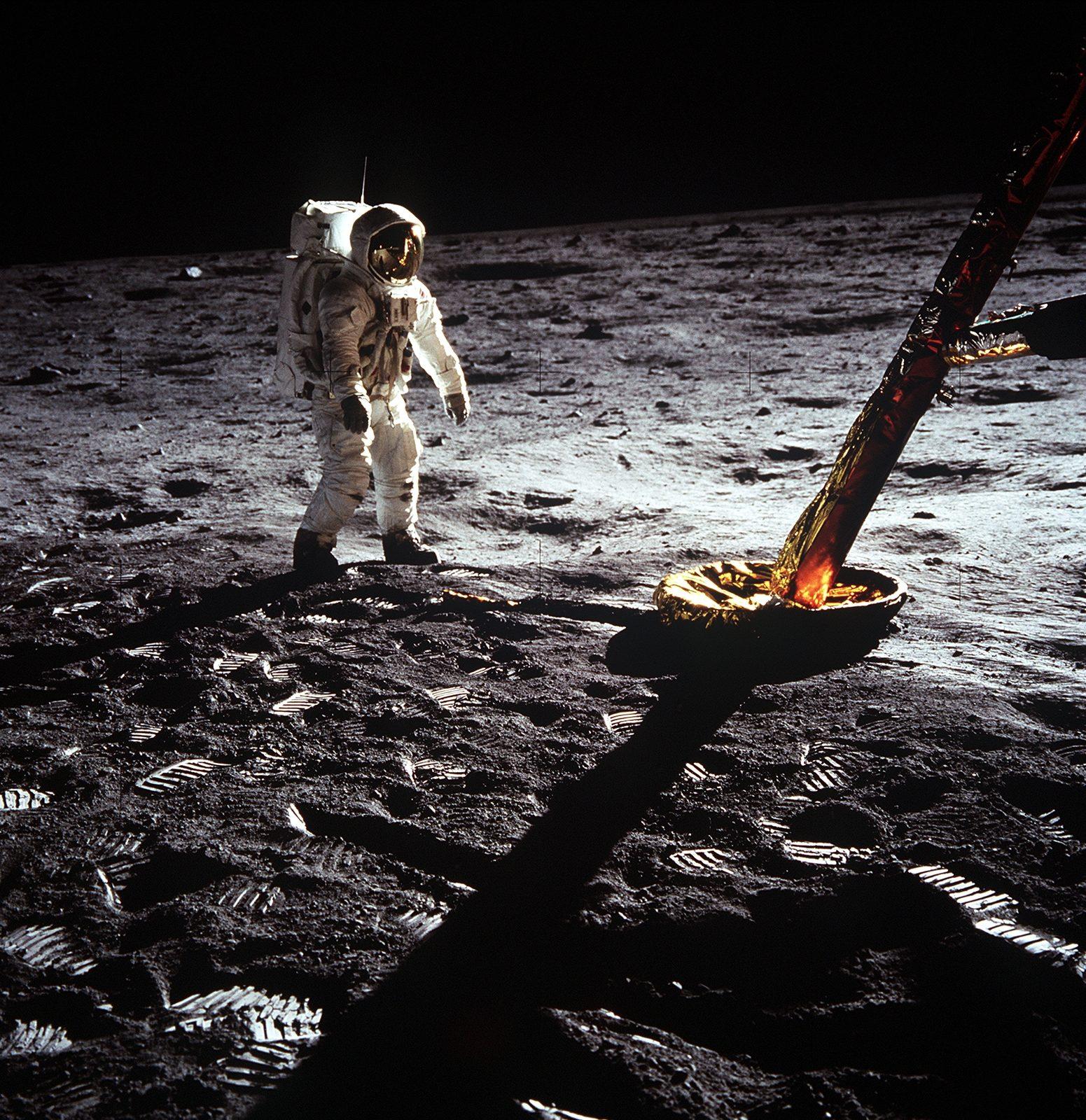
AS11-40-5902 (20 July 1969) --- Astronaut Edwin E.
EagleThe Moon has no air to carry sound—you could shout right beside me and hear only your own breathing inside your helmet.
NASA/JSC
01Yet tucked inside my rear cargo bay (Quad II), I carried a golden cylinder built to listen—not to the sky, but to the solid rock beneath my feet.
Buzz hauled the Passive Seismic Experiment fifty-five feet south of me, leveled it using a tiny bubble gauge, and popped open its two solar wings.
02The moment sunlight hit those panels, nearly forty watts of electricity flowed in, waking up four pendulums inside that could feel vibrations smaller than the width of a single atom.
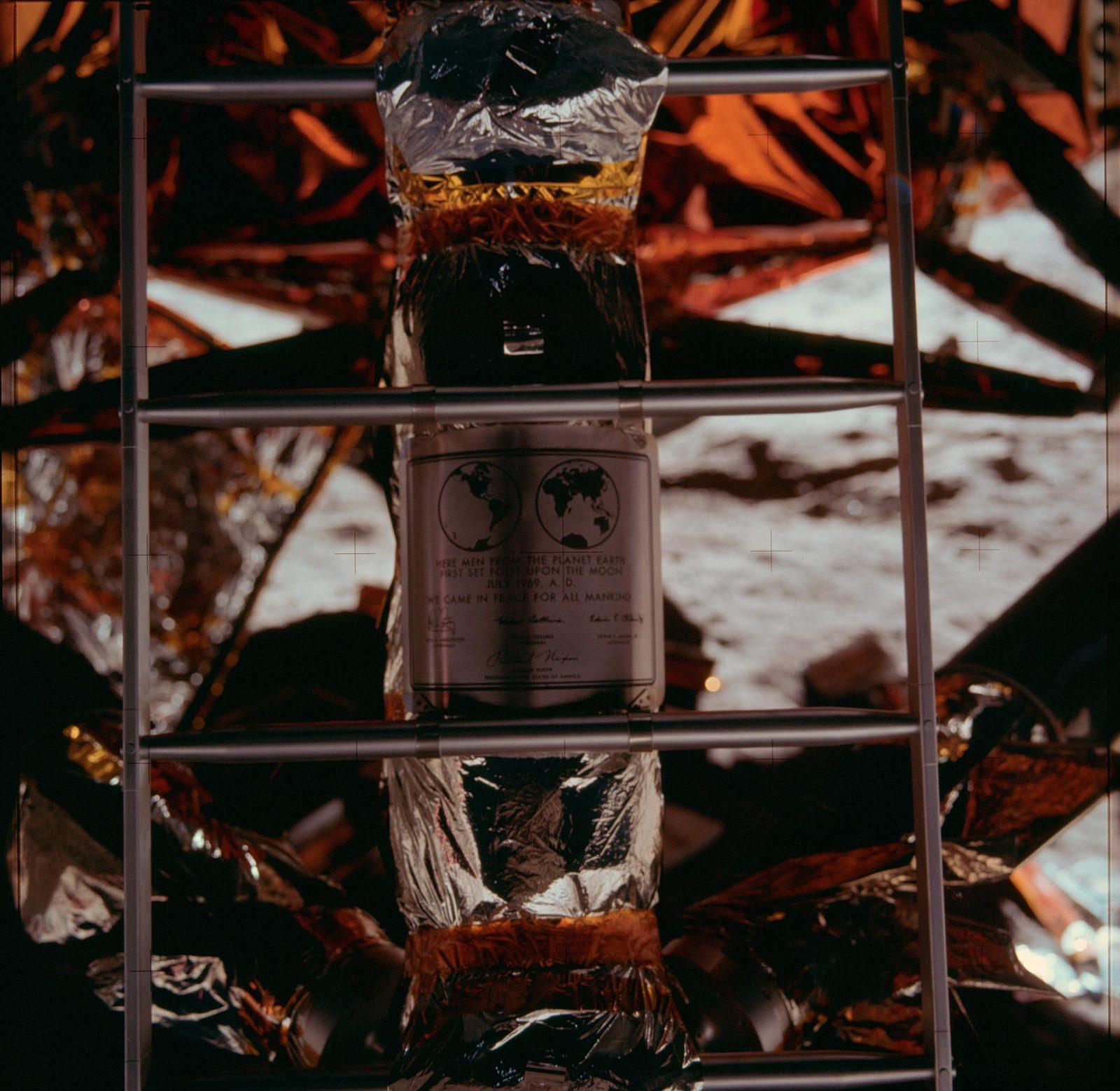
AS11-40-5899 (20 July 1969) --- Close-up view of the plaque which the Apollo 11 astronauts left on the moon in commemoration of the historic lunar landing mission.
EagleAs Buzz walked back toward my ladder, pens on paper strip-charts in Houston began jumping wildly!
NASA/JSC
03Every crunch of the astronauts' boots, every pebble they tossed, and even the thump of my cabin door closing sent tiny ripples through the lunar crust that the seismometer caught and radioed to Earth.
For twenty-one days after the astronauts left, that little cylinder sat beside me, recording the Moon's secret rumbles.
04It detected meteorite strikes and weird, echoing 'moonquakes' that rang like a bell for minutes—proving the Moon wasn't a dead ball of rock after all.

The big idea

Even though sound cannot travel through the airless vacuum of space, vibrations travel straight through the lunar ground—allowing Eagle's seismic package to detect footsteps and moonquakes smaller than an atom.

Think about it

If there is no air on the Moon to carry sound waves, how was the seismic instrument able to 'hear' the astronauts walking?

In this chapter: Four ultra-sensitive seismometers, leveling bubble, two solar panels, and radio antenna

Sources: Main record · NASA · The seismometer detects the crew’s footsteps

Machine illustration: AI-made. Photos: NASA Image and Video Library, credited on each picture.

Chapter 5 of 10

Next