Chapter 3 of 10
Sixty Seconds of Fuel and a Field of Boulders
Manual fly-over of West Crater and touchdown at Tranquility Base (GET 102:45:40)
Told in Eagle’s imagined voice · the events are real · source
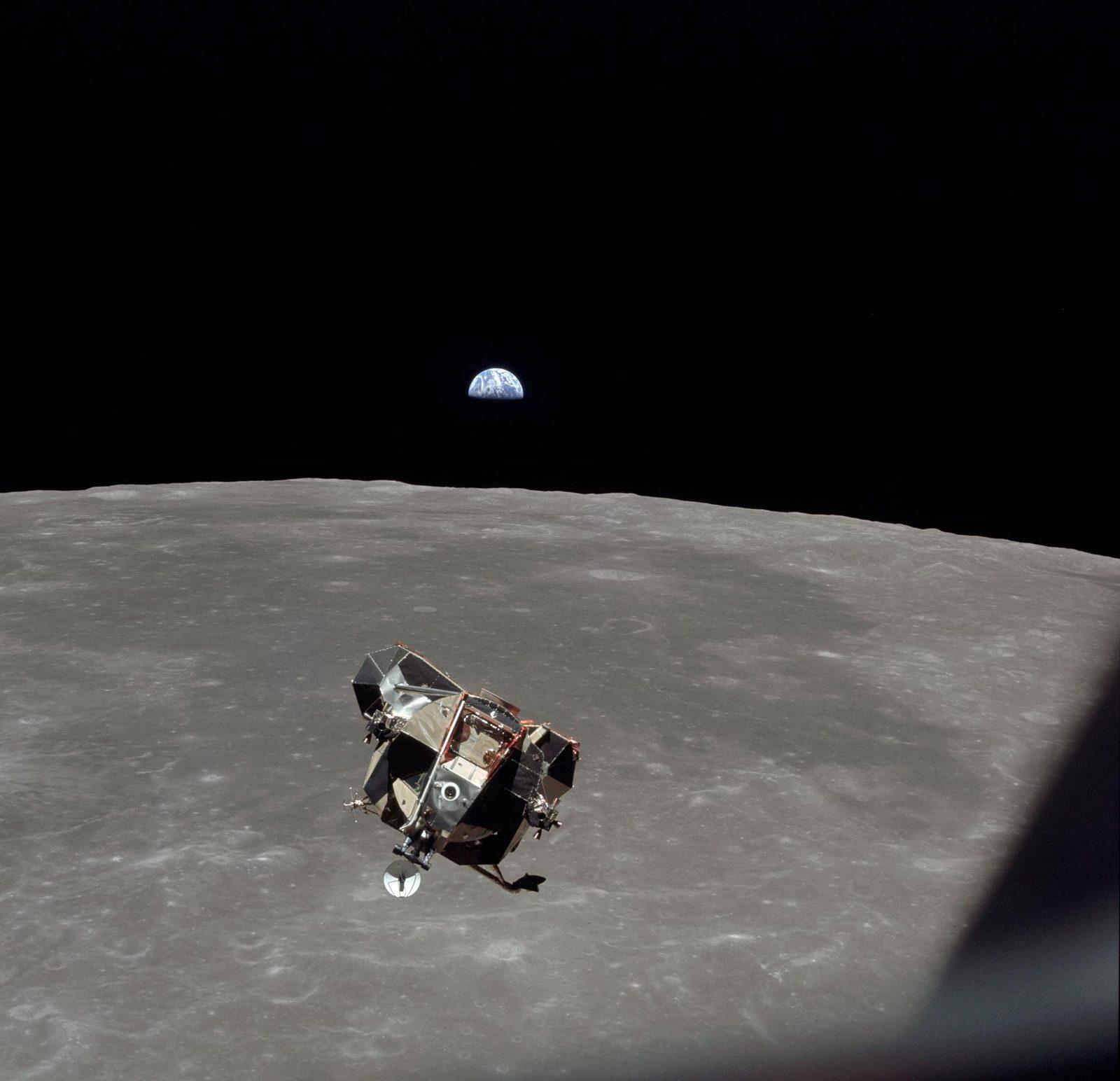
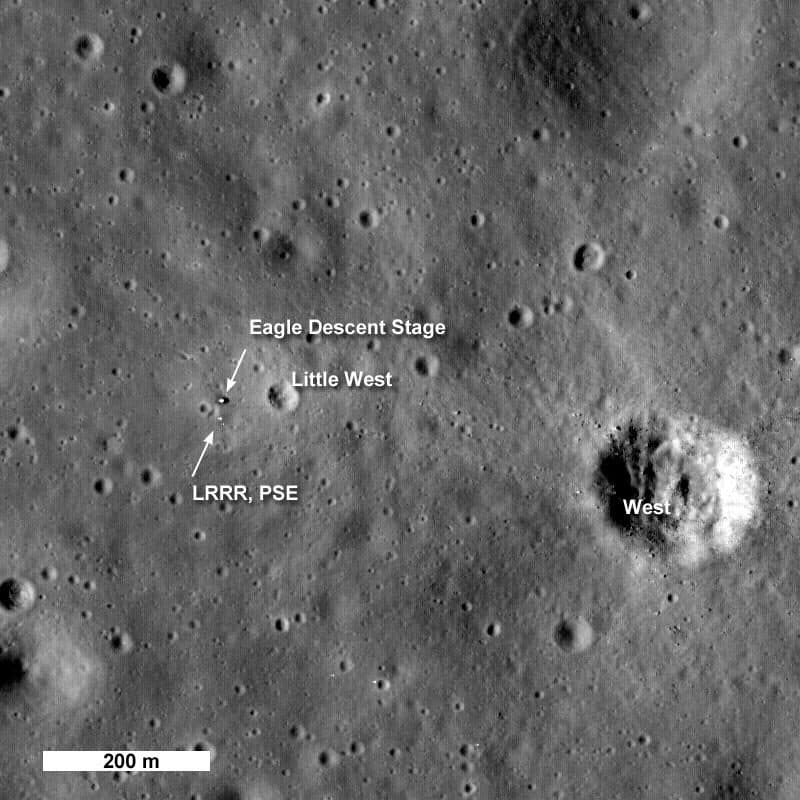
EagleFour hundred feet up, my autopilot was steering us straight into a crater the size of a football stadium, rimmed with car-sized boulders.
Neil skimmed me horizontally like a helicopter while Buzz stared at my instruments, calling out our speed and height.
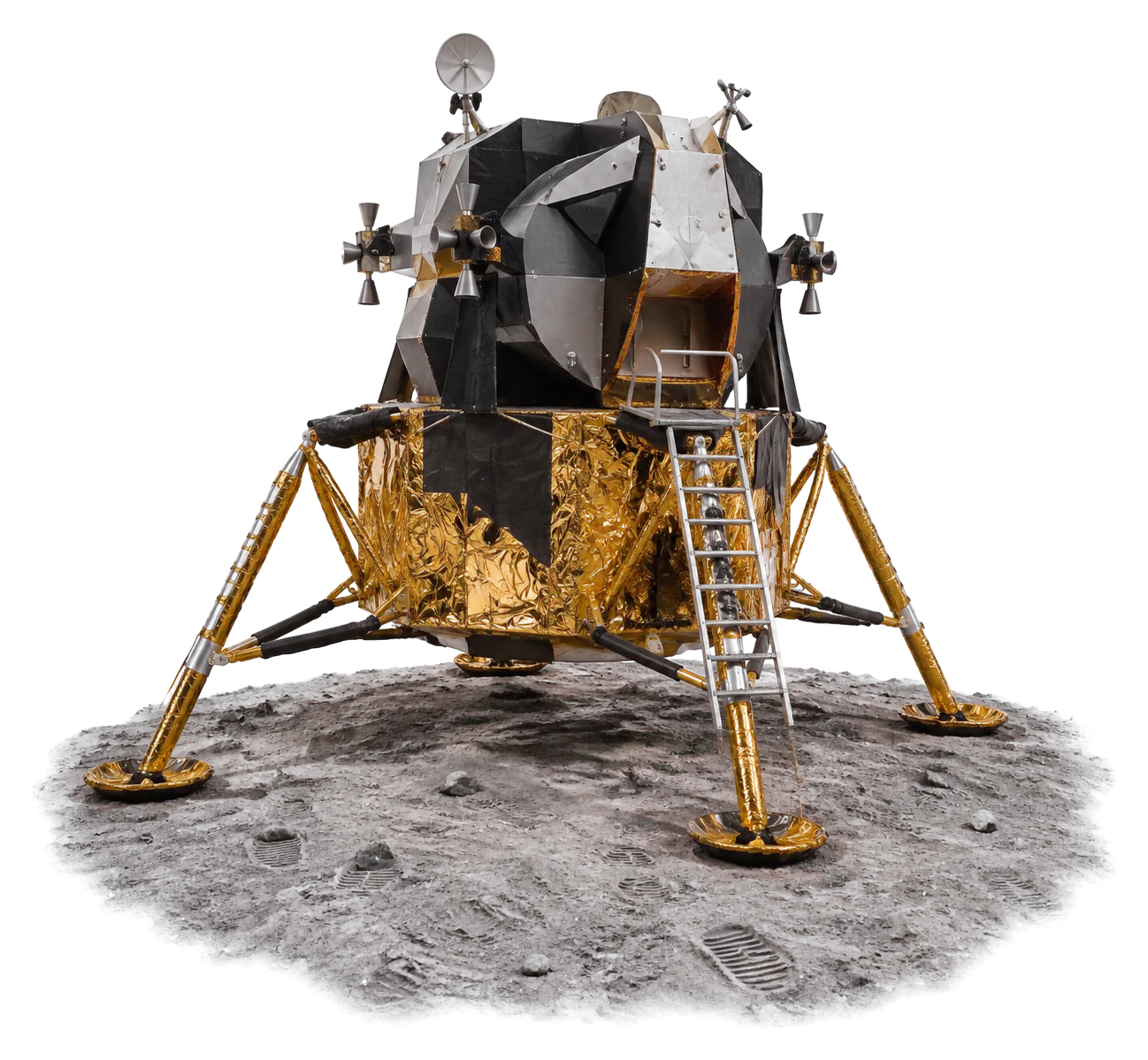
EagleFive feet below my saucer-shaped footpads, three thin metal feelers reached out for the Moon.
My engine cut off, I dropped the last three feet into the dust with twenty-five seconds of fuel left, and my four legs locked into history.
The big idea
Hanging 67-inch wire probes beneath the footpads warned the crew the exact millisecond they touched the ground, letting them shut the engine off safely before kicking up dangerous pressure underneath.
Think about it
Why did Eagle use long wire probes hanging below its footpads instead of waiting for the heavy legs themselves to hit the ground?
In this chapter: Throttleable Descent Propulsion System, 67-inch lunar contact probes, and honeycomb crush struts
Sources: Main record
Machine illustration: AI-made. Photos: NASA Image and Video Library, credited on each picture.