Chapter 4 of 5

Friendly soil and laser snow

Wet chemistry, perchlorate, carbonate evidence and falling snow

Told in Phoenix’s imagined voice · the events are real · source
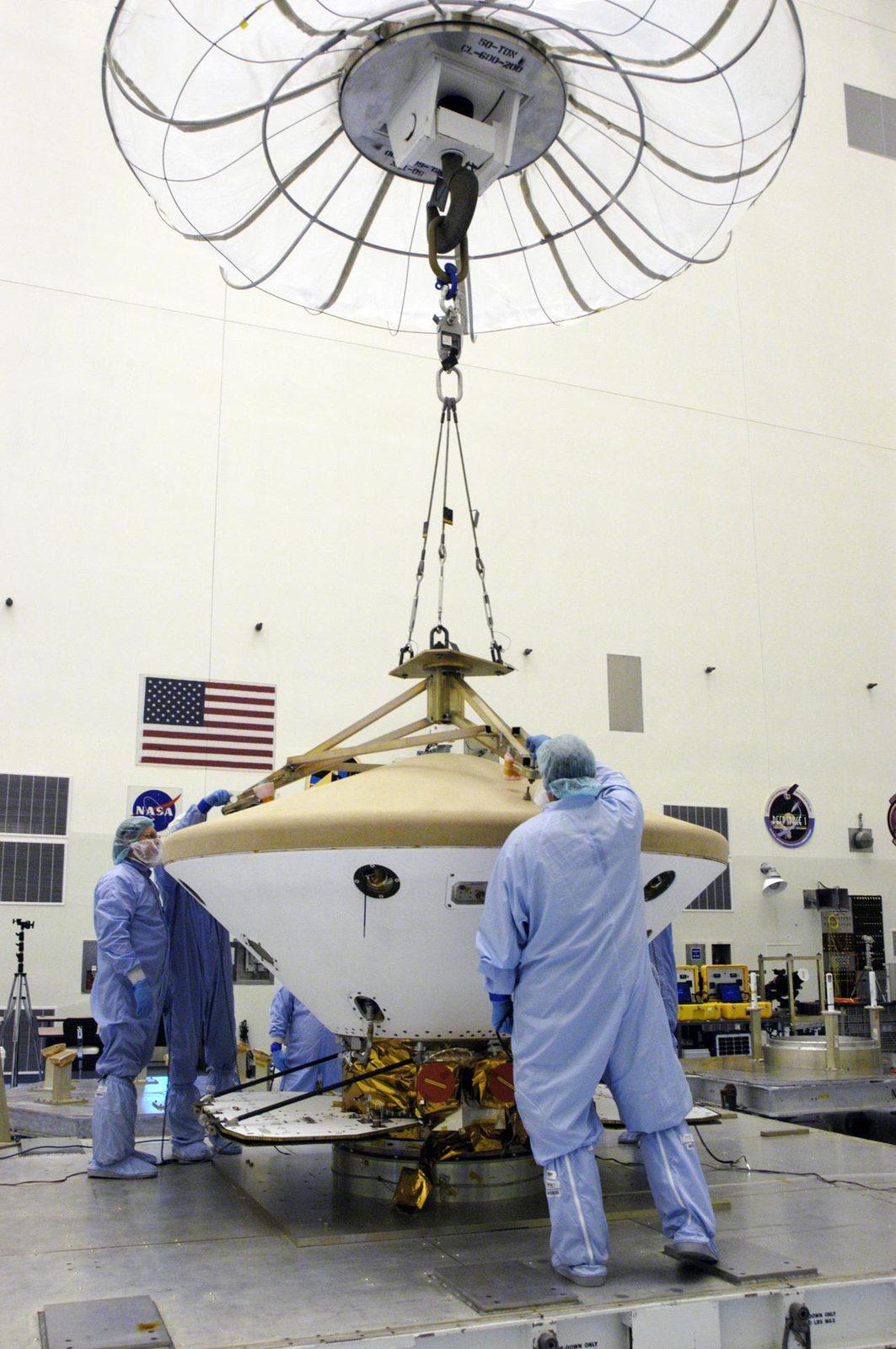
In the Payload Hazardous Servicing Facility, technicians attach a crane to the Phoenix Mars Lander spacecraft.
PhoenixMy wet lab mixed dirt with Earth water.
NASA/George Shelton
01MECA’s wet-chemistry experiment added liquid water to Martian soil and measured the dissolved chemicals. The soil was mildly alkaline rather than strongly acidic, and it contained salts such as perchlorate, sodium, magnesium, chloride and potassium.
Carbonate pointed to liquid water in the past.
02TEGA saw carbon dioxide released at a temperature consistent with calcium carbonate breaking down, while MECA saw the buffering behavior expected from a carbonate solution. On Earth, most carbonates and clays form only where liquid water has acted.
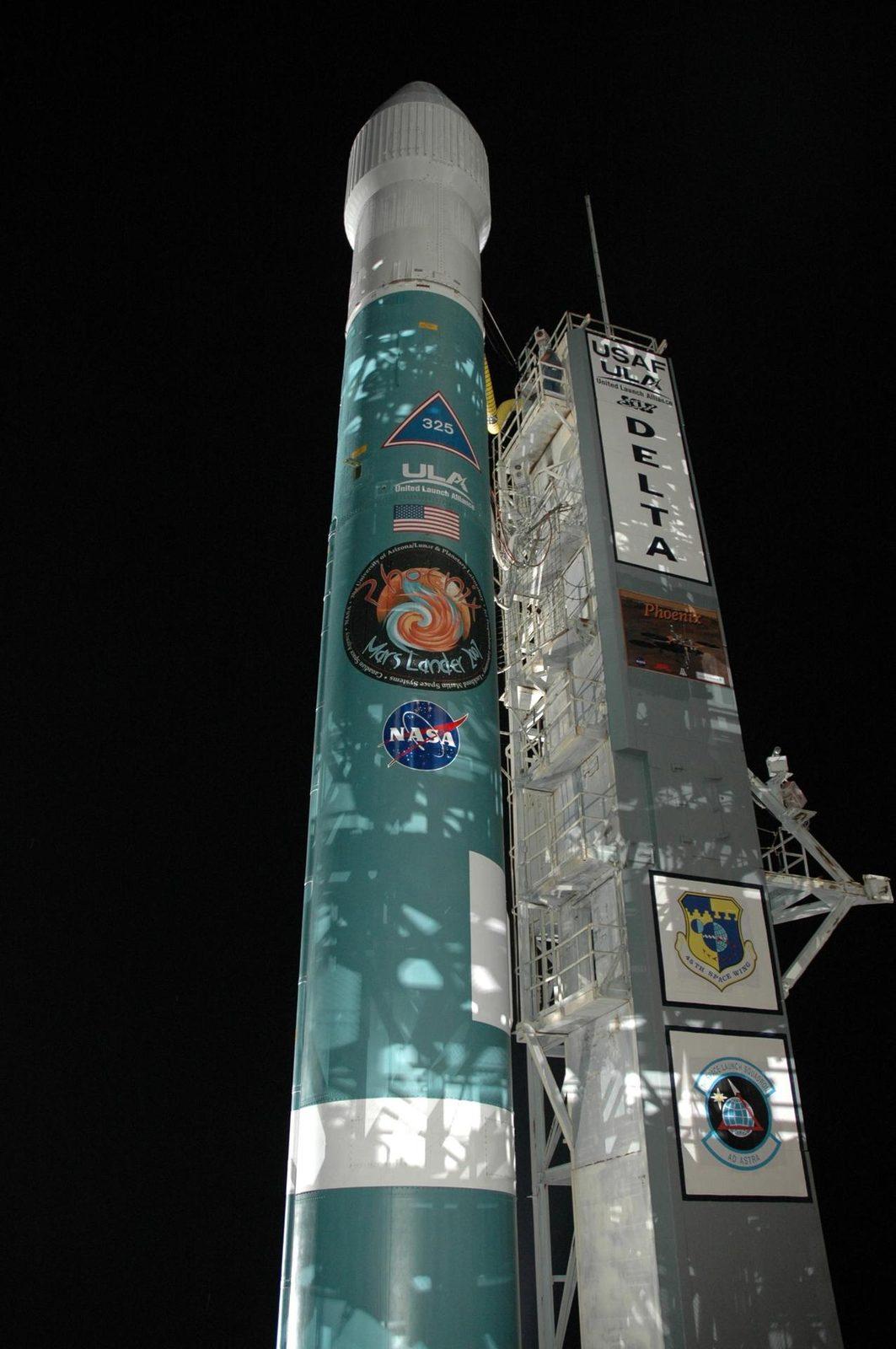
KENNEDY SPACE CENTER, FLA.
PhoenixPerchlorate changed old Viking questions.
NASA/Jim Grossmann
03Phoenix found perchlorate salts on the surface. Those salts do not by themselves prove life, but they can affect chemistry, freeze water into salty brines, and help scientists re-examine why Viking’s heated soil tests behaved as they did.
Then my laser found snow.
04The Canadian meteorological station’s laser detected snow falling from clouds about 2.5 miles above the landing site. The snow vaporized before reaching the ground, but it proved that water-ice particles were falling through the northern sky.

The big idea

Soil chemistry and laser sky measurements answer different questions: one reads the ground’s history, the other watches today’s weather.

Think about it

Why can a soil test and a laser both study water in very different ways?

Fact file

Soil chemistry
Alkaline soil; carbonate evidence
NASA reports calcium carbonate evidence from both TEGA and MECA; no single pH value is asserted in the children’s prose.
Source ↗
Laser snow height
About 2.5 miles (4 km)
NASA’s September release says snow vaporized before reaching the ground.
Source ↗

In this chapter: MECA wet-chemistry lab, TEGA, Canadian meteorological station and lidar

Sources: Main record · Mars Phoenix · NASA Science · PIA11200 · NASA Image Library

Machine illustration: AI-made. Photos: NASA Image and Video Library, credited on each picture.

Chapter 4 of 5

Next