Chapter 3 of 5
Peanuts and a steering burn
Ranger 7 launches, cruises to the Moon and fires its midcourse engine
Told in Ranger 7’s imagined voice · the events are real · source
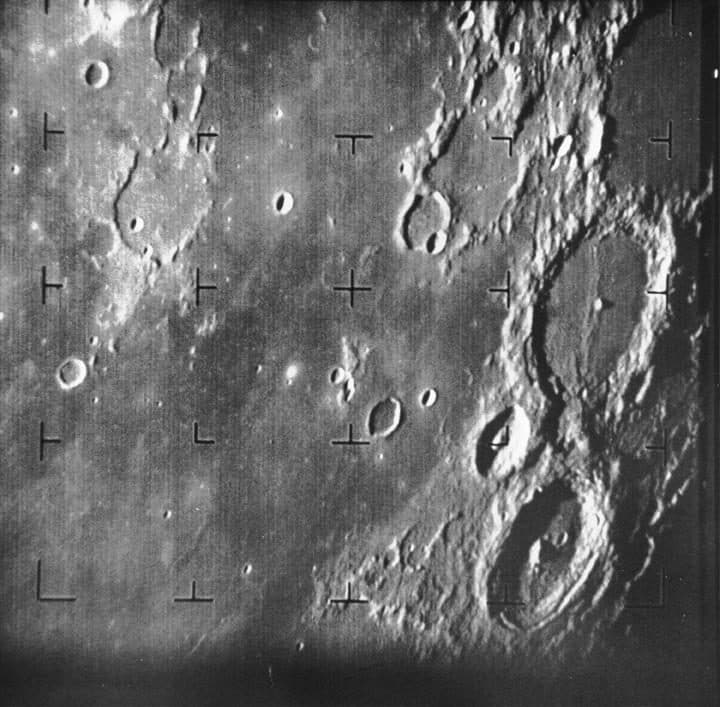
In the control room, the team shared a bag of peanuts.
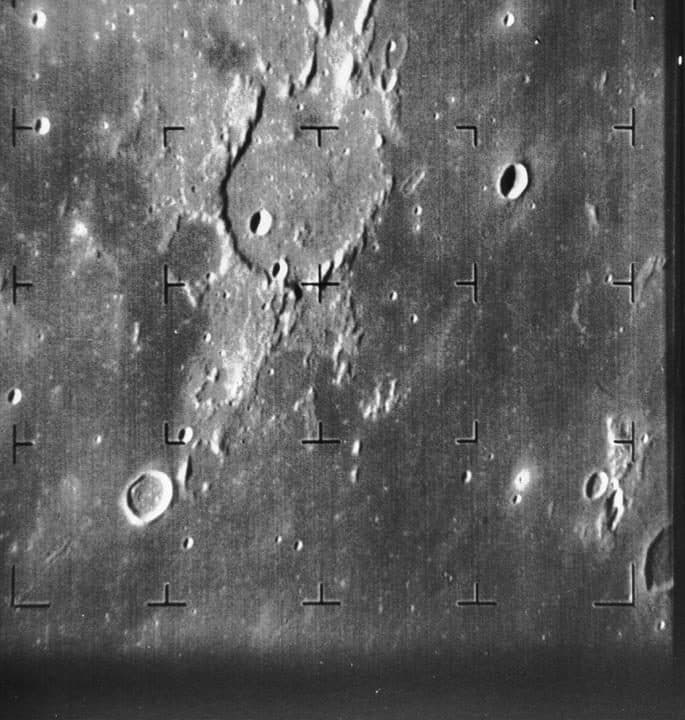
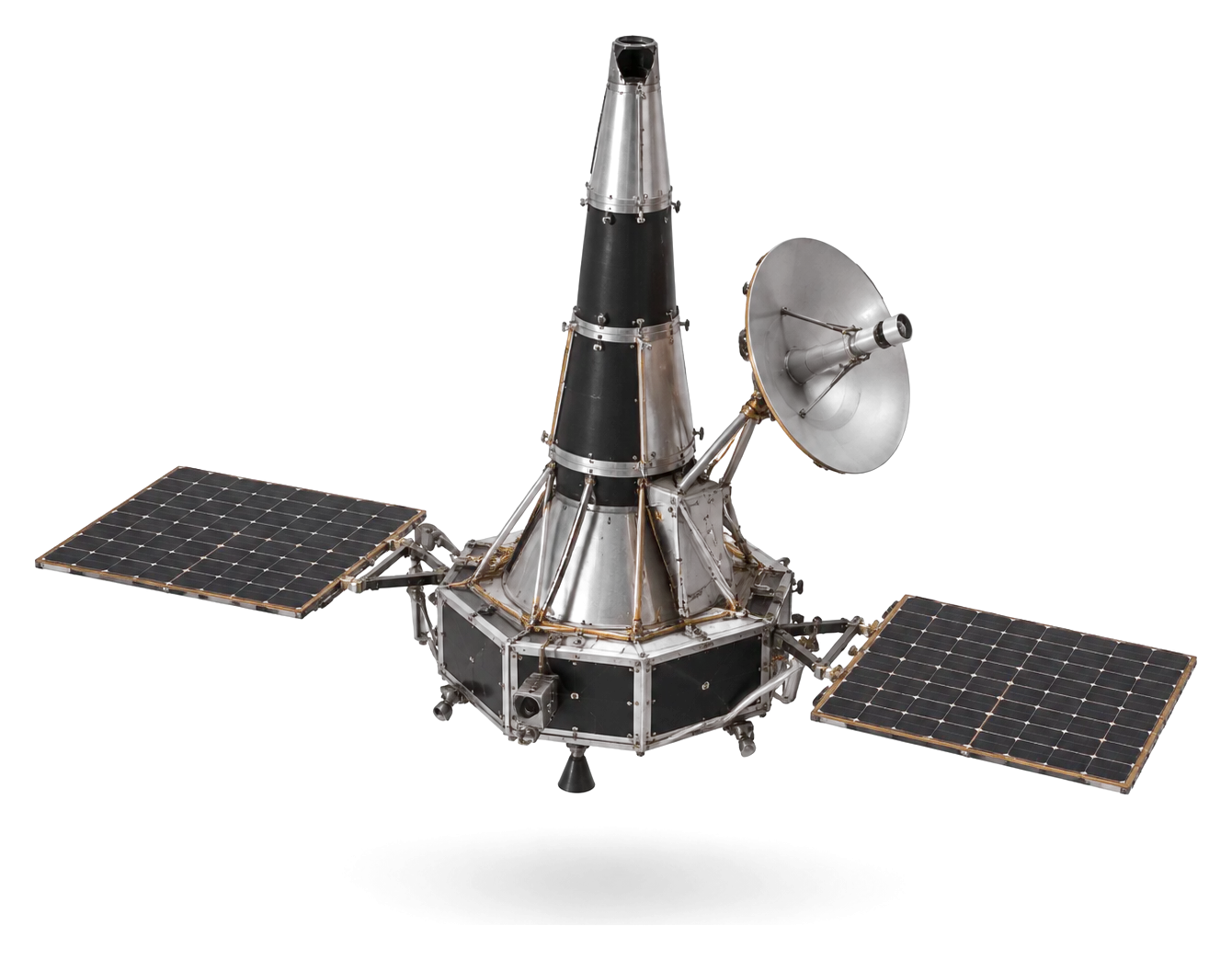
A small engine fired for 50 seconds and nudged me toward my target.
The big idea
A long journey can be steered by small, carefully timed changes, and a team's shared ritual can carry a story of its own.
Think about it
Why does a tiny engine burn far from the Moon change where the spacecraft arrives?
Fact file
- Launch
- 28 July 1964 · 16:50:07 UTC
- Atlas LV-3 Agena-B from Launch Complex 12 at Cape Canaveral. A faulty telemetry battery and a ground-guidance problem had delayed the first attempt by a day.
- Source ↗
- Earth orbit
- 192 km parking orbit
- The Atlas and Agena first placed Ranger in low Earth orbit. Half an hour after launch, a second Agena burn sent it toward the Moon.
- Source ↗
- Midcourse correction
- 29 July 1964 · 50-second burn
- A 224-N monopropellant hydrazine engine made the course correction. The exact burn time and thrust are NSSDCA values; contemporary descriptions sometimes round them.
- Source ↗
- Attitude control
- 12 nitrogen jets · 3 gyros · Sun and Earth sensors
- Small cold-gas jets turned the spacecraft so the solar panels could face the Sun and the antenna could face Earth.
- Source ↗
In this chapter: Atlas LV-3 Agena-B, solar arrays, cold-gas jets and a hydrazine engine
Sources: Main record · NSSDCA · Ranger 7 launch and mission profile · NASA Science · Ranger 7 mission overview · NASA History · Lunar Impact (NASA SP-4210)
Machine illustration: AI-made. Photos: NASA Image and Video Library, credited on each picture.